
AI optimize H1-H6 tags Key Takeaways
Using AI optimize H1-H6 tags tools can transform your on-page SEO by analyzing headings for relevance, user intent, and keyword alignment.
- AI tools identify weak or missing headings and suggest semantic improvements naturally.
- Common pitfalls like keyword stuffing and broken heading order are easy to fix with AI checks.
- An optimized heading structure boosts click-through rates and helps Google understand your content faster.
Why AI optimize H1-H6 tags Matters for Modern SEO
Headings are more than decorative text. They serve as a roadmap for both users and search engine crawlers. An H1 sets the main topic, H2s break down key sections, and H3-H6 tags add deeper detail. Without a logical structure, users bounce, and Google struggles to index your content properly.

AI tools like content analysis platforms and browser extensions now scan your headings for issues such as missing H1s, multiple H1s, or keyword gaps. They compare your structure against top-ranking pages and suggest edits that align with search intent. This means you can optimize H1-H6 tags with AI in minutes instead of manually auditing each page. For a related guide, see 7 Smart AI Tools for Local Keyword Research (Proven Method).
7 Common Heading Mistakes AI Can Help You Fix
Even experienced writers make heading errors. AI flags these seven mistakes quickly:

1. Using Multiple H1 Tags
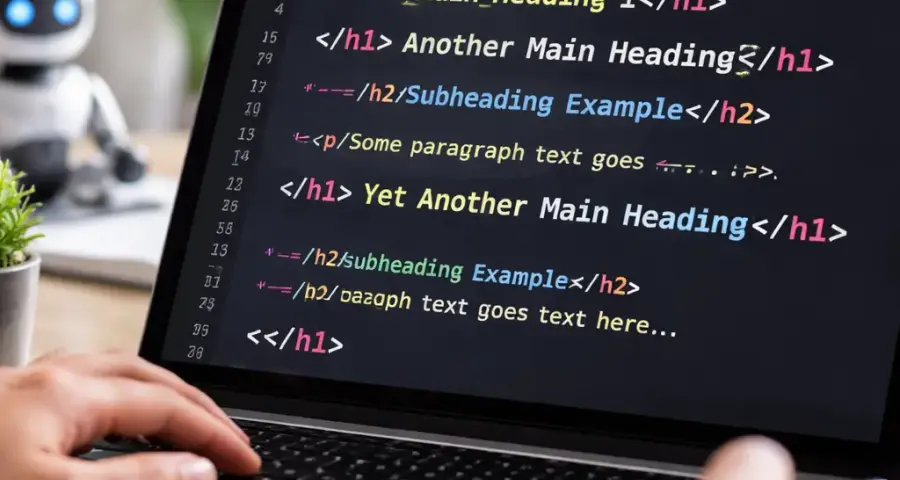
An H1 should appear once per page. AI scans your HTML and alerts you if more than one H1 exists, helping you consolidate topics.
2. Skipping Heading Levels
Jumping from H2 to H4 confuses readers and search engines. AI tools detect level skips and recommend a logical tree.
3. Keyword Stuffing
Repeating the focus keyword in every heading looks spammy. AI suggests natural synonyms and LSI keywords to maintain readability.
4. Vague or Missing Headings
Headings like “More Info” or “Services” add zero context. AI rewrites them to match user queries and content goals.
5. Irrelevant Heading Order
Placing H3 before H2 breaks hierarchy. Tools like Ahrefs and SEO crawlers highlight order issues and auto-fix them.
6. No H1 or H1 Not in Title
Your H1 should closely match the page title. AI checks for mismatch and suggests alignment.
7. Overly Long Headings
Headings longer than 70 characters get cut in SERPs. AI tools trim them to be concise yet descriptive.
Step-by-Step: How to AI optimize H1-H6 tags on Your Site
Follow these steps to apply AI optimization without overcomplicating your workflow:
Step 1: Audit Your Current Headings
Run a crawl with a tool like Screaming Frog or Ahrefs Site Audit. Export a list of all heading tags on your site. Look for duplicates, missing tags, and level skips.
Step 2: Analyze Competitor Headings
Use an AI content analysis tool to compare your heading structure against top-ranking URLs for your target keyword. Notice patterns: do they use question-style H2s? Do they include numbers in H3s?
Step 3: Generate Heading Suggestions
Paste your content into an AI writing assistant and ask it to suggest a revised heading hierarchy. For example, input: “Generate three H2s and two H3s for a guide about AI header tag optimization. Each heading must include a primary or semantic keyword.”
Step 4: Refine for User Intent
Review the AI suggestions and ensure they match what a searcher would want. If the keyword is “best coffee grinders,” your H2s should address grind consistency, budget options, and burr vs blade, not generic topics like “history of coffee.”
Step 5: Implement and Monitor
Update your headings directly in your CMS. After publishing, monitor organic traffic and click-through rates using Google Search Console. If a page loses rankings, revisit the AI suggestions and adjust.
Best Practices When Using AI optimize H1-H6 tags Tools
AI is powerful but not infallible. Keep these guidelines in mind:
- Always review AI output — AI can create grammatically correct but off-topic headings. Your editorial judgment matters.
- Test one page at a time — Change headings on a low-traffic page first, then measure impact before bulk updating.
- Pair AI with human intent analysis — Search intent evolves. AI models trained on past data may miss seasonal or trend-based queries.
- Keep accessibility in mind — Screen readers rely on proper heading order. AI can check for order and help you build an accessible page.
Common Pitfalls to Avoid with AI Heading Optimization
Even with AI, some mistakes persist. Watch out for:
- Over-relying on AI without context — Your brand voice and unique expertise should still guide heading choices.
- Ignoring mobile display — AI may suggest long headings that truncate on mobile. Check previews across devices.
- Not updating old content — AI optimization works on both new and existing pages. Refresh older posts to stay competitive.
- Forgetting meta description alignment — Headings and meta descriptions should share the same focus keyword theme for consistency.
Useful Resources
Deepen your understanding of heading optimization with these resources:
- Ahrefs: How to Use Headings for SEO (with Examples) — Comprehensive guide on heading best practices and common errors.
- Google: Creating Helpful Content — Official guidance on structuring content for users and search engines.
Frequently Asked Questions About AI optimize H1-H6 tags
What does AI optimize H1-H6 tags mean?
It means using artificial intelligence tools to analyze, suggest, and refine your page headings to improve SEO performance and readability.
Can AI write my H1 tags automatically?
Some AI tools generate H1 suggestions based on your topic and keyword, but you should always review them for accuracy and brand alignment.
Do I need an expensive tool to optimize H1-H6 with AI?
No. Free tools like ChatGPT or Google’s Natural Language API can help. However, paid SEO suites often offer deeper integration and bulk analysis. For a related guide, see 7 Best AI Tools for Google Business Profile Optimization in 2025.
Is AI heading optimization safe for Google rankings?
Yes, as long as you follow SEO best practices and avoid keyword stuffing. AI recommendations can actually improve rankings when applied thoughtfully.
How many H2 tags should a page have?
There is no fixed rule, but most well-optimized pages have between 3 and 7 H2 tags. AI can help you decide based on content length and topic depth.
What is the best AI tool for heading analysis?
Ahrefs Site Audit, Surfer SEO, and Frase are popular. Each offers different features for analyzing and suggesting heading structures.
Should every H2 contain the focus keyword?
Not every H2, but at least two should naturally include the focus keyword or a close LSI variant. AI can help distribute keywords without repetition.
Can AI detect heading level skips?
Yes, many SEO crawlers and AI content tools flag level skips automatically and suggest fixes.
Does AI optimize H1-H6 tags for voice search?
AI can help structure headings to match conversational queries, which improves chances for voice search results.
How often should I update my headings?
Review headings every time you refresh content or when analytics show a drop in organic traffic. AI makes this quick.
What is the difference between H1 and title tag?
The title tag appears in search results and browser tabs. The H1 is the visible main heading on the page. They should be similar but not identical.
Can AI write my FAQ headings?
Yes, AI can generate question-style H2 or H3 headings that match real user queries, improving featured snippet potential.
Is it okay to have no H1 on a page?
No. Every page should have exactly one H1 that describes the main topic. AI audits easily catch missing H1s.
Do AI tools handle different languages?
Many AI heading tools support multiple languages, but accuracy varies. Test with your specific language before full rollout.
What is a heading hierarchy?
It is the logical order of headings from H1 (most important) to H6 (least important). AI helps ensure no levels are skipped and the order matches content flow.
Can I use H4 tags inside an H3 section?
Yes, but only if the H4 provides sub-detail under the H3 topic. AI can validate that the relationship is logical.
Do H2 tags affect featured snippets?
Yes. Well-structured H2 tags that answer specific questions can trigger featured snippets, especially in “People Also Ask” boxes.
How do I know if my headings are too long?
AI tools or character counters can flag headings over 70 characters. Trim them to be scannable but descriptive.
Can AI help with heading accessibility?
Yes, AI can validate heading order and suggest semantic improvements that make content easier to navigate for screen readers.
What is the most common heading mistake?
Using multiple H1 tags on one page is the most frequent error. AI scans quickly flag this and suggest consolidating into one main heading.