
local SEO Key Takeaways
local SEO is the practice of optimizing your online presence to attract more customers from relevant local searches.
- local SEO focuses on Google Business Profile, local citations, and online reviews to boost visibility in map packs and organic results.
- A well-optimized local SEO strategy can increase website traffic, phone calls, and in-store visits significantly.
- Consistency in name, address, and phone number across the web is the foundation of local search trust.
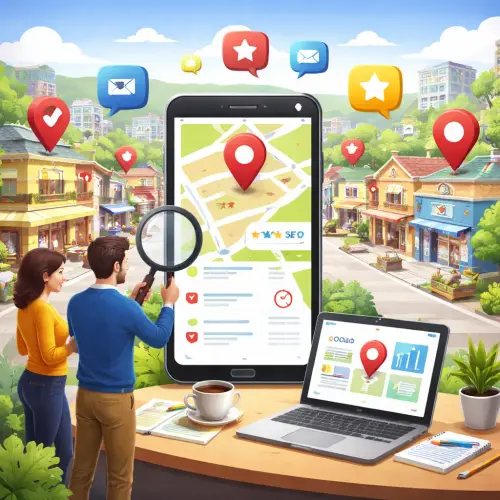
What Is local SEO and Why Does It Matter in 2026?
Local SEO stands for local search engine optimization. It is a specialized branch of SEO that helps your business appear in geographically related searches. When someone types “coffee shop near me” or “plumber in Austin,” search engines use local signals to decide which businesses to show. If you run a brick-and-mortar business or serve a specific area, local SEO is your most direct path to new customers.
Unlike traditional SEO, which targets a global audience, local SEO prioritizes proximity, relevance, and prominence. Google’s local algorithm weighs factors like your Google Business Profile completeness, the quality and quantity of your online reviews, and the accuracy of your business listings across directories. By mastering these elements, you can appear in the coveted local pack — the map-and-listings box at the top of search results.
For small business owners, local SEO levels the playing field. A well-optimized local listing can outrank a national competitor simply because you are closer and more trusted in the community. In 2026, as voice search and “near me” queries continue to grow, investing in local SEO is not optional — it is essential.
Why Small Businesses Should Prioritize local SEO
Consider this: 46% of all Google searches have local intent, and 78% of local mobile searches result in an offline purchase. When potential customers search for your services, they are ready to buy. If your business does not appear, you lose that lead to a competitor. Local SEO ensures you capture demand exactly when it peaks. For a related guide, see Search Intent: 7 Powerful Examples to Master User Goals.
Key Elements of a Successful local SEO Strategy
To dominate local search, you need to master three core pillars: your Google Business Profile, local citations, and online reviews. Let us break each one down.
1. Google Business Profile Optimization
Your Google Business Profile (GBP) is the most important asset for local SEO. It controls how your business appears in Google Maps and the local pack. Start by claiming your profile and verifying ownership. Then, complete every field: business name, address, phone number, website, hours, categories, and attributes. Add high-quality photos regularly and post updates about offers or events. A fully optimized GBP signals to Google that your business is active and trustworthy. For a related guide, see 8 Easy Mobile SEO Fixes to Boost Your Website’s Rankings.
2. Consistent Local Citations
A citation is any mention of your business name, address, and phone number on the web. Major directories like Yelp, Yellow Pages, and Facebook are important, but industry-specific sites matter too. The key is consistency. If your address appears as “123 Main St.” on one site and “123 Main Street” on another, Google may lose confidence in your data. Use a tool like Moz Local or BrightLocal to audit your citations and fix discrepancies.
3. Online Reviews and Reputation Management
Reviews are a direct ranking factor for local SEO. More importantly, they influence purchase decisions. Encourage satisfied customers to leave reviews on your Google profile and other platforms. Respond to all reviews — both positive and negative — professionally and promptly. A steady stream of fresh, positive reviews improves your local ranking and builds social proof.
7 Actionable local SEO Tips for 2026
Here is a practical checklist you can implement today to start improving your local search visibility.
Tip 1: Claim and Optimize Your Google Business Profile
If you have not claimed your GBP yet, stop everything and do it now. After verification, fill out every section. Choose the most specific primary category possible. Add service areas if you visit customers rather than serving them at a fixed location. Upload photos of your storefront, team, and products. Use the Q and A feature to answer common questions proactively.
Tip 2: Get Listed in Relevant Online Directories
Start with the big three: Google, Yelp, and Facebook. Then, expand to industry-specific directories. A lawyer might need Avvo and Justia; a restaurant should be on TripAdvisor and Zomato. Use a citation management tool to track your listings and ensure name, address, and phone number consistency.
Tip 3: Generate More Online Reviews
Create a simple process for asking happy customers to leave a review. Print a QR code linking directly to your Google review page. Send a follow-up email after a purchase. Never buy fake reviews — Google detects and penalizes them. Instead, focus on delivering excellent service and making it easy for customers to share their experience.
Tip 4: Optimize Your Website for Local Keywords
Include your city and region in title tags, meta descriptions, headings, and body content. Create location-specific landing pages if you serve multiple areas. For example, a cleaning service in Phoenix might have a page for “house cleaning in Scottsdale” and another for “house cleaning in Tempe.” Each page should offer unique value, not just swapped city names.
Tip 5: Build Local Backlinks
Links from local newspapers, chamber of commerce websites, and community blogs signal relevance to Google. Sponsor a local sports team, participate in charity events, or host a workshop. These activities often result in a link from a local organization. Each relevant link strengthens your local authority.
Tip 6: Use Structured Data Markup
Add LocalBusiness schema to your website. This structured data helps search engines understand your business type, address, phone number, and hours of operation. It can also enable rich results like star ratings in search snippets. Use Google’s structured data testing tool to verify your implementation.
Tip 7: Monitor Your Local SEO Performance
Track your local pack rankings for key search terms. Use Google Search Console to see which queries bring visitors. Monitor your GBP insights to understand how customers find you — whether by direct search, discovery search, or brand search. Adjust your strategy based on data, not guesses.
Troubleshooting Common local SEO Issues
Even with the best efforts, problems can arise. Here are frequent pitfalls and how to fix them.
Duplicate Listings
If your business has multiple listings on the same directory, Google may not know which one is correct. Search for duplicates using a citation tool and request their removal or merge them. Duplicate listings dilute your authority and confuse potential customers.
Suspicious Review Patterns
If you receive several negative reviews in a short period or reviews from unverified users, Google may suspend your profile. Respond diplomatically and encourage genuine positive reviews to repair your reputation. If suspension occurs, appeal through Google’s support channel.
Incorrect Business Category
Choosing a broad category like “Restaurant” when you specialize in “Vegan Restaurant” reduces your relevance. Review your GBP category settings and choose the most specific option that fits your core service.
Optimizing Your local SEO for Voice Search
Voice search is growing rapidly, and it is often local. People ask their phones “Where is the nearest dentist?” or “Find a pizza place open now.” To optimize for voice, use natural language in your content and target long-tail, conversational keywords. Also, ensure your business hours are always up to date — voice searchers rely on accurate timing.
Useful Resources
For further reading, explore these trusted guides:
- Moz: The Beginner’s Guide to Local SEO — A comprehensive resource covering everything from GBP optimization to citation building.
- Google: Local SEO Guide — Official documentation from Google on how to improve your local search presence.
Frequently Asked Questions About local SEO
What is local SEO in simple terms?
Local SEO is the process of making your business more visible in local search results. When someone searches for a service near them, local SEO helps your business appear on Google Maps and in the top organic listings.
How is local SEO different from regular SEO?
Regular SEO targets a global audience and focuses on content and backlinks. Local SEO prioritizes proximity, reviews, and business listings. It also uses a different ranking system, including the local pack and Google Maps.
Do I need local SEO if I have a website?
Yes. A website alone does not guarantee visibility in local searches. Local SEO ensures your business appears when customers search for services in your area, which is where most conversions happen.
How long does local SEO take to work?
Typically, improvements start appearing within 3 to 6 months, depending on competition and the current state of your online presence. Consistent effort yields faster results.
Is Google Business Profile free?
Yes. Claiming and optimizing your Google Business Profile is completely free. It is the most cost-effective local SEO tool available.
What are local citations?
Local citations are online mentions of your business name, address, and phone number. They appear on directories, social media, and other websites, and they help Google verify your business information.
How many reviews do I need for local SEO ?
Quality matters more than quantity. A steady stream of positive reviews over time is better than a sudden spike. Aim for at least 10–20 reviews to establish credibility.
Can I do local SEO myself?
Yes, many small business owners manage local SEO themselves. It requires time and attention to detail, but the basics are straightforward. Tools like Google Business Profile and BrightLocal simplify the process.
What is the local pack?
The local pack is the boxed set of three local business listings that appears at the top of Google search results for local queries. It includes a map, business names, ratings, and contact info.
How does Google rank local businesses?
Google uses three main factors: proximity (how close you are to the searcher), relevance (how well your business matches the query), and prominence (how well-known and trusted you are online).
Does local SEO work for service-area businesses?
Absolutely. Service-area businesses can set up a Google Business Profile with a service area instead of a physical address and use location-based content on their website to attract customers.
What is a local landing page?
A local landing page is a page on your website that targets a specific city or region. It includes locally relevant content, keywords, and contact information to rank for that area.
How do I find local keywords?
Use tools like Google Keyword Planner, Ahrefs, or Semrush, and type in your service plus your city. You can also look at competitor pages and Google autocomplete suggestions for local queries.
Do social media profiles help local SEO ?
Indirectly, yes. Social media profiles are another form of citation, and active engagement can improve brand visibility and trust. They also provide a channel for customer reviews.
What is the most common local SEO mistake?
Inconsistent name, address, and phone number across the web. Even a minor discrepancy can confuse search engines and harm your rankings. Regular audits prevent this.
How often should I post on Google Business Profile?
Post at least once a week. Updates about offers, events, or new products keep your profile active and signal to Google that your business is current.
Does local SEO help with voice search?
Yes. Many voice searches are local, such as “find a plumber near me.” Optimizing for local keywords and ensuring accurate business information helps you appear in voice results.
Should I use a local SEO agency?
If you lack time or expertise, an agency can be a good investment. Look for one with transparent reporting and proven results. For DIY owners, plenty of free resources exist.
Can local SEO work for online-only businesses?
Local SEO is primarily for businesses with a physical location or service area. Purely online businesses benefit more from traditional SEO and paid advertising.
What is the future of local SEO ?
Local SEO will continue to evolve with AI, voice search, and hyper-personalization. Businesses that prioritize authentic reviews, accurate data, and user-friendly websites will stay ahead.