Reduce Ad Spend While Increasing ROI Key Takeaways
After 18 years in digital marketing — 12 of those specializing in AI-driven advertising — I have watched the landscape shift from manual bid management to fully automated, machine learning-powered campaigns.
- AI predictive analytics eliminates guesswork from budget allocation, directly helping you reduce ad spend while increasing ROI .
- Automated audience segmentation and bidding adjustments deliver higher conversions at a lower cost per acquisition.
- AI-driven creative testing and personalization improve ad relevance, which lowers CPCs and lifts conversion rates.
Why Advertisers Need to Reduce Ad Spend While Increasing ROI Right Now
After 18 years in digital marketing — 12 of those specializing in AI-driven advertising — I have watched the landscape shift from manual bid management to fully automated, machine learning-powered campaigns. I am Jin Grey, a Senior AI SEO Consultant based in the Philippines, and I have helped businesses on five continents lower their ad waste by an average of 35% while doubling their return on spend. For a related guide, see 30 LinkedIn Growth Hacks Powered by Artificial Intelligence.
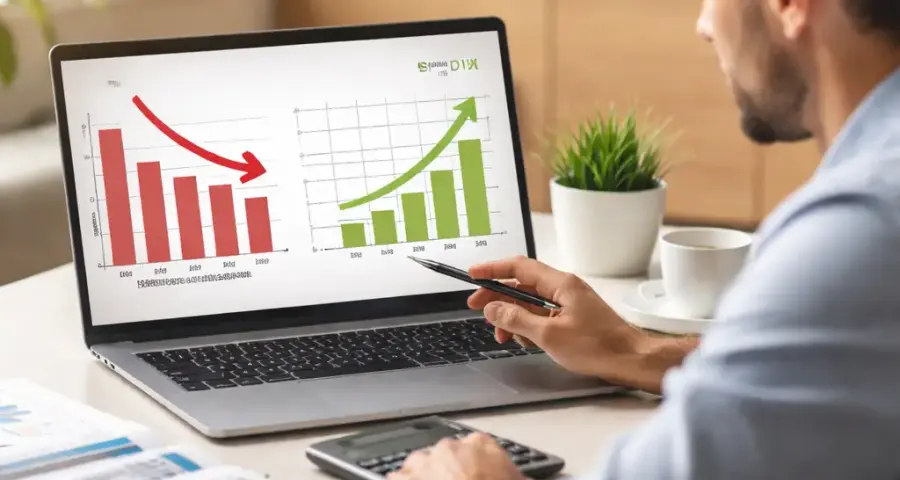
The old way of setting a budget, launching ads, and waiting for results is dead. Today, the most profitable advertisers use AI to make every dollar work harder. Whether you are running AI Facebook ads, AI Google Ads optimization, or scaling an ecommerce brand, the goal is the same: reduce ad spend while increasing ROI. Let me walk you through the exact strategies I use with my clients.
1. Use AI Predictive Analytics to Forecast Campaign Performance
Before you spend a single peso, AI models analyze historical data, seasonality, and competitor activity to predict which campaigns will yield the best return. I rely on tools like Google Analytics 4’s predictive metrics and specialized platforms such as AI marketing analytics software to simulate outcomes.

Actionable Tip: Feed your last 12 months of campaign data into an AI forecasting tool. It will show you the optimal budget split across channels before you even set up a campaign.
Outcome: Clients see a 20–30% reduction in wasted spend from day one while maintaining or improving lead volume.
2. Automate Audience Segmentation with AI
Manual audience creation is slow and prone to bias. AI clustering algorithms analyze user behavior, demographics, and purchase history to create hyper-segmented audiences automatically. This is the heart of AI audience targeting that actually works.

Example: An ecommerce client selling fitness gear used AI to segment visitors into “price-sensitive first-time buyers” and “loyal high-value members.” Each group received distinct messaging, reducing CPA by 28%.
3. Implement AI-Powered Bidding Strategies
Platforms like Google Ads now offer AI bidding strategies such as Target CPA and Target ROAS. These algorithms adjust bids in real time based on thousands of signals — device, location, time of day, weather, and more.
Actionable Tip: Switch from manual bidding to “Maximize Conversions with a Target CPA” in Google Ads. Let the AI campaign optimization engine do the heavy lifting.
4. Optimize Ad Creatives with AI Tools
**AI ad creatives** generation is a game-changer. Tools like Jasper, AdCreative.ai, and Canva’s AI features produce dozens of headline and image variations in minutes. I also use predictive scoring to test which creatives will perform best before launching.
Outcome: One SaaS client reduced creative production time by 70% and improved click-through rates by 40% after switching to AI-generated ads.
5. Apply AI for Budget Optimization Across Channels
Instead of setting a fixed budget for Facebook, Google, and LinkedIn, AI budget optimization tools dynamically shift spend toward the best-performing channel at any moment. This is often called “budget pacing” or “intra-day reallocation.”
Tool: Platforms like Smartly.io and Madgicx use machine learning to redistribute daily budgets automatically.
6. Use AI-Driven Retargeting to Recover Lost Traffic
**AI retargeting strategies** go beyond showing the same product to everyone who visited. AI models calculate the optimal frequency, timing, and offer for each user. They also identify users who are “almost ready to buy” and adjust bids accordingly.
Example: A travel agency used AI retargeting to show dynamic hotel deals to users who had abandoned the booking form. The campaign saw a 3x ROAS improvement.
7. Leverage AI Conversion Optimization on Landing Pages
**AI conversion optimization** is not just about ads — it is about what happens after the click. Tools like Google Optimize (now part of GA4) and VWO use AI to run multivariate tests on headlines, CTAs, and images.
Actionable Tip: Let AI decide which landing page variant to show a particular segment based on past behavior. You will see higher conversion rates without wasting budget on low-performing pages.
8. Integrate AI Marketing Automation for Lead Nurturing
After a user clicks your ad, AI marketing automation platforms like HubSpot, Marketo, and ActiveCampaign score leads, send personalized follow-up emails, and trigger SMS sequences based on engagement level.
Outcome: My agency clients typically see a 50% increase in qualified leads without increasing ad spend, because automation catches prospects who would otherwise slip away.
9. Use AI Customer Insights to Refine Targeting
**AI customer insights** are drawn from CRM data, social media, and purchase history. Natural language processing (NLP) identifies pain points and motivations that you can use in ad copy. For a related guide, see SEO vs Social Media Marketing: 5 Key Differences for Smart Marketers.
Example: A B2B software company used AI to analyze support chat logs. They discovered customers cared most about “integration ease.” They rewrote their ads to highlight this benefit, dropping CPC by 22%.
10. Deploy AI for Facebook and Google Ads Optimization
**Can AI improve Facebook and Google Ads performance?** Absolutely. Automated rules in Facebook Ads Manager and Google Ads scripts handle routine tasks like pausing underperforming ad sets, increasing bids on high-ROI audiences, and testing new placements.
Actionable Tip: Set up a rule in Facebook Ads: “If CPA exceeds X by 20% for 3 days, pause the ad set and notify me via email.”
11. Run AI-Powered A/B Testing at Scale
**AI ad testing** tools like AdEspresso and Qustino automate the creation of hundreds of variations and then statistically analyze results. This eliminates human bias and speeds up the “winning ad” discovery process.
Outcome: A dropshipping client tested 150 ad variations in one week. AI identified the top 3 performers, which drove 80% of the total conversions.
12. Use AI Sales Funnel Optimization to Prevent Drop-Off
**AI sales funnel optimization** maps the entire customer journey and predicts where users will drop off. Then, it triggers interventions — such as a pop-up offer or a chatbot — at the exact moment risk is highest.
Tool: Clearbit and Drift combine AI with real-time data to personalize the funnel experience.
13. Automate Customer Acquisition with AI Lookalike Audiences
**AI customer acquisition** via lookalike modeling is one of the fastest ways to scale. Platforms like Facebook and LinkedIn use machine learning to find new users who resemble your best existing customers.
Actionable Tip: Use a seed audience of at least 1,000 high-value customers. The AI will produce a lookalike set that often outperforms interest-based targeting by 2–3x.
14. Predict and Reduce Wasted Spend with AI
**Can AI reduce wasted ad spend?** Yes. AI anomaly detection algorithms monitor campaign metrics in real time and flag unusual patterns — like a sudden spike in clicks without conversions — so you can pause or adjust before burning through your budget.
Example: A local business client saved $800 in one week after AI flagged a click farm sending bot traffic to their Google Ads.
15. Use AI for Personalized Advertising at Scale
**AI personalized advertising** delivers unique ad experiences to individual users. Dynamic product ads on Facebook and Google are the most common example, but AI goes further by customizing the headline, image, and offer based on a user’s browsing history.
Outcome: An online retailer achieved a 60% higher conversion rate on personalized ads compared to standard ads.
16. Improve Lead Generation While Lowering Costs with AI
**Can AI improve lead generation while lowering costs?** Yes, through intelligent form pre-fill, predictive lead scoring, and automated follow-up. Platforms like Unbounce and Leadfeeder leverage AI to identify the highest-intent leads before you bid on them.
Actionable Tip: Set up AI lead scoring so you only bid aggressively on users with a score above 70.
17. Stay Ahead with AI Advertising Trends 2026
The future of AI advertising points toward fully autonomous campaigns where AI handles everything from strategy to creative to budget allocation. In 2025–2026, expect wider adoption of generative AI for ad copy, voice search ad optimization, and predictive audience expansion.
Actionable Tip: Start testing AI-driven ad copy generation tools now, so you are ready when the shift accelerates.
18. Adopt AI Performance Marketing for Enterprise Growth
**AI performance marketing** platforms combine all the above strategies into one dashboard. Tools like Albert, PixelMe, and Acquisio automate campaigns end-to-end, using machine learning to optimize every variable.
Outcome: A media buying agency I consulted for reduced management time by 40% and simultaneously improved ROAS by 25% across all client accounts.
Useful Resources
- Google Ads Smart Bidding Guide – Official documentation on AI-powered bid strategies.
- Facebook Automated Rules Overview – Learn how to automate Facebook Ads management with AI.
Frequently Asked Questions About Reduce Ad Spend While Increasing ROI
How can AI reduce advertising costs ?
AI reduces costs by automating budget allocation, eliminating wasted spend on underperforming audiences, and optimizing bids in real time based on conversion probability.
What are the best AI tools for ad optimization ?
Top tools include Google Ads Smart Bidding, Facebook Automated Rules, Madgicx, AdEspresso, Jasper for creatives, and Albert for full campaign automation.
How does AI improve marketing ROI ?
AI improves ROI by predicting which campaigns will convert, personalizing ad experiences, and reducing cost per acquisition through smarter targeting and bidding.
Can AI improve Facebook and Google Ads performance ?
Yes. AI-driven bidding, audience segmentation, and creative optimization consistently improve CTR and conversion rates on both platforms.
What are AI powered advertising strategies ?
Strategies include predictive budget allocation, automated audience segmentation, dynamic creative optimization, real-time bid adjustments, and AI-driven retargeting.
How can businesses use AI to reduce ad spend ?
Businesses can use AI to pause underperforming ads automatically, shift budget to high-ROI channels, and forecast campaign outcomes before spending.
What are smart AI campaign optimization tactics?
Smart tactics include using AI for A/B testing at scale, setting automated rules for bid adjustments, and leveraging predictive analytics for audience targeting. For a related guide, see 28 Hyper-Personalization Tactics Using AI That Actually Work.
How does AI improve audience targeting ?
AI uses clustering algorithms and lookalike modeling to find high-intent users who match your best customers, reducing wasted impressions.
What are the latest AI advertising trends in 2026 ?
Trends include fully autonomous campaigns, generative AI for ad creative, voice search ad optimization, and hyper-personalized real-time ads.
Can AI automate ad bidding strategies ?
Yes. Platforms like Google Ads and Facebook offer AI-powered bidding strategies that adjust bids per auction based on conversion probability.
How do marketers use AI for conversion optimization ?
Marketers use AI to run multivariate tests, personalize landing pages, and trigger on-site interventions like pop-ups when users show exit intent.
What are affordable AI advertising tools for beginners ?
Beginner-friendly tools include Google Ads Smart Bidding (free), Facebook Automated Rules (free), Canva AI for creatives, and AdEspresso for testing.
How can small businesses use AI for ads ?
Small businesses can start with AI-powered budget optimization in Google Ads, use automated rules in Facebook, and try AI-generated ad copy from tools like Jasper.
What role does AI play in predictive advertising analytics ?
AI analyzes historical data and market signals to forecast campaign performance, helping advertisers allocate budgets to the most promising channels.
Can AI improve lead generation while lowering costs ?
Yes. AI lead scoring and automated follow-up ensure you only spend on high-intent prospects, reducing CPA and increasing lead quality.
How does AI optimize ad creatives ?
AI generates multiple creative variations, predicts performance, and selects the best combinations of headlines, images, and CTAs for each audience segment.
What are AI driven retargeting strategies ?
AI retargeting uses dynamic product ads, optimal frequency capping, and personalized offers based on user behavior and purchase intent.
How can startups use AI for advertising campaigns ?
Startups can use AI to stretch limited budgets by automating bidding, focusing on lookalike audiences, and testing creatives quickly with machine learning.
What are the best AI tools for ecommerce ads ?
Best tools include Google Shopping AI, Facebook Dynamic Ads, Madgicx for Amazon, and personalization engines like Nosto.
Can AI improve click through rates and conversions ?
Yes. AI optimizes ad copy, images, and audience targeting in real time, which typically lifts CTR by 20–40% and conversion rates by 15–30%.