Email Marketing Campaigns Key Takeaways
With the right AI-powered tools, you can now build and launch Email Marketing Campaigns in minutes instead of days.
- AI dramatically reduces the time needed to craft, segment, and optimize email campaigns.
- You can implement AI-driven personalization, abandoned cart recovery, drip sequences, and re-engagement flows without technical expertise.
- These 40 campaign ideas cover everything from welcome sequences to behavioral triggers, giving you a complete playbook for 2026 and beyond.
Why AI Transforms Email Marketing Campaigns
For nearly two decades, I’ve seen email marketing evolve from batch-and-blast blasts to hyper-personalized conversational streams. The biggest shift? Artificial intelligence. Today, AI email marketing campaigns allow you to automate copywriting, segment audiences based on behavior, predict the best send times, and even generate subject lines that outperform human-written ones. At jingrey.com, I help businesses — from ecommerce stores to SaaS companies — leverage these technologies to scale their outreach without sacrificing quality.
Key Benefits of AI Email Automation
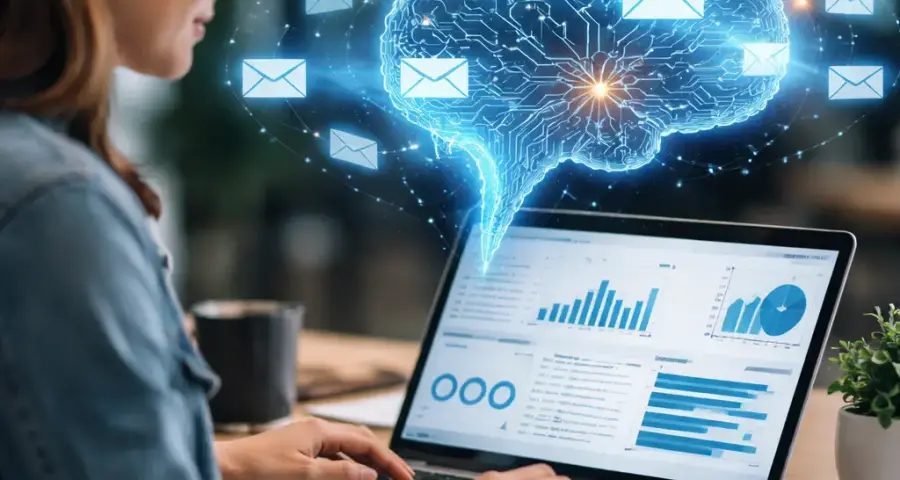
AI email automation takes over repetitive tasks: writing follow-ups, scheduling sequences, and testing variations. Instead of spending hours crafting individual emails, you feed your strategy into an AI tool, and it generates multiple versions tailored to each segment. This frees you to focus on higher-level strategy, creative direction, and analysis.

How AI Email Copywriting Boosts Engagement
Tools like ChatGPT, Jasper, and Copy.ai have made AI email copywriting accessible to everyone. I’ve used them to create subject lines, body copy, and CTAs that mirror the brand voice — in seconds. When you combine copywriting with AI email personalization — inserting the recipient’s name, past purchase behavior, or browsing history — you get emails that feel handcrafted at scale.

40 AI-Driven Email Marketing Campaigns You Can Launch Today
Below are 40 campaigns I’ve designed (or tweaked using AI) for clients across industries. Each entry includes a tactic, a real-world example, and a practical implementation tip. These are not theoretical — they come from actual work I’ve done through jingrey.com.
1. AI-Powered Welcome Email Campaigns
Tactic: Use AI welcome email campaigns to greet new subscribers with a personalized message that includes their name, signup source, and a tailored offer.
Example: An online bookstore sends a welcome email with book recommendations based on genres the subscriber browsed before signing up. AI pulls data from the browsing session and populates the email dynamically.
Tip: Use a tool like Mailchimp’s AI-driven Content Optimizer to A/B test your welcome subject line and preview text.
2. AI Abandoned Cart Emails
Tactic: Trigger AI abandoned cart emails automatically when a shopper leaves items in their cart without purchasing. AI predicts the optimal time to send (usually 1 hour after abandonment) and generates a compelling subject line.
Example: A fashion retailer emails “You left something behind — 10% off just for you” with images of the exact products.
Tip: Use AI to test two variations: one emphasizing urgency (“Only 3 left”) vs. one focusing on value (“Free shipping with this item”).
3. AI Lead Nurturing Email Sequences
Tactic: Build an automated AI lead nurturing sequence that sends educational content based on where the lead is in the buyer’s journey. AI analyzes past email clicks and website visits to determine next steps.
Example: A SaaS company sends a 5-email sequence: problem awareness → solution overview → case study → demo invite → free trial.
Tip: Use AI email sequences that score leads dynamically; if someone clicks the demo link, skip the remaining nurture emails and send a calendar invite.
4. AI-Drive Re-Engagement Campaigns
Tactic: Recover inactive subscribers with AI re engagement campaigns. AI identifies users who haven’t opened an email in 90 days and creates a “We miss you” message with a special incentive.
Example: A fitness app sends “Come back — your progress is waiting” with a free week of premium access.
Tip: Use AI to determine whether to send a discount, a helpful tip, or a survey to re-engage each segment.
5. AI Promotional Emails for Flash Sales
Tactic: Generate AI promotional emails for limited-time sales. AI can craft urgency-driven copy and even choose the best subject line based on past open rates for similar promotions.
Example: An electronics store sends “24-hour flash sale — 30% off laptops” with dynamic product recommendations based on browsing history.
Tip: Use AI email design tools like Postcards or Canva’s AI features to create on-brand email templates in minutes.
6. AI Product Launch Emails
Tactic: Create AI product launch emails that build anticipation. The AI generates teaser emails, launch day announcements, and post-launch follow-ups — all in a single campaign.
Example: A skincare brand sends a countdown series: 7 days before (ingredient reveal), 3 days before (expert quote), launch day (buy now).
Tip: Use AI email workflow automation to segment your list into “warm” leads (who clicked teaser) and “cold” leads for different launch sequences.
7. AI Behavioral Email Marketing
Tactic: Leverage AI behavioral email marketing to send emails triggered by specific on-site actions: viewed a product page three times, added an item to a wishlist, or abandoned a signup form.
Example: A travel site emails a user who viewed a Paris hotel four times: “Ready to book? Here’s a discount on your Paris stay.”
Tip: Use AI to decide the best channel — if the user didn’t open the email, automatically trigger an SMS or push notification instead.
8. AI Personalized Newsletter Creation
Tactic: Automate AI newsletter creation by feeding your AI tool a topic, a few links, and your brand voice. AI generates a polished newsletter with a subject line, headlines, and personalized recommendations.
Example: A marketing blog sends a weekly “AI insights” newsletter — AI picks the top 3 articles based on each subscriber’s reading history. For a related guide, see 18 Ways AI is Making Personalized Marketing Actually Scalable.
Tip: Use AI email personalization to swap out the featured article based on what the subscriber clicked last time.
9. AI Drip Campaigns for Course Creators
Tactic: Set up AI drip campaigns that deliver course lessons over time. AI determines the optimal sending schedule (e.g., every 3 days) based on when students are most likely to open.
Example: An online course on digital marketing sends Day 1: welcome video, Day 4: module 1 worksheet, Day 7: quiz reminder.
Tip: Use AI campaign optimization to adjust the drip pace: if a student finishes a module early, advance the next lesson.
10. AI Sales Emails for B2B Outreach
Tactic: Write AI sales emails that personalize the subject line and first sentence using company name, industry, and pain point from a LinkedIn profile or CRM data.
Example: “Hi [name], noticed [company] is hiring for [role] — our tool cuts hiring time by 40%.”
Tip: Use AI email tools like Lavender or SmartWriter to analyze the prospect’s website and generate a hyper-relevant opening.
11. AI Ecommerce Email Marketing for Post-Purchase Upsells
Tactic: Deploy AI ecommerce email marketing campaigns that recommend complementary products after a purchase. AI uses collaborative filtering to suggest items other buyers also purchased.
Example: A coffee brand emails after a coffee machine purchase: “Make the perfect cup — try our sampler pack of beans.”
Tip: Use AI customer journey automation to time the upsell email 3 days after delivery, not immediately.
12. AI Customer Retention Campaigns
Tactic: Build AI customer retention campaigns that identify at-risk customers (e.g., no purchase in 60 days) and send a “We value you” message with a loyalty reward.
Example: A subscription box service emails: “Your next box could be 50% off — here’s your code.”
Tip: Use AI retention marketing to test whether a discount or a free gift drives higher re-purchase rates for each segment.
13. AI Lead Generation Emails for Webinars
Tactic: Create AI lead generation emails that promote a webinar. AI writes the invite, follow-up, and thank-you email — all personalized with the recipient’s name and role.
Example: A B2B agency sends “Join our free SEO webinar — learn how to rank in 2026” with a calendar link.
Tip: Use AI email analytics to see which email element (subject, CTA, image) drove the most registrations.
14. AI Onboarding Email Sequences
Tactic: Automate a series of onboarding emails using AI email workflow automation that guides new users through product features based on their signup answers.
Example: A project management tool emails: “Step 1: Create your first project,” “Step 2: Invite your team,” “Step 3: Set a deadline.”
Tip: Use AI to detect which step a user skipped and send a one-off helper email.
15. AI Segmented Birthday and Anniversary Emails
Tactic: Use AI audience segmentation to send automated birthday or anniversary emails with a personalized offer. AI can even generate a fun subject line like “Happy birthday [name] — your gift awaits!”
Example: A restaurant chain sends “Free dessert on your birthday — just show this email.”
Tip: Set up the trigger 7 days before the date to allow users to plan.
16. AI Replenishment Reminder Emails
Tactic: Use AI email automation to send reminders when a consumable product is likely running out based on previous purchase cycles.
Example: A pet food subscription emails: “Your dog’s food is almost gone — reorder now for 15% off.”
Tip: AI can analyze the time between orders and predict exactly when to send the reminder.
17. AI Cross-Sell Email Campaigns
Tactic: Generate AI personalized email campaigns that cross-sell related items. AI analyzes the purchase history of all customers to recommend pairs.
Example: A bookstore emails after a fiction novel purchase: “Readers who bought [book] also loved [second book].”
Tip: Use AI email tools like Klaviyo or Omnisend to automate this based on SKU relationships.
18. AI Survey and Feedback Emails
Tactic: Create AI marketing automation workflows that send a survey after a purchase or support interaction. AI writes the email and even analyzes open-ended responses for sentiment.
Example: “How did we do? Rate your recent order in 60 seconds.”
Tip: Use AI to trigger a follow-up email if the customer rates below 4 stars — with a direct link to customer support.
19. AI Event Invitation and Reminder Campaigns
Tactic: Build AI marketing campaigns for event invitations. AI crafts the invite, sends reminders 1 week and 1 day before, and follows up after the event.
Example: “Don’t forget — our live Q and A starts tomorrow at 2 PM ET. Here’s the link.”
Tip: Use AI email analytics to see which email (invite vs. reminder) had the highest click rate.
20. AI Customer Win-Back Campaigns After Cancelation
Tactic: Send an AI re engagement campaign after a user cancels their subscription. AI analyzes the reason (if provided) and crafts a personalized offer to win them back.
Example: “We’re sorry to see you go — here’s 30 days free to try again.”
Tip: Use AI to segment canceled users by reason — pricing, features, or lack of use — and tailor the offer accordingly.
21. AI Daily Deal or Flash Sale Emails
Tactic: Automate AI promotional emails that showcase a daily deal. AI selects the product with the highest margin or lowest inventory and writes the copy.
Example: “Today only — 50% off this smartwatch. Shop now!”
Tip: Use AI conversion optimization to test two price points (e.g., $49 vs. $39) to see which drives more purchases.
22. AI Post-Purchase Thank You with Social Proof
Tactic: Send an immediate thank-you email that includes user-generated content (reviews or photos) using AI email personalization.
Example: “Thanks for your order! See how others are styling [product].”
Tip: AI can pull recent reviews for that specific product and insert a quote.
23. AI Abandoned Browse Emails
Tactic: Trigger an email when a user views a product but leaves without adding to cart. AI email automation can include the exact product image and a short description.
Example: “Saw something you liked? This [product] is still available in your size.”
Tip: Use AI to test sending this email 2 hours vs. 24 hours after the browse session.
24. AI Re-Order Emails for Repeat Customers
Tactic: Automate a re-order email for products customers buy regularly. AI customer retention algorithms estimate the reorder date based on past intervals.
Example: “Time to restock [product] — one-click reorder here.”
Tip: Include a subscription option in the email to avoid future manual reorders.
25. AI Newsletter With Dynamic Content Blocks
Tactic: Use AI newsletter creation to build emails with dynamic blocks that change based on user preferences, location, or past clicks.
Example: A travel newsletter shows beach destinations to subscribers who previously clicked on beach articles, and city guides to others.
Tip: Use AI to A/B test which block order (articles vs. deals) increases click-through rate.
26. AI Thank You With Referral Ask
Tactic: After a purchase, send an email that thanks the customer and asks for a referral. AI email copywriting can craft a natural, not salesy, request.
Example: “Love [product]? Share it with a friend — you both get 10% off.”
Tip: Use AI to personalize the referral incentive amount based on the customer’s lifetime value.
27. AI Price Drop Alerts
Tactic: Send AI email automation that monitors product prices and notifies subscribers when an item they viewed drops in price.
Example: “The [product] you wanted is now $20 cheaper — limited time!”
Tip: Use AI to decide the threshold — notify at 10% off for low-margin items, 20% for high-margin.
28. AI Educational Email Sequences for Lead Nurturing
Tactic: Build a 4-email sequence that educates subscribers about a problem, then introduces your solution. AI lead nurturing helps you tailor the content to the subscriber’s stage.
Example: Email 1: “3 signs your SEO strategy is outdated.” Email 2: “How to fix on-page SEO.” Email 3: “Our case study: 200% traffic increase.” Email 4: “Book a free audit.”
Tip: Use AI to score which educational topic gets the highest open rate and create more content around it.
29. AI Account Update Confirmation Emails
Tactic: Automate transactional emails (password change, email update, plan upgrade) with AI email workflow automation to maintain brand voice.
Example: “Your plan has been upgraded — here’s what’s new.”
Tip: Use AI to insert personalized tips for the new plan tier.
30. AI Exclusive Access or VIP Emails
Tactic: Send a VIP email to your most loyal segment — those in the top 10% of spend. AI audience segmentation makes this automatic.
Example: “You’re invited to our private sale — 24 hours early access.”
Tip: Use AI to create a unique discount code for each VIP member to track redemption.
31. AI Seasonal Campaigns (Holiday, Summer, Back-to-School)
Tactic: Create templates for major seasons. AI email marketing campaigns can generate holiday-specific subject lines and offers, then schedule them ahead of time.
Example: “Christmas countdown: 12 days of deals — day 1: 20% off [product].”
Tip: Use AI to forecast which products are most likely to sell during the season and feature them.
32. AI Feedback Follow-Up for Customer Service Calls
Tactic: After a customer service interaction, send a feedback email using AI customer journey automation. AI can analyze the call transcript and personalize the email.
Example: “We hope [agent name] resolved your issue. Please rate your experience.”
Tip: Use AI to flag negative feedback and automatically escalate to a manager.
33. AI Multi-Channel Follow-Up Sequence
Tactic: If a user opens an email but doesn’t click, have AI schedule a follow-up email with a different angle. If still no click, trigger a Facebook Messenger or WhatsApp message.
Example: “I saw you read our guide — would you like a free demo?”
Tip: Use AI to track which channel drives the highest conversion per segment.
34. AI Webinar On-Demand Access Emails
Tactic: For those who registered but didn’t attend, send a “watch replay” email. AI email automation can automatically generate a short highlight reel from the recorded webinar.
Example: “Missed the live event? Watch the top 3 moments here (5-minute recap).”
Tip: Use AI to personalize the recap based on the registrant’s industry.
35. AI Renewal Reminder Emails
Tactic: For subscription-based businesses, send a renewal reminder 3 days before expiry. AI email personalization can include the user’s usage stats to demonstrate value.
Example: “Your subscription renews in 3 days. This year, you saved 40 hours using [product].”
Tip: Use AI to test a “save 20% with annual plan” vs. “monthly renewal” message.
36. AI Cart Recovery with Social Proof
Tactic: Combine an AI abandoned cart email with social proof: “12 people bought this in the last hour.” AI can pull live inventory data.
Example: “Size medium is selling fast — grab it now before it’s gone.”
Tip: Use AI to insert the exact number of product views or purchases in real time.
37. AI Location-Based Event Invitations
Tactic: Use AI audience segmentation to send event invitations only to subscribers in a specific city. AI can generate the email content based on the local venue and weather.
Example: “Join us at [local venue] on [date] — we’re bringing the [product] experience to you.”
Tip: Use AI to adjust the email tone based on the city’s culture (e.g., formal vs. casual).
38. AI Personalized Abandoned Cart for Logged-In Users
Tactic: For logged-in users, send an email that references their past purchases: “We noticed you left [item] in your cart — based on your love for [similar product], we think you’ll enjoy it.”
Example: A book store cross-sells: “You bought [thriller A], try [thriller B] as well.”
Tip: Use AI to decide whether to offer a discount on the current cart item or a free shipping coupon.
39. AI Exit-Intent Email Popup and Follow-Up
Tactic: When a user shows exit intent on a site (mouse moving toward close button), trigger an email popup offering a discount. AI can generate the popup copy and the follow-up email if the user doesn’t complete the capture.
Example: “Wait! Get 15% off your first order — just enter your email.”
Tip: Use AI to test different discount levels (10% vs. 15%) to maximize conversion without eroding profit margins.
40. AI Monthly Performance Summary and Next Steps
Tactic: Send a monthly email summarizing the user’s activity within your platform (e.g., “You sent 150 emails, opened 45 campaigns, and achieved a 25% click rate”). AI email analytics prepopulates the data.
Example: “Your top-performing email last month was [subject line] — replicate its format for better results.”
Tip: Use AI to offer one personalized recommendation for improvement next month.
How to Choose the Best AI Email Marketing Tools
With dozens of tools available, selecting the right one for your Email Marketing Campaigns can feel overwhelming. Here are three criteria I share with clients at jingrey.com.
Evaluate Your Campaign Needs
Do you need AI email automation for simple welcome flows, or complex AI drip campaigns with branching logic? Start with a tool that matches your current complexity, then scale.
Check for AI Email Personalization Features
Look for tools that offer dynamic content blocks, behavioral triggers, and predictive analytics. AI email personalization is the single biggest driver of engagement in 2026.
Consider Budget and Learning Curve
Many AI email tools have free tiers or affordable plans for small businesses. I recommend testing 2-3 tools before committing to a long-term contract. AI marketing automation should save time, not add complexity.
| Tool | Best For | Key AI Feature | Starting Price |
|---|---|---|---|
| Mailchimp | Small businesses | Content Optimizer | $13/mo |
| Klaviyo | Ecommerce stores | Predictive analytics | $20/mo |
| ActiveCampaign | Lead nurturing | AI split testing | $15/mo |
| ConvertKit | Creators and course sellers | Triggered sequences | $29/mo |
| HubSpot | Enterprise | AI copy and send time | $50/mo |
Useful Resources
Here are two resources I often recommend to my clients for deeper dives into the AI tools mentioned above:
- Mailchimp’s AI-Powered Tools — Learn how their Content Optimizer and send-time optimization work.
- ActiveCampaign’s Guide to AI Marketing Automation — A detailed resource for building automated workflows with AI.
Frequently Asked Questions About Email Marketing Campaigns
How can AI improve email marketing campaigns ?
AI email marketing campaigns improve performance by automating personalization, optimizing send times, generating high-performing subject lines, and segmenting audiences based on behavior. For example, AI can analyze past click data to predict which product recommendation will get the highest engagement.
What are the best AI tools for email marketing?
The best AI email tools include Mailchimp for small businesses, Klaviyo for ecommerce, ActiveCampaign for lead nurturing, ConvertKit for creators, and HubSpot for enterprise. Each offers unique AI features like predictive analytics, send-time optimization, and content generation.
Can AI create email campaigns automatically?
Yes, tools powered by AI marketing automation can generate entire campaigns — from subject lines to body copy — based on a brief you provide. You simply set goals, define your audience, and the AI drafts a complete sequence you can review and launch.
How do marketers use AI for email personalization?
Marketers use AI email personalization to insert dynamic content such as the recipient’s name, past purchase history, browsing behavior, and location. AI can also tailor the entire email layout based on the user’s segment — for example, showing premium products to high-value customers.
What are AI powered email marketing strategies?
AI-powered strategies include behavioral triggers, predictive send-time optimization, dynamic content blocks, A/B testing at scale, and automated lead scoring. These AI powered email marketing strategies help deliver the right message to the right person at the right time. For a related guide, see 7 Smart AI Hyperlocal Marketing Strategies to Boost Local Sales.
How can small businesses use AI for email marketing?
Small businesses can use affordable AI email tools like Mailchimp or SendGrid to create welcome sequences, abandoned cart recovery, and promotional campaigns. AI small business marketing levels the playing field, allowing smaller teams to produce results similar to larger competitors.
What are the best AI email automation tools?
For AI email automation, top tools include ActiveCampaign (advanced automation maps), Klaviyo (ecommerce flows), and HubSpot (enterprise workflows). They let you build conditional sequences, lead scoring, and multi-channel follow-ups.
Can AI generate high converting email copy?
Yes. AI email copywriting tools like Jasper, Copy.ai, and ChatGPT can generate copy that matches your brand voice and includes persuasive elements like urgency, social proof, and clear CTAs. Always edit for nuance, but the base quality is often ready to deploy.
How does AI improve email open rates?
AI improves open rates by optimizing subject lines, sender names, and send times based on historical data. AI email subject line generator tools test multiple variations against past performance to pick the most likely to be opened.
What are the latest email marketing trends in 2026?
Key trends include hyper-personalization powered by AI behavioral email marketing, predictive analytics for send timing, interactive email elements (polls, ACF galleries), and privacy-first segmentation that respects data regulations.
What is Email Marketing Campaigns ?
Email Marketing Campaigns is covered in the guide above with practical context, useful examples, and details readers can use to make a better decision.
Why is Email Marketing Campaigns important?
Email Marketing Campaigns is covered in the guide above with practical context, useful examples, and details readers can use to make a better decision.
How does Email Marketing Campaigns work?
Email Marketing Campaigns is covered in the guide above with practical context, useful examples, and details readers can use to make a better decision.
Who should care about Email Marketing Campaigns ?
Email Marketing Campaigns is covered in the guide above with practical context, useful examples, and details readers can use to make a better decision.
What are the main benefits of Email Marketing Campaigns ?
Email Marketing Campaigns is covered in the guide above with practical context, useful examples, and details readers can use to make a better decision.
What are the common mistakes with Email Marketing Campaigns ?
Email Marketing Campaigns is covered in the guide above with practical context, useful examples, and details readers can use to make a better decision.
How do beginners start with Email Marketing Campaigns ?
Email Marketing Campaigns is covered in the guide above with practical context, useful examples, and details readers can use to make a better decision.
What should readers know before choosing Email Marketing Campaigns ?
Email Marketing Campaigns is covered in the guide above with practical context, useful examples, and details readers can use to make a better decision.
How can Email Marketing Campaigns be compared with other options?
Email Marketing Campaigns is covered in the guide above with practical context, useful examples, and details readers can use to make a better decision.
What makes Email Marketing Campaigns different?
Email Marketing Campaigns is covered in the guide above with practical context, useful examples, and details readers can use to make a better decision.