
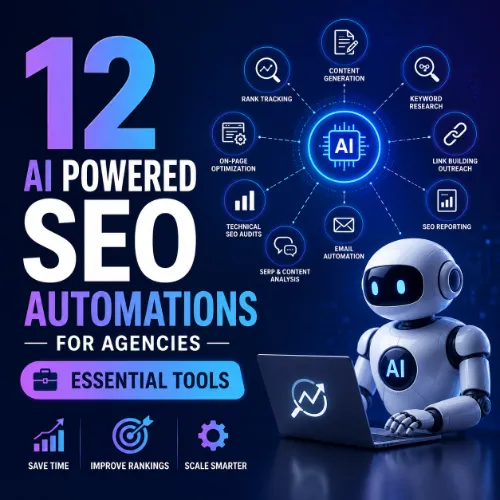
AI powered SEO automations for agencies Key Takeaways
Artificial intelligence is transforming how agencies handle search engine optimization by automating repetitive tasks like keyword clustering, content brief generation, and rank tracking.
- AI-powered SEO automations for agencies reduce manual labor on tasks such as backlink audits, SERP analysis, and content gap identification.
- Smart automation tools can handle SEO reporting, competitor monitoring, and technical site checks without human oversight.
- Implementation tips in each section help you integrate these automations into existing workflows quickly.
Why AI Powered SEO Automations for Agencies Are a Game-Changer
SEO agencies face constant pressure to deliver faster results with leaner teams. Manual processes for keyword research, link building, and technical audits eat hours that could be spent on strategy. AI-powered SEO automations for agencies bridge this gap by handling the grunt work, letting your team focus on high-value analysis and client relationships.
Automation also reduces human error in repetitive tasks. Tools driven by machine learning can scan thousands of pages, identify patterns, and suggest optimizations in seconds. The result: more consistent output, happier clients, and stronger campaign performance across the board.
What Sets AI-Driven SEO Tools Apart
Unlike simple script-based automations, AI tools adapt based on real data. They learn from search engine updates, competitor shifts, and content performance to refine recommendations. This adaptability makes them invaluable for agencies managing diverse niches and constantly changing SERPs. For a related guide, see 10 Essential SEO Terms Every Beginner Should Know.
12 AI-Powered SEO Automations Every Agency Should Use
1. Automated Keyword Clustering and Topic Grouping
Sorting hundreds of keywords into thematic clusters is tedious. AI tools like Semrush and Ahrefs now offer automated clustering that groups keywords by search intent and topical relevance. This saves hours of manual sorting and helps you build content strategies that target entire topic clusters, not just isolated terms.
Implementation tip: Upload your raw keyword list into a tool like Semrush Keyword Manager or use Ahrefs Keyword Explorer’s group-by-topic feature to generate clusters for each client campaign.
2. AI-Generated Content Briefs with Search Intent Analysis
Creating detailed content briefs for writers is essential but time-consuming. AI-powered SEO tools can analyze top-ranking pages for any keyword and generate a brief that includes recommended headings, word count, question targets, and semantic terms. This ensures writers cover competition thoroughly.
Implementation tip: Use Frase or MarketMuse to auto-generate briefs. Export the brief directly to Google Docs and assign it to your content team.
3. Automated Rank Tracking with Smart Alerts
AI-driven rank trackers go beyond simple position snapshots. They detect ranking volatility, correlate it with Google algorithm updates, and alert you when a client’s page drops significantly. Some tools even predict rank changes based on SERP feature shifts.
Implementation tip: Set up rank tracking in AccuRanker or Wincher with daily checks for top 50 keywords per campaign. Configure alerts to notify you when a page drops below page three. For a related guide, see Seo Mistakes Beginners Should Avoid: 7 Trusted Checks Before You Decide.
4. Competitor Monitoring and Gap Analysis Automation
Keeping an eye on competitor moves is vital but easily neglected. AI tools automate competitor content tracking, backlink changes, and keyword shifts. You get weekly digests that show which terms competitors are gaining ground on and where gaps exist for your clients.
Implementation tip: Use the “Competitors” report in Ahrefs to set up daily alerts for new competitor content and backlinks. Review reports weekly with your account managers.
5. Backlink Audit and Disavow Automation
Manual backlink audits can take days for larger sites. AI automates the identification of toxic links, evaluates them against Google’s guidelines, and generates a ready-to-upload disavow file. Some tools also prioritize which links to remove first based on risk level.
Implementation tip: Run a backlink audit in Semrush or Majestic monthly. Use their automated disavow generation tool to produce the file, then review it before submitting to Google Search Console.
6. Technical SEO Crawl and Issue Detection Automation
AI-powered crawlers learn to distinguish between critical, moderate, and cosmetic issues. They prioritize fixes by impact and can even re-crawl after fixes to confirm resolution. This turns a tedious checklist into a dynamic, ongoing maintenance task.
Implementation tip: Schedule weekly automated crawls in DeepCrawl or Sitebulb. Configure the tool to email the technical team a sorted list of high-priority issues each Monday.
7. Automated Internal Linking Suggestions
Internal linking structures weaken as sites grow. AI tools analyze page relationships and suggest contextually relevant internal links that improve crawlability and pass link equity. Some even add the links automatically with your approval.
Implementation tip: Install the Link Whisper plugin on WordPress sites. Run the suggestion report weekly and approve high-relevance links in bulk.
8. Content Optimization and Readability Scoring
Agencies managing multiple writers need consistency. AI tools score content against top performers for readability, term usage, and topical depth. They provide real-time suggestions for improvement so editors can fix issues before publishing.
Implementation tip: Use Clearscope or Surfer SEO’s real-time content editor. Set a minimum score threshold per client and require all articles to pass before scheduling.
9. Automated Schema Markup Generation
Structured data is still a pain point for many agency teams. AI can detect the most relevant schema types for each page and generate the markup in JSON-LD format. Some tools even test the markup against Google’s Rich Results Test automatically.
Implementation tip: Use the schema plugin Merkle or Yoast’s schema features. For custom pages, try AI schema generators like Schema App.
10. Automated SEO Reporting with Insights
Client reporting can drain hours each month. AI-powered reporting tools pull data from multiple sources (Google Search Console, rank trackers, analytics) and generate narrative insights—not just charts. They highlight wins, flag issues, and suggest next steps in plain language.
Implementation tip: Create a white-labeled report template in AgencyAnalytics or Looker Studio. Connect all client data sources and automate weekly or monthly delivery.
11. AI-Powered Local SEO Automation
For agencies managing local clients, AI automates citation building, review monitoring, and local rank tracking. Tools can detect new competitor Google Business Profile updates and suggest optimization moves to stay competitive.
Implementation tip: Use BrightLocal or Whitespark for automated citation submissions and review monitoring. Set up alerts for new Google reviews across all client locations.
12. Predictive Performance Modeling
Advanced AI tools model how changes in link building, content creation, and technical health will impact organic traffic over time. This helps agencies set realistic expectations with clients and prioritize the highest-ROI activities.
Implementation tip: Use tools like Pathfinder or search-driven analytics to build predictive models for each client. Share quarterly projections during strategy reviews to guide resource allocation.
SEO Entities and Their Functions
Understanding the entities behind your analysis helps agencies choose the right automation and interpret data correctly. Here are the key entity groups relevant to AI-powered SEO automations for agencies:
- Keyword entities: Organic keywords, keyword difficulty (KD), and search volume help identify demand and competition levels. Automated clustering relies on these metrics to group terms by opportunity.
- Backlink entities: Referring domains, anchor text distribution, and dofollow/nofollow ratios reveal link profile health. Automated audits flag toxic links based on these signals.
- Page entities: Top pages by traffic and links show which content earns visibility. AI tools use this data to suggest internal linking and optimization targets.
- Technical SEO entities: Crawl issues, redirect chains, and Core Web Vitals expose obstacles. Automated crawlers prioritize fixes based on impact on indexability and user experience.
- Competitor entities: Competing domains and content gap opportunities show where rivals win. Automated monitoring tools track these to surface actionable gaps.
- SERP entities: Featured snippets, People Also Ask, and AI Overviews inform content format needs. AI brief generators include these to increase snippet capture rates.
Useful Resources
To deepen your knowledge of AI-powered SEO automations for agencies, check out these external guides:
- Ahrefs Guide to SEO Automation — Covers tools and workflows for automating keyword research, rank tracking, and reporting.
- Semrush Blog on AI and SEO — Explains how machine learning is reshaping search algorithms and automation possibilities for agencies.
Frequently Asked Questions About AI powered SEO automations for agencies
What are AI-powered SEO automations for agencies?
AI-powered SEO automations for agencies refer to artificial intelligence tools that handle repetitive SEO tasks such as keyword clustering, content brief generation, rank tracking, backlink audits, and reporting, freeing up time for strategic work.
How do AI SEO automations save time?
By processing large datasets in seconds rather than hours, these tools eliminate manual data gathering and analysis. They also generate ready-to-use reports, briefs, and disavow files automatically.
Are AI SEO automations expensive?
Pricing varies widely. Basic automations start around $30 per month per tool, while enterprise-grade solutions can exceed $500 per month. Most agencies find the time saved offsets the cost.
Can AI completely replace human SEO work?
No. AI handles repetitive tasks and data analysis, but strategic decisions, client communication, creative content ideas, and relationship building still require human judgment and expertise.
What is the best tool for AI keyword clustering?
Semrush Keyword Manager and Ahrefs Keyword Explorer both offer excellent automated grouping. Frase also provides intent-based clustering within content planning workflows.
How does AI help with content optimization?
AI content optimization tools score your draft against top-ranking pages, suggest relevant terms, and recommend structural improvements like heading distribution and keyword placement.
Is AI-generated content acceptable for SEO?
Google’s guidelines allow AI content if it is valuable and original. AI should assist humans, not replace them. Always review and edit AI-generated content before publishing.
What is an automated backlink audit?
An automated backlink audit uses AI to scan all inbound links to a site, flag toxic or unnatural ones, and generate a disavow file ready for submission to Google Search Console.
Can AI predict SEO rankings?
Some predictive AI tools model potential traffic and rank changes based on link building, content creation, and technical improvements. These projections help set client expectations but are not guarantees.
How often should I run automated technical SEO crawls?
Weekly crawling is ideal for large client sites with frequent changes. For smaller sites, bi-weekly or monthly crawls suffice. Automated alerts catch critical issues faster than manual checks.
What is the role of AI in local SEO automations?
AI automates citation submission, review monitoring, local rank tracking, and competitor profile analysis for businesses targeting specific cities or regions, reducing manual effort for local campaigns.
Do AI SEO tools integrate with Google Search Console?
Yes, most major SEO automation tools like Semrush, Ahrefs, and AgencyAnalytics connect directly to Google Search Console to pull performance data for automated reporting and analysis.
Which automation is best for client reporting?
AgencyAnalytics and Looker Studio are popular choices. They connect multiple data sources, generate narrative insights, and offer white-labeling for agency use.
What is AI-powered internal linking automation?
Automated internal linking tools analyze page relationships and suggest contextually relevant links. Some tools, like Link Whisper, can add approved links directly to WordPress sites.
How do I choose the right AI SEO tools for my agency?
Start by identifying your most time-consuming manual tasks. Then evaluate tools based on integration capabilities, ease of use, pricing, and the specific automation features they offer for those tasks.
Are there free AI SEO automation tools available?
Some tools offer free tiers with limited features, such as Google Search Console’s basic insights or Ahrefs Webmaster Tools. For full automation capabilities, paid subscriptions are usually required.
Can AI automate schema markup generation?
Yes. AI tools can detect the most appropriate schema types for each page and generate JSON-LD markup automatically, reducing the need for developer assistance.
What is predictive SEO modeling?
Predictive modeling uses historical data and AI algorithms to estimate the impact of SEO actions on future traffic, rankings, and conversions, helping agencies prioritize tasks with the highest ROI.
How do AI automations handle SEO for multiple client sites?
Most agency-focused tools offer dashboards that let you manage multiple clients from one account. You can assign automations, track performance, and generate reports per client without mixing data.
Will AI make SEO agencies obsolete?
No. AI automates tasks, but agencies provide strategic thinking, creative campaigns, and personalized service that automated tools cannot replicate. The demand for expert guidance is growing alongside AI.