AI tools to optimize anchor text Key Takeaways
A balanced profile includes branded anchors (your company name), generic anchors ("click here"), topical anchors ("best running shoes"), and some exact-match anchors for your primary keywords.
- AI tools to optimize anchor text analyze your existing link profile and recommend a balanced distribution of branded, topical, and generic anchors.
- Top tools automatically surface contextual anchor opportunities by scanning competitor backlinks and content gaps.
- Avoid common penalties by using AI to detect patterns that look manipulative, then replace them with natural variations.
Why AI Tools to Optimize Anchor Text Are a Must in 2025
Anchor text remains a top-three ranking signal for many competitive keywords. But using the same exact-match link text over and over is a fast track to a Google manual action. The challenge? Manually auditing every backlink and internal link for proper distribution takes hours — and humans still miss subtle patterns.
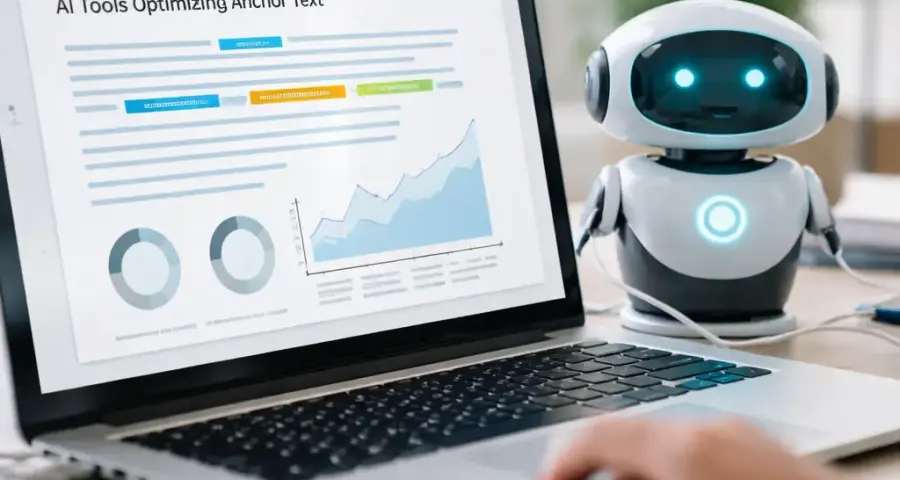
That’s where AI tools to optimize anchor text come in. They process thousands of links in seconds, flag risky anchor text ratios, and suggest replacements that feel natural to both users and search engine algorithms. In 2025, these tools are no longer a luxury — they’re essential for any serious SEO strategy. For a related guide, see 7 Smart AI Tools to Find Local SEO Opportunities in 2025.
What Makes a Healthy Anchor Text Profile?
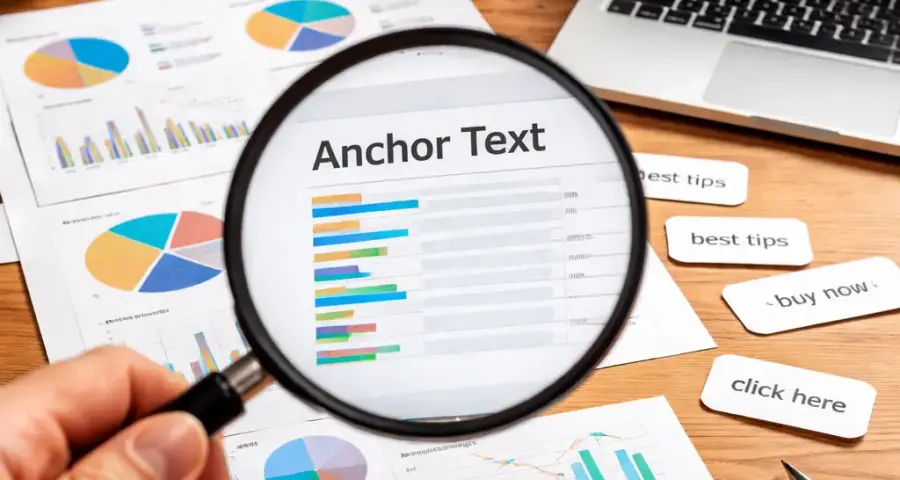
A balanced profile includes branded anchors (your company name), generic anchors (“click here”), topical anchors (“best running shoes”), and some exact-match anchors for your primary keywords. AI tools analyze the percentage of each type and alert you when any category exceeds safe thresholds, typically above 10–15% for exact-match anchors.
Top AI Tools to Optimize Anchor Text in 2025
The following tools stand out for their ability to automate anchor text analysis, provide actionable recommendations, and integrate into broader SEO workflows.

1. Ahrefs — Backlink Audit with AI Overlay
Ahrefs isn’t exclusively an anchor text tool, but its backlink audit feature uses AI to group and categorize anchor text patterns. You can filter by exact match, phrase match, branded, or generic, then export a list of links that need updating. The “Best by Links” report also shows which pages have the most diverse anchor text — a useful benchmark for your own campaigns.
Best for: SEO pros who already use Ahrefs and want a data-driven view of their link profile.
2. LinkMiner by Mangools — Anchor Diversity Scores
LinkMiner provides a quick visual breakdown of anchor text distribution directly on the SERP. Its AI-powered “Anchor Text Diversity Score” tells you if your profile looks natural or spammy. If the score is low, the tool suggests specific domains where outreach can help diversify anchor text.
Best for: Freelancers and small teams needing fast link analysis without heavy setup.
3. Rank Math Pro — Internal Link Suggestions
Rank Math Pro uses machine learning to analyze your content and suggest internal links with optimal anchor text. It considers topic relevance, page authority, and existing anchor distribution so you don’t accidentally over-optimize a single page. The “Link Suggestions” panel appears directly in the WordPress editor.
Best for: WordPress site owners who want anchor text optimization to happen during content creation.
4. SEMrush — AI Post-Campaign Analysis
SEMrush’s AI engine evaluates anchor text from your backlink campaigns and compares it to competitors. It highlights where you have too many exact-match links and recommends ratio adjustments before you launch new outreach. The “Anchor Text Report” can be scheduled weekly.
Best for: Agencies running large-scale link building campaigns.
5. Link Assistant (SEO PowerSuite) — Bulk Anchor Optimization
This desktop tool uses AI to scan your entire backlink profile and suggests bulk anchor text replacements. You can filter by link type (dofollow/nofollow), domain authority, and even specific anchor strings. The “Anchor Text Editor” lets you simulate changes before implementing them.
Best for: Advanced users who need granular control over every link.
6. MarketMuse — Content-Driven Anchor Recommendations
MarketMuse takes a different approach: it analyzes your content library and suggests anchor text that aligns with topical clusters. Instead of just auditing existing links, it tells you what anchor text to use for new internal links to strengthen topical authority. The AI ensures anchors match the target page’s primary topic.
Best for: Content teams building topical authority with internal linking.
How to Avoid Anchor Text Over-Optimization with AI
Over-optimization penalties often start subtly. You might use “buy running shoes” for 12 out of 100 backlinks — that’s fine. But if 30 out of 100 links use the same phrase, Google’s spam algorithms may devalue those links or penalize the page.
Common Mistakes AI Tools Catch Automatically
- Uniform anchor text: Same phrase for most links. AI flags ratios above 10% for any single anchor.
- Unnatural keyword stacking: “Cheap running shoes size 10.5” — a phrase no human would naturally link with.
- Ignoring nofollow distribution: AI ensures at least 20–30% of links use nofollow to appear organic.
- Missing branded anchors: If your brand name is underrepresented, AI suggests adding more.
The 4-Step AI Audit Process
- Export your backlink profile from any tool listed above.
- Run an anchor text distribution report — let AI group anchors by type.
- Identify risky patterns using the tool’s alerts (exact-match above 15%, same anchor from 5+ different domains).
- Create a removal or replacement plan — reach out to webmasters for non-essential links, update your own internal links.
Comparison Table: Top AI Tools to Optimize Anchor Text
| Tool | Best Feature | Price Range | Best For |
|---|---|---|---|
| Ahrefs | Anchor group filtering + backlink comparison | $99–$999/mo | In-house SEO teams |
| Mangools LinkMiner | Anchor Diversity Score | $49–$129/mo | Freelancers, small teams |
| Rank Math Pro | In-editor internal link suggestions | $5–$10/mo | WordPress site owners |
| SEMrush | Campaign-level anchor analysis | $129–$499/mo | Agencies |
| Link Assistant | Bulk anchor text editing | $499–$999 one-time | Advanced power users |
| MarketMuse | Topic-driven anchor recommendations | $3,600+/yr | Content teams |
SEO Entities and Their Functions
Understanding the entities behind anchor text analysis helps you use these tools more effectively:
- Backlink entities: Referring domains, dofollow/nofollow flags, and anchor text strings are the building blocks of link profile analysis. Tools like Ahrefs let you filter by these dimensions.
- Keyword entities: Organic keywords, keyword difficulty, and search volume help you decide which anchor targets are worth pursuing. SEMrush’s keyword gap tool shows anchors competitors use that you don’t.
- Competitor entities: Competing domains and their anchor profiles reveal opportunities. MarketMuse compares your internal link anchors against competitor topic clusters.
- Content entities: Published dates, author pages, and topical clusters — when connecting internal links, the AI considers whether the anchor text matches the target page’s primary entity.
- Site audit entities: Crawl issues and indexability status tell you if anchor-rich pages are even being found. Rank Math Pro catches internal links pointing to non-indexable pages.
Best Practices for AI-Driven Anchor Text Optimization
These guidelines ensure your AI tools deliver actionable, penalty-proof results:
- Set ratio targets before importing data. Decide on threshold alerts (e.g., any exact-match anchor over 12%) before running reports.
- Always cross-check AI suggestions manually. Tools can miss context — a Wikipedia link with “famous river” might look generic but is actually a valuable topical anchor.
- Focus on internal links first. You have full control over those. Use Rank Math Pro or MarketMuse to diversify internal anchors before tackling backlinks.
- Document your anchor text strategy. Create a spreadsheet with approved anchor variants for each target page. AI tools can reference this list to check compliance.
- Re-audit every 90 days. New links are constantly added. Schedule recurring anchor text audits to catch problems early.
Useful Resources
For deeper reading on anchor text best practices and how AI is transforming link audits:
- Ahrefs: Anchor Text in SEO — A Complete Guide — Comprehensive overview of anchor text types and how to balance them.
- Search Engine Journal: How to Use AI to Optimize Anchor Text — Practical tips and case studies from SEO experts.
Frequently Asked Questions About AI tools to optimize anchor text
What does an AI tool for anchor text actually do?
It scans your backlink and internal link profile, categorizes each anchor text by type (branded, generic, exact-match, etc.), and alerts you when any category exceeds safe thresholds.
Can AI anchor text tools prevent Google penalties?
No tool can guarantee penalty protection, but they significantly reduce risk by catching over-optimization patterns that humans often miss, such as uniform anchor text across 50+ links.
Are these tools suitable for small websites with a few backlinks?
Yes. Even 50 links can have an imbalanced anchor profile. Tools like Rank Math Pro and LinkMiner work well on small sites and scale as your site grows.
What is a good anchor text diversity score?
Most tools consider a score above 80 out of 100 healthy. Below 60 indicates a high concentration of one anchor type and warrants corrective action.
How often should I run an anchor text audit?
Every 90 days is the industry standard. If you actively build links, consider monthly audits to catch new over-optimization early.
Do AI tools recommend specific anchor text replacements?
Many do. For example, Link Assistant allows bulk replacement suggestions, and MarketMuse recommends anchor text based on the target page’s topic.
Can these tools analyze internal links only?
Rank Math Pro and MarketMuse focus heavily on internal links. Most backlink tools also include internal link analysis as a separate report.
What is the safest percentage of exact-match anchor text?
Keeping exact-match anchors under 10–12% is widely considered safe. AI tools alert you when this ratio is exceeded.
Are branded anchors always safe?
Branded anchors are generally safe, but having 100% branded anchors can look unnatural. Aim for 30–50% branded, 20–30% generic, and the rest topical or partial-match.
Does Google use anchor text in ranking?
Yes, Google uses anchor text as a strong contextual signal. However, over-optimization can trigger spam filters, so balance is key.
What is a “naked URL” anchor?
It’s the full URL used as anchor text. AI tools count these as a separate category and warn if they dominate your profile.
Can AI detect toxic backlinks through anchor text?
Yes. Many tools flag links with anchor text that includes spammy keywords or unusual character patterns, helping you identify toxic links for disavowal.
Do AI anchor text tools work with disavow files?
Some tools, like Link Assistant, let you export a list of suspicious anchor text links directly into a Google Disavow file format.
What is a “partial-match” anchor?
A phrase that includes a keyword but isn’t an exact match, e.g., “best running shoes for flat feet” instead of just “running shoes.” AI tools categorize these separately. For a related guide, see 7 Smart AI Tools for Local Keyword Research (Proven Method).
Is there a free AI tool for anchor text analysis?
Mangools LinkMiner offers a free version with limited credits. Google Search Console also shows top anchor text, but lacks AI categorization.
Can I use these tools for competitor analysis?
Yes. Ahrefs, SEMrush, and Mangools allow you to enter a competitor domain and analyze their anchor text profile to find linking opportunities.
Do AI tools consider dofollow vs. nofollow in anchor text?
Most premium tools let you filter by link type. Some, like SEMrush, even show anchor distribution for dofollow links separately.
How long does it take to see ranking improvements after optimizing anchor text?
Typically 4–8 weeks. If you are recovering from a penalty, it may take 2–3 months for Google to recrawl and re-evaluate your link profile.
What is the difference between anchor text and link text?
They refer to the same thing. “Anchor text” is the technical SEO term, while “link text” is more common in content marketing discussions.
Should I use the exact focus keyword as anchor text?
Only sparingly — for one or two high-authority links. AI tools help ensure the exact-match percentage stays within safe range.