
rank in the Google Local Pack Key Takeaways
When a potential customer searches for “plumber near me” or “best Italian restaurant in Austin,” Google’s Local Pack — the boxed map results with three business listings — often appears before any organic search result.
- What It Really Takes to rank in the Google Local Pack
- rank in the Google Local Pack: Why the Google Local Pack Matters for local pack SEO for small businesses
- rank in the Google Local Pack: Understanding the Three Pillars: Relevance, Distance, Prominence
What It Really Takes to rank in the Google Local Pack
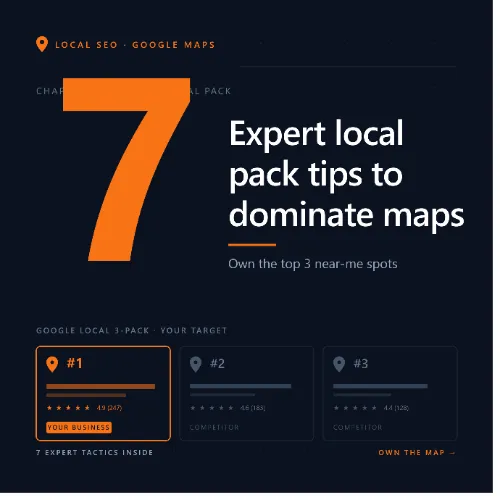
When a potential customer searches for “plumber near me” or “best Italian restaurant in Austin,” Google’s Local Pack — the boxed map results with three business listings — often appears before any organic search result. For local businesses, securing a spot in that local pack can mean the difference between a full booking calendar and a silent phone. But how to rank in Google Local Pack isn’t about guesswork or luck. It’s about a systematic alignment of three core signals: relevance, distance, and prominence. In this guide, you’ll learn seven actionable strategies to rank in the Google Local Pack, plus the traps to avoid. For a related guide, see 12 Reasons Your Content Isn’t Ranking: Avoid These Common Mistakes.
Why the Google Local Pack Matters for local pack SEO for small businesses
The local pack gets massive click-through rates — often over 40% of all clicks for local-intent searches. For small business owners, this means less reliance on expensive ads and more free visibility. Whether you run a dental clinic, a landscaping company, or a boutique hotel, local pack SEO for small businesses is one of the highest-ROI tactics you can adopt. Google’s algorithm prioritizes businesses that best answer the searcher’s intent, so optimizing for the local pack directly increases foot traffic, phone calls, and direction requests. For a related guide, see 13 Hyperlocal SEO Ideas That Work: Proven Tactics for Local Search Dominance.
Understanding the Three Pillars: Relevance, Distance, Prominence
Before diving into tactics, it helps to understand how Google evaluates local businesses. Relevance measures how well your business matches what someone searched for. Distance is about proximity to the searcher’s location or the location they specified. Prominence reflects how well-known and trusted your business is — both online and offline. Every action you take to rank in the Google Local Pack should improve at least one of these pillars.
1. Optimize Your Google Business Profile (GBP) Completely
Your Google Business Profile is the foundation of local pack SEO. How to rank in Google Local Pack starts with a fully completed, verified profile. Fill out every field: business name, address, phone number, website, hours, services, and attributes (like “free Wi-Fi” or “wheelchair accessible”). Add high-quality photos of your storefront, team, and products. Use the Q and A section proactively. According to Google, businesses with complete profiles are more than twice as likely to be considered reputable by users and the algorithm.
Pro Tip: Keep NAP Consistent Across the Web
Your Name, Address, and Phone number must be identical everywhere — on your website, your GBP, local directories, and social media. Even a slight variation (e.g., “St.” vs. “Street”) can confuse Google and hurt your Google Local Pack ranking.
GBP Checklist
- Verify your business location
- Select the most accurate primary category
- Add secondary categories that match services
- Write a business description that includes local keywords
- Upload photos and videos weekly
- Enable messaging and respond quickly
2. Collect and Manage Customer Reviews Actively
Reviews directly impact prominence. A business with many recent, positive reviews is far more likely to rank in the Google Local Pack. But more than the star rating, Google looks at review quantity, diversity, and freshness. Aim to earn at least 10–15 new reviews per month. Respond to every review — positive ones with gratitude and negative ones with empathy and a solution. This signals that you care about customer experience.
How to Generate More Reviews Without Violating Guidelines
Never offer incentives for reviews. Instead, make the process frictionless: send a direct review link after a service, add a QR code to receipts, and include a polite request in follow-up emails. A steady flow of reviews from real customers is the most sustainable way to boost your local pack prominence.
3. Build High-Quality Local Citations and Backlinks
Citations — mentions of your business on other websites — strengthen your relevance and prominence. For local pack SEO for small businesses, focus on well-known directories like Yelp, Yellow Pages, and industry-specific sites (e.g., Avvo for lawyers, Zocdoc for healthcare). Additionally, local backlinks from news sites, community blogs, or local business associations carry extra weight. When a well-known local newspaper links to your site, Google sees that as a vote of local authority.
Citation Cleanup and Consistency
Use a tool like Moz Local or BrightLocal to audit where your business is listed. Inconsistent NAP data across directories is a common reason businesses fail to rank in the Google Local Pack. Correct every mismatch, remove duplicate listings, and update old addresses. For a related guide, see 7 Proven Ways to Rank in Google Maps – Expert Guide.
4. Optimize Your Website for Local Search Intent
Your website must reinforce your GBP signals. Include your city and service area in title tags, meta descriptions, headers, and body content. Create dedicated location pages if you serve multiple areas. For example, an HVAC contractor in Denver could have subpages like “Air conditioning repair in Lakewood” and “Furnace service in Aurora.” This increases your relevance for hyperlocal searches and improves your Google Local Pack ranking.
On-Page SEO Factors That Matter Most
- Title tags and H1s with city + service keyword
- Fast page load speed (use Core Web Vitals)
- Mobile responsiveness (the local pack is heavily used on phones)
- Embedded Google Map on the contact page
- Schema markup: LocalBusiness, Review, OpeningHours
5. Encourage and Optimize User-Generated Content
Questions and answers on your GBP, along with Google Posts, are user-generated signals that boost engagement. Post weekly updates, offers, events, or new products. Respond to every user question within 24 hours. Google tracks how actively you engage with users, and higher engagement can help rank in the Google Local Pack more easily.
Google Posts: A Forgotten Lever
You can publish short updates, photos, and calls to action directly inside your GBP. These appear in search results and can drive immediate action, like booking an appointment or visiting your website. Use them to announce specials, share blog posts, or highlight community involvement.
6. Use the Right Local SEO Tools and Data
To outpace competitors, you need data-driven decisions. How to rank in Google Local Pack requires regular monitoring of your Google Business Profile insights, local keyword rankings, and competitor activity. Tools like BrightLocal, Moz Local, and Google Search Console help you track what works. For deeper competitive analysis, an SEO platform like Ahrefs can reveal which local competitors are gaining backlinks and visibility in your area.
SEO Entities and Their Functions
Understanding key entities helps you make better decisions for local pack optimization. Here’s what each one means:
- Keyword entities: organic keywords, keyword difficulty (KD), search volume, and SERP features show demand, competition, and ranking opportunity for local queries.
- Backlink entities: referring domains, anchor text, dofollow/nofollow links, and new/lost links reveal authority sources and outreach priorities.
- Page entities: top pages by traffic, best by links, and broken pages help identify which of your pages earn visibility or need repair.
- SERP entities: featured snippets, local packs, and AI Overviews indicate what format Google wants for local-intent searches.
- Technical SEO entities: crawl issues, Core Web Vitals, and indexability show obstacles that prevent ranking.
- Competitor entities: competing domains, content gaps, and keyword overlaps show where rivals win and where you can pounce.
7. Monitor and Adapt to Algorithm Updates
Google’s local search algorithm evolves. What works today might not work next year. Stay current by following official Google updates, joining local SEO communities, and regularly testing new strategies. The businesses that consistently rank in the Google Local Pack are those that stay flexible, test often, and never stop optimizing their digital presence.
Common Mistakes to Avoid for Google Local Pack ranking
| Mistake | Why It Hurts | Fix |
|---|---|---|
| Using a P.O. box or virtual address | Google requires a physical location for the local pack | Use a real storefront or office address |
| Ignoring negative reviews | Shows lack of engagement; lowers prominence | Respond professionally to all reviews |
| Keyword stuffing GBP description | Looks spammy; can trigger manual action | Write naturally, include location once or twice |
| Duplicate Google Business Profiles | Confuses Google and splits signals | Merge or remove duplicates |
| No local business schema markup | Missing structured data reduces relevance | Add LocalBusiness schema to your site |
Useful Resources
For a deeper understanding of Google Business Profile guidelines and local ranking factors, explore these resources:
- Google Business Profile Help: Guide to Verification and Optimization
- Ahrefs Local SEO Guide: Strategies for Small Businesses
To rank in the Google Local Pack, focus on the fundamentals: a flawless GBP, consistent reviews and citations, locally-optimized website content, and a commitment to staying current. With the strategies outlined in this guide, you can significantly improve your local visibility, attract more qualified leads, and grow your business.
Frequently Asked Questions About rank in the Google Local Pack
What is the Google Local Pack?
The Google Local Pack is the boxed map section with three business listings that appears for local searches, showing business name, rating, phone, and website.
How does distance affect local pack ranking?
Distance is a primary factor. Businesses closer to the searcher’s location (or the location they typed) are more likely to appear in the local pack.
Can I rank in the Local Pack without a physical storefront?
Generally no. Google requires a physical street address for local pack inclusion, though service-area businesses may hide their address if they serve customers at their locations.
How often should I post on Google Business Profile?
Aim for at least 1–2 posts per week. Regular posting keeps your profile fresh and signals engagement to Google.
Do reviews with text matter more than star ratings?
Yes. Reviews with text contain useful keywords and are more valuable for demonstrating relevance and user trust.
What is the difference between organic and local pack ranking?
Organic ranking refers to traditional blue-link results. Local pack ranking is the map + three business listings that appear above or beside organic results.
Does my website domain age affect local pack ranking?
Not directly, but older domains with good backlink profiles may have higher prominence, which can indirectly help.
How many categories should I select for my GBP?
Choose one primary category that best describes your business and up to 9 secondary categories for related services.
Can I use a virtual office to rank in the Local Pack?
Google discourages virtual offices that are not staffed during business hours. It may lead to suspension if detected.
What is a citation in local SEO?
A citation is any online mention of your business name, address, and phone number, even without a link. Consistent citations build trust.
How long does it take to rank in the Local Pack?
It varies. With a fully optimized profile and consistent effort, you may see improvements in 2–4 months. Highly competitive markets can take longer.
Does Google Ads placement help local pack ranking?
No, paying for ads does not directly impact organic local pack ranking. However, ads may appear in the same area of the search results.
What is the maximum distance for Local Pack visibility?
There is no fixed radius, but typically results are limited to around 10–20 miles from the searcher’s location in urban areas, and further in rural areas.
How do I know if I’m in the Local Pack?
Search for your core service plus your city in an incognito browser. If your GBP appears in the map pack, you are in the Local Pack.
Does having multiple locations help or hurt?
Multiple locations can help if each has its own optimized GBP and separate address. Duplicate listings for the same location harm rankings.
Can I rank without a website?
Google prefers businesses with a website for local pack ranking, but it is possible to rank if you have a very complete GBP and many reviews.
What are Google Local Services Ads?
Local Services Ads are paid listings that appear above the local pack, with a Google Guarantee badge. They are separate from organic local pack ranking.
How do I get more phone calls from the Local Pack?
Ensure your phone number is prominently displayed, respond quickly to calls, and consider using call tracking to measure GBP-driven calls.
Does posting events help local pack ranking?
Yes, posting events to your GBP can increase engagement and signal freshness, which can positively influence local pack visibility.
What is the biggest mistake small business owners make with local SEO?
Treating SEO as a one-time task. Local pack ranking requires ongoing attention to reviews, profile updates, content, and citations.