Futuristic AI Marketing Trends Key Takeaways
By 2027, AI won’t just optimize your campaigns—it will orchestrate entire customer journeys in real time, from hyper-personalized content to predictive ad bidding.
- Futuristic AI marketing trends like generative AI content factories and autonomous ad platforms will cut manual work by 70% while boosting conversion rates.
- AI customer engagement tools will use emotion detection and real-time personalization to create frictionless, loyalty-building experiences.
- Businesses that adopt AI predictive analytics and immersive marketing now will own their niches by 2027, while laggards struggle to catch up.
What These 35 Futuristic AI Marketing Trends Mean for Your Business
Over the past two decades, I’ve seen marketing shift from gut-feel decisions to data-driven strategies. Now, we’re entering an era where AI marketing 2027 will be less about tools and more about autonomous systems that learn, adapt, and execute across every channel. Whether you’re a solo entrepreneur or a CMO at a Fortune 500 company, these trends will reshape how you attract, engage, and retain customers.

Below, I break down 35 AI digital marketing trends into actionable insights. I’ve organized them by impact area so you can prioritize what matters most for your industry and budget. Each trend includes a real-world application and a takeaway you can implement today.
1. Autonomous Campaign Orchestration
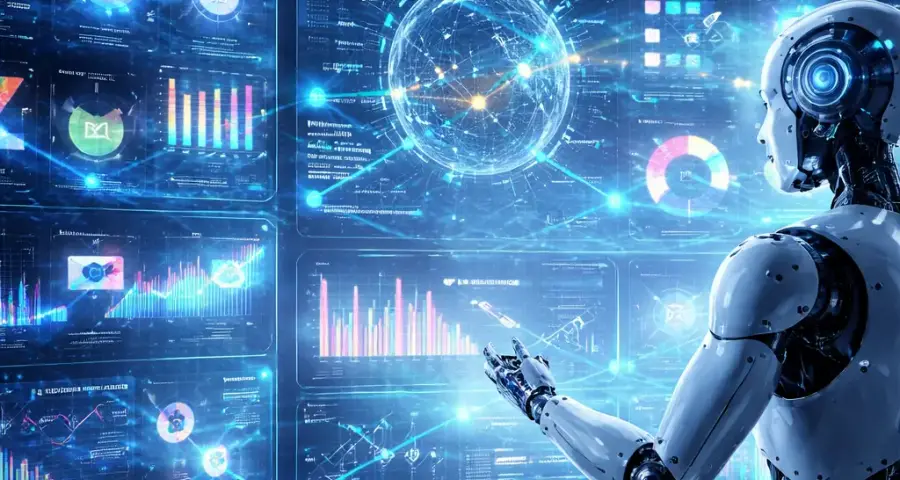
AI marketing automation is evolving from basic drip sequences to full campaign orchestration. By 2027, platforms will automatically adjust channel mix, budget allocation, and creative rotation based on live performance and predicted customer lifetime value.
Real-world application: A SaaS company launches a new feature. The AI identifies high-intent segments from CRM data, serves personalized video ads on CTV, triggers an email sequence with interactive demos, and retargets via SMS—all without human intervention. The marketer simply reviews the weekly report.
Takeaway: Start integrating a unified marketing orchestration platform like HubSpot’s Breeze or Salesforce’s Einstein 1 AI now. The key is connecting your data sources so the AI can see the full customer picture.
2. Generative AI as Creative Co-Pilot
Generative AI marketing will move beyond writing blog drafts and creating social images. By 2027, it will produce entire campaign concepts—from strategy briefs to video scripts to A/B test variants—each optimized for different audience micro-segments. For a related guide, see 30 Ways Brands Are Using Generative AI for Influencer Marketing.

A fashion retailer can input “spring collection for Gen Z eco-conscious shoppers” and receive 50 variations of ad copy, 30 image styles, and 10 video hooks, all brand-aligned and platform-specific. The marketer becomes a curator, not a creator.
Takeaway: Experiment with tools like Jasper Art, Midjourney for visuals, and ElevenLabs for AI voiceovers. Develop a clear brand style guide your AI models can follow.
3. Real-Time Hyper-Personalization Engines
AI personalization strategies will become instantaneous. Instead of segmenting users into broad groups, AI will build individual profiles that update with every click, scroll, and pause. Product recommendations, pricing, and even site layout will morph in milliseconds.
Example: A returning visitor to an ecommerce site sees a homepage rearranged with her favorite categories, personalized discounts on items she abandoned last visit, and a chatbot that already knows her size preferences.
Takeaway: Use a recommendation engine like Dynamic Yield or Google Cloud’s Recommendations AI. Start with personalized product blocks on your product pages and expand from there.
4. Predictive Analytics for Proactive Marketing
AI predictive analytics will shift from “what happened” to “what will happen next” with high accuracy. Marketers will predict churn risk, next purchase date, and even the best time to send a message—down to the minute. For a related guide, see 35 Predictive Analytics Tactics Every Marketer Needs in 2026.
A subscription box service uses predictive models to identify subscribers likely to cancel in 30 days. The AI automatically sends a surprise discount or a curated box preview, reducing churn by 35%.
Takeaway: Integrate predictive analytics into your CRM. Most modern platforms (Salesforce, HubSpot, Zoho) offer add-ons. Start with a single KPI like churn or repeat purchase rate.
5. Autonomous Ad Buying and Optimization
AI advertising trends point to fully autonomous ad buying. AI will manage bids, placements, and creative rotation across Google, Meta, Amazon, and emerging platforms like TikTok Shop. The human’s role: set business goals and guardrails.
A DTC brand sets a target CPA of $25 and a daily budget of $500. The AI analyzes hundreds of signals—weather, trending hashtags, competitor pricing—and allocates spend to the best performing combinations every few minutes.
Takeaway: Enable automated bidding strategies in Google Ads and Meta. Test Performance Max campaigns with clear conversion tracking. Let the AI optimize; you monitor the trends.
6. AI-Native Content Factories
AI content creation will produce not just text but entire content ecosystems: blog posts, video scripts, social snippets, email newsletters, and even interactive infographics—all derived from a single core topic.
A financial advisor records a 10-minute video on tax strategies. The AI transcribes it, generates a 2000-word blog post, creates 15 social posts, designs two infographics, and builds a quiz—all branded and ready to publish.
Takeaway: Build a content library of source material (videos, podcasts, interviews). Use a tool like Descript or Opus Clip to repurpose long-form content into multiple assets.
7. Social Media AI Managers
AI social media marketing will evolve from scheduling tools to full social media managers. AI will draft posts, generate native visuals, schedule at optimal times, engage with comments in your brand voice, and even identify emerging micro-trends.
A boutique hotel chain’s AI monitors Instagram Stories, TikTok trends, and booking data. It detects a rising interest in “digital detox weekends” and immediately creates a campaign featuring quiet rooms and no-wifi packages.
Takeaway: Use a platform like Buffer or Later with AI features, or explore specialized tools like Vista Social. Set brand voice guidelines and tone parameters first.
8. AI-Powered Influencer Discovery and Management
AI influencer marketing will move beyond follower counts to predict authentic engagement. AI will analyze audience overlap, sentiment, and brand affinity to match brands with nano and micro-influencers who drive actual sales, not just likes.
An organic skincare brand uses an AI influencer platform to find 50 Gen Z creators whose followers match the brand’s target demographics. The AI also drafts briefs and tracks attribution via unique discount codes.
Takeaway: Platforms like Upfluence and Grin already offer AI-powered discovery. Start by analyzing your current influencer partnerships for audience alignment rather than vanity metrics.
9. Emotion AI for Customer Engagement
AI customer engagement will read emotions through text sentiment, voice tone, and even facial expressions (in video or VR). Brands will adapt messaging in real time to match the user’s emotional state.
A frustrated customer types “this is ridiculous” in a chatbot. The AI detects anger, escalates to a human agent immediately, and the support team sees a summary of the issue plus a recommended empathetic response.
Takeaway: Start with sentiment analysis on your support tickets. Tools like MonkeyLearn or Lexalytics can tag sentiment without complex coding.
10. Conversational Commerce at Scale
AI chatbot trends will merge with commerce, creating frictionless buying experiences inside messaging apps. Customers will browse, ask questions, and purchase without leaving WhatsApp, Messenger, or Instagram DMs.
A customer messages a clothing store on Instagram: “Need a dress for a summer wedding.” The AI asks about budget, style, and size, then presents three options with links to purchase directly in the chat.
Takeaway: Integrate a conversational AI platform like ManyChat or Tidio with your ecommerce backend. Start with product recommendation flows and payment links.
11. AI Business Automation Across Marketing and Sales
AI business automation will break silos between marketing, sales, and customer success. Lead scoring, follow-up emails, and contract generation will happen automatically based on behavior triggers.
A prospect downloads a whitepaper, attends a webinar, and visits the pricing page—all within 48 hours. The AI auto-assigns them a high lead score, sends a personalized case study, and schedules a demo with the nearest sales rep.
Takeaway: Map your customer journey and identify repetitive handoff tasks. Automation tools like Zapier and Make can connect your CRM to your email and calendar without expensive tech stacks.
12. AI-Driven Brand Voice and Strategy
AI branding strategies will analyze millions of brand mentions, reviews, and social conversations to recommend positioning, tone, and even visual identity changes. Your brand will adapt to cultural shifts faster than ever.
A direct-to-consumer beverage brand’s AI notices a rising sentiment around “functional hydration” among its target audience. It suggests new product messaging emphasizing electrolytes and vitamins, and even generates packaging mockups.
Takeaway: Use Brandwatch or Talkwalker for social listening. Set up alerts for shifts in how your audience talks about your category.
13. Predictive Consumer Behavior Models
AI consumer behavior analysis will predict not just what customers buy, but why they buy—uncovering emotional triggers, decision drivers, and even the exact moment of purchase intent.
An online course platform’s AI identifies that users who read two blog posts and watch one webinar have a 70% chance of enrolling within 48 hours. It triggers a targeted email sequence that converts at a 40% rate.
Takeaway: Use your existing customer data to build a simple predictive model. Start with customer clusters based on behavior, then test which attributes correlate with high lifetime value.
14. AI-Powered Audience Targeting Beyond Demographics
AI audience targeting will use behavioral signals, intent data, and micro-moments to identify audiences that don’t look like your existing customers but act exactly like them. Reach expands without waste.
A fitness app targets not just “people interested in running” but “people who search for running routes near them between 6-7 AM”—a behavioral signal that correlates highly with premium subscriptions.
Takeaway: Enable lookalike audiences in Meta and Google based on high-value actions (purchase, subscription, trial start), not just page views.
15. Automated Marketing Analytics with Natural Language
AI marketing analytics will let you ask questions in plain English and get visual answers instantly. “Show me last week’s email campaign performance by region” becomes a one-second interaction.
A marketing director asks Salesforce Einstein Analytics: “What channel drove the highest ROAS for our winter launch?” The AI returns a chart comparing channel performance with attribution breakdowns.
Takeaway: If you use Google Analytics 4, explore the natural language query feature. For enterprise, consider Looker’s conversational analytics.
16. Data-Driven Marketing with Zero-Party Data Collection
AI data driven marketing will rely more on zero and first-party data as third-party cookies fade. AI will design interactive experiences (quizzes, preference centers, loyalty programs) that collect explicit data in exchange for value.
A beauty brand launches a “skin quiz” powered by AI. The quiz asks about concerns, preferences, and routines. In return, customers get a personalized product regimen and a discount. The brand gets permission-based data.
Takeaway: Build an interactive data capture tool relevant to your product. Offer clear value exchange: personalized results, exclusive discounts, or early access.
17. AI Campaign Optimization in Real-Time
AI campaign optimization will happen within seconds of launch. AI tests multiple headlines, images, CTAs, and even landing page layouts simultaneously, killing poor performers and reallocating budget to winners within minutes.
A nonprofit’s donation campaign runs 20 ad variations on Meta. After the first hour, the AI identifies that a video testimonial with a “Donate Now” button converts 3x better than a text-only version. It pauses the others and funnels 90% of budget to the winner.
Takeaway: Use A/B testing tools like Optimizely or VWO that integrate with your ad platforms. Set clear success metrics before launching.
18. AI and the Creator Economy
AI creator economy tools will empower independent creators to act like full marketing teams. AI handles editing, captioning, scheduling, and even sponsorship negotiations, letting creators focus on what they do best.
A YouTube content creator uploads a raw 45-minute vlog. The AI generates a 10-minute highlight reel, five shorts, three tweets, a newsletter summary, and suggests brand partnership opportunities based on content topics.
Takeaway: Creators should adopt AI editing tools like Descript and Runway. Focus on producing authentic content; let AI handle the distribution grind.
19. Social Commerce with AI Assistants
AI social commerce will embed shopping agents directly into social platforms. Virtual stylists, product finders, and comparison shoppers will guide users from discovery to purchase without ever leaving the app.
On Pinterest, a user finds a living room photo. An AI assistant identifies the sofa, lamp, and rug, and offers to buy them from partnered retailers with one tap. The user completes the purchase without leaving the pin.
Takeaway: Optimize your product catalog for social platforms like Pinterest, Instagram, and TikTok. Use a product feed manager to keep inventory and prices in sync.
20. AI Business Intelligence for Market Gaps
AI business intelligence will scan millions of reviews, forums, and social comments to identify unmet customer needs before competitors do. Product teams will get early signals on feature requests, pain points, and service gaps.
An electronics brand’s AI notices a growing number of users complaining about setup difficulty for smart home devices. The team develops a simplified setup process and promotes it heavily, gaining market share.
Takeaway: Use review monitoring tools like G2 or Capterra for B2B, or Jungle Scout for ecommerce. Look for patterns across at least 50 mentions before acting.
21. AI Search Optimization for Generative Results
AI search optimization will adapt to AI Overviews and conversational search. Content will need to be structured for knowledge panels, featured snippets, and direct answers—not just ranked links.
A travel site optimizes an article about “best time to visit Japan” with clear, concise answers in table format, FAQs, and bullet lists. Google’s AI uses that content for its AI Overview, driving a 40% click-through rate despite fewer search impressions.
Takeaway: Structure your content with clear headings, tables, and lists. Answer specific questions concisely at the top of your articles.
22. AI Content Personalization for Every User
AI content personalization will tailor not just which article a visitor sees, but the headline, tone, examples, and even images based on their industry, role, and past browsing behavior.
A B2B software blog shows a cybersecurity article. A CTO sees technical depth and compliance stats; a CEO sees ROI data and case studies. The core content stays the same, but the presentation adapts.
Takeaway: Start with a simple personalization engine like AppTek or Ninetailed. Test one variable at a time (e.g., headline) before layering multiple signals.
23. AI Marketing Software as an Operating System
AI marketing software will shift from point solutions to integrated operating systems that manage the entire marketing workflow: planning, creation, deployment, measurement, and optimization.
One dashboard replaces Google Analytics, Mailchimp, Canva, Hootsuite, and Optimizely. The AI not only executes tasks but suggests next steps based on overall business goals and current performance.
Takeaway: Look for all-in-one platforms like HubSpot or ActiveCampaign that are adding AI layers. Reduce tool count gradually to avoid disruption.
24. AI Growth Hacking with Predictive Experiments
AI growth hacking will propose experiments based on historical data and market conditions. Instead of guesswork, AI will rank experiments by predicted impact and statistical confidence.
A mobile app’s growth team receives a weekly “Experiment Playbook” from the AI: “Try a referral discount on the third day of onboarding. Expected lift: 15% retention. Confidence: 85%.”
Takeaway: If you run growth experiments, log them with predicted impact and actual results. The data trains your future AI model.
25. AI Online Branding Through Consistency
AI online branding will audit your brand presence across hundreds of touchpoints—your site, social profiles, app stores, review sites—and flag inconsistencies in messaging, tone, or visual identity.
A chain of coffee shops discovers that its Instagram bio uses “artisanal coffee” while its Google Business profile says “craft coffee.” The AI recommends aligning to “specialty coffee” across all channels for consistent perception.
Takeaway: Run a brand audit today. Use a tool like Brand24 or Mention to check how your brand appears across platforms. Note the exact wording and visual style.
26. AI Conversion Optimization at the Edge
AI conversion optimization will run thousands of micro-experiments simultaneously on live pages, adjusting CTA colors, button sizes, copy length, and even images based on the user’s device, time of day, and past behavior.
A landing page for a webinar shows a red “Register” button to desktop users at 2 PM (historically high-converting), but a blue “Save My Spot” button to mobile users at 9 PM (higher conversion for late-night browsers).
Takeaway: Use tools like Google Optimize or Convert for continuous experiments. Start with the highest-traffic page and test one element at a time.
27. AI-Powered Customer Experience (CX) Orchestration
AI customer experience management will connect every touchpoint—from initial ad impression to post-purchase support—into one seamless journey. The AI ensures consistency, context, and friction reduction across channels.
A customer browses a product on mobile, adds to cart on desktop, but abandons. The AI triggers a personalized email with a tutorial video, then a retargeting ad with a limited-time discount, and finally a chatbot follow-up asking if they need help deciding.
Takeaway: Map your customer journey and identify gaps. Use a CDP like Segment to unify data across channels. Start with one high-friction touchpoint.
28. AI Recommendation Engines for Cross-Selling
AI recommendation engines will analyze not just purchase history but real-time behavior, comparing millions of user paths to suggest the next best action at every step of the journey.
A customer buys a camera. The AI recommends a specific lens, a carrying case, and a photography course—based on what other camera buyers purchased within one week. The result: 25% higher average order value.
Takeaway: Implement product recommendation blocks on your site. Start with “frequently bought together” and expand to “customers who bought this also viewed.”
29. AI Omnichannel Marketing Without Silos
AI omnichannel marketing will unify email, SMS, push notifications, in-app messages, social ads, and direct mail into one intelligent flow. The AI decides which channel to use based on user preference, urgency, and predicted response rate.
A fitness brand’s AI notices a user engages most with push notifications during morning commutes and emails on weekends. Campaigns automatically adjust delivery channel and timing per user, increasing open rates by 40%.
Takeaway: Use a cross-channel marketing platform like Braze or MoEngage. Start with preference data—ask users how often and where they want to hear from you.
30. AI Retail Marketing for In-Store and Online
AI retail marketing will merge physical and digital experiences. In-store cameras (with privacy safeguards) and mobile apps will track foot traffic, dwell time, and product interaction, triggering personalized offers on the customer’s phone in real time.
A customer pauses in front of the pasta aisle. The store’s app sends a coupon for a premium pasta sauce brand they purchased last month. The customer redeems it at checkout.
Takeaway: For physical stores, explore AI-driven personalization via beacons or geo-fencing. For ecommerce, use session replay tools like Hotjar to understand user behavior.
31. AI Metaverse Marketing and Virtual Storefronts
AI metaverse marketing will create branded virtual experiences where AI-powered avatars guide users through product exploration. Brands will sell digital and physical goods in immersive 3D environments.
A sneaker brand launches a virtual store in Decentraland. Users try on shoes using an AI avatar that adjusts fit and style. The AI recommends complementary items and guides the purchase flow, all within the metaverse.
Takeaway: Start small. Create a simple branded experience in a platform like Roblox or Spatial. Test user engagement before building a full metaverse store.
32. AI Interactive Content for Engagement Data
AI interactive content—polls, quizzes, calculators, configurators—will generate real-time engagement data that feeds back into personalization models. The more a user interacts, the smarter the AI gets.
A car manufacturer’s site offers a “Build Your Dream Car” configurator. As users select options, the AI learns their style preferences and later serves ads featuring similar configurations.
Takeaway: Add one interactive element to your site, such as a product finder quiz or a pricing calculator. Use the data to segment users in your CRM.
33. AI Sales Automation for Faster Cycles
AI sales automation will handle lead qualification, follow-up scheduling, proposal creation, and even objection handling via guided scripts. Sales teams focus on closing warm, high-fit leads.
A B2B sales rep wakes up to a list of three high-priority leads pre-qualified by AI. The AI drafted personalized email proposals based on each lead’s specific needs and timeline. The rep can review and send within minutes.
Takeaway: Use a sales engagement platform like Outreach or SalesLoft. Set up automated lead scoring and predefined sequences for common scenarios.
34. AI Communication Tools for Team Collaboration
AI communication tools will translate languages in real time, summarize meeting notes, generate action items, and sync with marketing calendars automatically. Remote and hybrid teams will operate as though they’re in one room.
A global marketing team runs a strategy meeting with members in Tokyo, London, and São Paulo. The AI translates, transcribes, and creates a task list in each member’s project management tool—all during the call.
Takeaway: Adopt tools like Otter.ai for transcription and Motion for AI-driven calendar management. Set a weekly routine of AI-generated meeting summaries.
35. Ethical AI Marketing and Transparency
As AI becomes pervasive, futuristic AI marketing trends will include a strong focus on ethics. Brands that disclose AI usage, protect customer data, and avoid manipulative personalization will earn long-term trust.
A financial services brand openly labels AI-generated content, offers clear opt-out for personalization, and publishes an annual AI ethics report. Customers reward them with higher engagement and loyalty.
Takeaway: Document your AI usage and create a simple transparency statement for your customers. Make opt-out easy and respect it completely.
Preparing Your Business for AI Marketing 2027
The common thread across these futuristic AI marketing trends is data readiness. You can’t have AI-driven personalization or predictive analytics without clean, connected data. My advice after 18 years in SEO and digital marketing: start with a data audit. Clean your CRM, standardize your tracking, and choose one high-impact area—like AI marketing automation for email or AI advertising trends for paid media—and master it before expanding. The future belongs to marketers who embrace AI not as a replacement, but as a powerful amplifier of human creativity and strategic thinking.
Useful Resources
For deeper exploration of AI marketing 2027 and related technologies, check these authoritative sources:
- Marketing AI Institute Blog for in-depth articles on AI tools and strategies for marketers.
- Gartner AI Marketing Insights for analyst-backed reports and predictions on AI adoption in marketing.
Frequently Asked Questions About Futuristic AI Marketing Trends
What are the future AI marketing trends for 2027?
By 2027, key trends include autonomous campaign orchestration, generative AI creative co-pilots, real-time hyper-personalization, predictive analytics for proactive marketing, and AI-native content factories that produce entire content ecosystems from a single source.
How will AI change digital marketing in the future?
AI will shift digital marketing from batch-and-blast campaigns to continuous, one-to-one conversations. Every touchpoint—ads, emails, chatbots, in-app messages—will adapt in real time to the individual user’s behavior, intent, and emotional state.
What are the next big AI marketing innovations ?
Next-generation innovations include emotion AI for sentiment-adaptive messaging, autonomous ad buying that optimizes across channels by the minute, AI-powered influencer discovery platforms, and immersive metaverse marketing with AI avatars.
How can businesses prepare for AI driven marketing?
Start with a data audit to ensure your customer data is clean, connected, and accessible. Choose one high-impact area—like email personalization or predictive lead scoring—and run a pilot before scaling. Also, invest in team training on AI tools and ethics.
What are futuristic AI advertising strategies?
Futuristic AI advertising strategies include autonomous bid management, creative rotation based on real-time performance, audience targeting by behavioral micro-moments, and hyper-personalized dynamic ads that change copy and imagery per user.
How does AI improve customer engagement and personalization?
AI improves engagement by analyzing every digital signal—clicks, dwell time, support chat sentiment, purchase history—to deliver the right message at the right moment. Personalization becomes a real-time, individual-level experience rather than a segment-based one.
What are the latest AI marketing trends beyond 2026?
Beyond 2026, watch for conversational commerce integrated into messaging apps, AI business intelligence identifying market gaps through social listening, and ethical AI transparency requirements that build customer trust.
Can AI replace traditional marketing methods?
AI won’t replace traditional marketing entirely but will automate its repetitive components—drafting, scheduling, reporting—while amplifying human creativity and strategy. Marketers who adapt will focus on high-level decisions AI cannot make.
What role will generative AI play in future marketing?
Generative AI will become the central creative engine, producing copy, images, video scripts, and even entire campaign briefs. Marketers will act as curators and strategists, guiding the AI’s output to match brand voice and goals.
How do brands use AI for predictive analytics?
Brands use predictive analytics to forecast customer churn, identify next likely purchase, optimize send times, and allocate ad budgets. The AI analyzes historical data and real-time signals to score each user’s future behavior probability.
What are AI powered customer experience trends?
AI-powered CX trends include orchestrated omnichannel journeys, real-time sentiment-based routing to human agents, predictive service bots that solve issues before they’re reported, and loyalty programs that adapt rewards to individual preferences.
How will AI affect influencer marketing in the future?
AI will automate influencer discovery by analyzing audience overlap and predicted engagement, rather than just follower counts. It will also draft briefs, track campaign attribution, and manage payments, making partnerships more efficient and measurable.
What are the top AI tools marketers will use in 2027?
Top tools include HubSpot Breeze for all-in-one marketing orchestration, Jasper for generative content, Dynamic Yield for personalization, Salesforce Einstein for predictive analytics, and Braze for omnichannel customer engagement.
How can small businesses benefit from future AI marketing tools?
Small businesses can use affordable AI tools for email automation (e.g., Mailchimp’s AI features), social media scheduling (Buffer’s AI suggestions), simple chatbots (Tidio), and personalized product recommendations (Nosto). These tools level the playing field against larger competitors.
What are smart AI automation strategies for businesses?
Smart strategies include starting with a single funnel (e.g., lead capture to sales), using your CRM data to define triggers, and setting clear success metrics. Automate the most repetitive tasks first—email follow-ups, social posting, and basic reporting—before expanding.
How does AI improve ecommerce and social commerce?
AI boosts ecommerce by enabling visual search, personalized product recommendations, dynamic pricing, and automated inventory management. For social commerce, AI creates in-chat shopping experiences and optimizes product tagging for platforms like Instagram and Pinterest.
What are virtual influencers and AI avatars?
Virtual influencers are AI-generated digital characters with their own personas and social media followings. Brands partner with them for promotions. AI avatars also appear in customer service, acting as brand representatives in chatbots or metaverse stores.
What is Futuristic AI Marketing Trends ?
Futuristic AI Marketing Trends is covered in the guide above with practical context, useful examples, and details readers can use to make a better decision.
Why is Futuristic AI Marketing Trends important?
Futuristic AI Marketing Trends is covered in the guide above with practical context, useful examples, and details readers can use to make a better decision.
How does Futuristic AI Marketing Trends work?
Futuristic AI Marketing Trends is covered in the guide above with practical context, useful examples, and details readers can use to make a better decision.