
content cluster ideas for SEO Key Takeaways
For SANTOLLUCKY or any niche—from online entertainment to e-commerce—clusters let you capture search intent at every stage.
- Implement structured content cluster ideas for SEO to outperform competitors who rely on scattered, single-page content.
- Each cluster idea includes specific subtopics and linking strategies you can adapt to your industry today.
- Avoid common pitfalls like overstuffing keywords or neglecting internal links that can sabotage your cluster’s performance.
Why Content Cluster Ideas for SEO Matter More in 2025
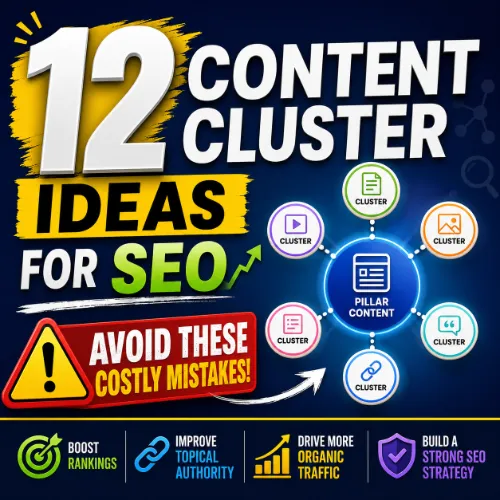
Search engines have evolved beyond matching keywords. They now evaluate entire websites for topical depth and authority. A single article rarely ranks for competitive terms, but a well-linked cluster covering every angle of a subject can dominate search results. Think of your pillar page as the hub and your cluster posts as the spokes. When Google sees that your site thoroughly covers a topic and links those pages together, it rewards you with higher rankings, featured snippets, and more organic traffic. For a related guide, see 7 Best AI Content Clusters: Ultimate Site Organization Guide.
For SANTOLLUCKY or any niche—from online entertainment to e-commerce—clusters let you capture search intent at every stage. A visitor searching “how to verify a platform’s reputation” lands on a cluster post, then follows internal links to your pillar guide on trust signals. That seamless navigation builds trust with both users and search engines. Without clusters, you risk losing visitors to competitors who offer a more complete resource. For a related guide, see 12 Advanced Internal Linking Strategies for Better SEO.
12 Content Cluster Ideas for SEO You Can Start Today
Each idea below includes a pillar topic, suggested cluster subtopics, and a key linking tip. Adapt the concepts to your specific industry or brand like SANTOLLUCKY.
1. The Ultimate Guide Pillar With How-To Clusters
Pillar topic: “Complete Guide to [Your Industry]”
Cluster subtopics: Beginner tutorials, advanced techniques, troubleshooting common issues, tool comparisons, and case studies.
Linking tip: Link every cluster post back to the pillar using the exact phrase that matches the pillar’s core topic. For example, if your pillar is “Complete Guide to Online Verification,” each cluster should include a link like “learn more in our complete guide to online verification.”
2. Category Hub With Product or Service Reviews
Pillar topic: “Best [Category] Resources”
Cluster subtopics: Individual reviews, comparison articles, top 10 lists, user testimonials, and update logs.
Linking tip: Use star ratings or scores within cluster posts and link to the pillar table that aggregates all rankings. This creates a clear hierarchy of value for readers and search engines alike.
3. Problem-Solution Cluster for Pain Points
Pillar topic: “Common [Problem] and How to Solve Them”
Cluster subtopics: Each specific problem gets its own post: causes, step-by-step solutions, prevention tips, and expert interviews.
Linking tip: In the pillar, use a table summarizing each problem and link the “read more” text directly to the corresponding cluster post.
4. Beginner-to-Expert Learning Path
Pillar topic: “Learn [Skill] From Scratch”
Cluster subtopics: Level 1 basics, Level 2 intermediate, Level 3 advanced, quizzes, glossary, and resource downloads.
Linking tip: Create a numbered progression and link each level post to the next. This encourages sequential reading and increases page views per session.
5. Data-Driven Cluster With Research and Statistics
Pillar topic: “[Industry] Statistics and Trends 2025”
Cluster subtopics: Survey results, demographic breakdowns, year-over-year comparisons, data visualization guides, and methodology explanations.
Linking tip: Cite exact numbers from cluster posts in your pillar page, then link to the full analysis for readers who want deeper details.
6. Comparison and Decision Hub
Pillar topic: “[Product A] vs [Product B] vs [Product C]: Which Is Best?”
Cluster subtopics: Feature comparisons, pricing breakdowns, user reviews from different angles, performance tests, and long-term usage reports.
Linking tip: Use a decision tree or flow chart in the pillar that leads users to specific cluster posts based on their needs. Link each branch of the tree.
7. Regional or Local Cluster
Pillar topic: “[Service or Product] in [Region]”
Cluster subtopics: City-specific guides, local regulations, neighborhood reviews, local success stories, and regional FAQs.
Linking tip: Include a map or location list in the pillar that hyperlinks to each local cluster page. This is gold for local SEO campaigns.
8. FAQ-Based Pillar With Deep-Dive Clusters
Pillar topic: “Everything You Need to Know About [Topic] — 50+ FAQs”
Cluster subtopics: Each major FAQ becomes its own comprehensive article covering definitions, examples, steps, and common misconceptions.
Linking tip: In the pillar, each question is a link to the full cluster post. This format gets picked up by Google’s People Also Ask and AI Overviews.
9. Tool or Platform Ecosystem Cluster
Pillar topic: “Complete Ecosystem for [Platform/Tool]”
Cluster subtopics: Setup guides, feature deep-dives, integration tutorials, troubleshooting, advanced hacks, and community resources.
Linking tip: Create a visual ecosystem map in the pillar showing how each cluster post connects. Link each node in the map to its respective article.
10. Historical Evolution and Future Predictions
Pillar topic: “History and Future of [Industry]”
Cluster subtopics: Decade-by-decade breakdowns, key milestones, influential figures, future forecasts, and expert panel discussions.
Linking tip: Use a timeline in the pillar with links to cluster posts for each era or prediction. This format attracts both informational and trending queries.
11. Case Study and Success Story Cluster
Pillar topic: “Real Results: [Company/Industry] Case Studies”
Cluster subtopics: Individual client stories, methodology breakdowns, before-and-after data, interview transcripts, and lessons learned.
Linking tip: Include a results comparison table in the pillar and link each row to the full case study. This builds credibility and encourages deeper reading.
12. Resource and Template Library
Pillar topic: “Free [Industry] Templates and Resources”
Cluster subtopics: Downloadable templates, checklists, calculators, video walkthroughs, and user-submitted add-ons.
Linking tip: Link directly to the download or resource page in the cluster. Use descriptive anchor text like “download the SEO audit template.”
SEO Entities and Their Functions
Understanding the entities behind SEO tools helps you make smarter decisions with your clusters. Here are the key entities and what they reveal:
- Website / Domain entities: Root domain, subdomain, and URL-level analysis show whether performance belongs to the whole site or a specific section. Use this to decide if your cluster should live under a subdirectory or subdomain.
- Keyword entities: Organic keywords, keyword difficulty (KD), search volume, and SERP features reveal demand and competition. Focus your cluster on keywords with moderate KD and high traffic potential.
- Backlink entities: Referring domains, dofollow/nofollow links, and broken backlinks help you identify which cluster posts earn authority and which need link-building efforts.
- Content entities: Authors, topics, published dates, and social shares show which content resonates. Update older cluster posts to keep them fresh.
- SERP entities: Featured snippets, People Also Ask, and AI Overviews tell you what format your content should use. Structure cluster posts to answer questions directly.
- Competitor entities: Competing domains, content gaps, and shared keywords show where rivals win and where you can capture untapped traffic.
Common Mistakes When Building SEO Content Clusters
Mistake 1: Creating a Pillar Page That’s Too Thin
A pillar page must be comprehensive enough to serve as the definitive resource. Aim for at least 2,000–3,000 words with clear sections, tables, and visuals. If your pillar is too short, it won’t establish topical authority and your cluster posts will lack a strong foundation.
Mistake 2: Weak Internal Linking Between Clusters
Every cluster post should link back to the pillar and to related cluster posts where relevant. Use descriptive anchor text that includes keywords. A common error is using only “click here” or forgetting to link at all. Map out your linking structure before writing.
Mistake 3: Ignoring Search Intent
Not all cluster posts should target the same intent. Some users want informational content, while others have transactional intent. Align each cluster post with the specific intent behind its target keyword. For example, a “how to” post serves informational intent, while a “best tool for” post targets commercial investigation.
Mistake 4: Publishing Clusters Too Slowly
Clusters work best when published within a short time frame—ideally 2–4 weeks. If you spread them over months, the pillar may lose relevance and Google may not recognize the cluster as a cohesive topic. Batch-write your cluster posts before launching.
How to Measure Cluster Performance
Track these metrics to know if your cluster strategy is working:
| Metric | What It Tells You | Tool |
|---|---|---|
| Organic traffic to pillar page | Total visibility of the topic | Google Search Console |
| Average position for cluster keywords | Whether the cluster is ranking as a group | Ahrefs or Semrush |
| Internal link clicks from clusters to pillar | How well your linking strategy guides users | Google Analytics |
| Time on site and pages per session | Reader engagement and topical depth | Google Analytics |
| Referring domains to cluster pages | Authority growth from external sources | Ahrefs |
Useful Resources
For a deeper dive into content cluster strategy, check out these authoritative guides:
- Ahrefs Guide to Content Clusters — Practical steps and real examples of cluster implementation.
- Moz on Content Clusters and SEO — Covers the theory behind topical authority and how clusters support it.
Frequently Asked Questions About content cluster ideas for SEO
What is a content cluster in SEO?
A content cluster is a group of interlinked pages centered around a broad pillar page. The pillar covers the main topic, while cluster posts dive into specific subtopics. This structure signals topical authority to search engines and improves user navigation.
How many pages should a content cluster have?
There is no fixed number, but most successful clusters include 5–15 cluster posts linked to one pillar page. The optimal size depends on how many subtopics are relevant and search-worthy in your niche.
Can I repurpose old blog posts into a cluster?
Yes, repurposing existing content is a smart way to build a cluster quickly. Audit your old posts, group them by topic, create a new pillar page, and add internal links between them. Update the posts for freshness and accuracy.
Do content clusters work for small websites?
Absolutely. Clusters help small sites build topical authority faster by focusing depth on fewer subjects. Start with one cluster around your primary niche and expand as you grow.
What is the difference between a pillar page and a hub page?
A pillar page is a comprehensive guide that covers a broad topic and links to detailed cluster posts. A hub page is similar but often links to external resources or serves as a directory. In modern SEO, the terms are used almost interchangeably.
How do I choose the best topic for my first cluster?
Pick a topic with high search volume and moderate competition, that aligns with your expertise. Use keyword research tools to find a broad term that has enough subtopics to support multiple cluster posts. Avoid topics with very low search volume or high difficulty.
Should I update cluster posts regularly?
Yes, updating cluster posts keeps them relevant and signals freshness to search engines. Review each cluster post every 6–12 months and update statistics, links, and examples. The pillar page should be updated even more frequently.
Can a cluster have multiple pillar pages?
Yes, but each pillar should cover a distinct broad topic. For example, one pillar on “SEO Basics” and another on “Link Building” can each have their own clusters. Avoid overlapping topics between pillars to prevent cannibalization.
How do internal links affect cluster performance?
Internal links distribute link equity across the cluster, help Google discover all pages, and guide readers to related content. A well-linked cluster sees higher average rankings for both pillar and cluster posts compared to unlinked pages.
What is the ideal pillar page length?
Most effective pillar pages run between 2,000 and 5,000 words. The length should be dictated by the topic’s depth, not a word count target. Cover every major subtopic with at least a brief section and link to the full cluster post for details.
Do I need a separate pillar page for each cluster?
Yes, each cluster needs its own pillar page that covers the broad topic comprehensively. The pillar is the central reference point for all cluster posts. Without a pillar, your cluster posts lack a unifying hub.
Can I use video content in a cluster?
Yes, video content can be a powerful addition. Create a pillar video overview and individual cluster videos for subtopics. Embed videos within the relevant text pages and link between them to create a multimedia cluster.
How do I avoid keyword cannibalization in a cluster?
Assign unique primary keywords to each cluster post and the pillar page. Use keyword research tools to ensure no two pages target the same search query. If overlap occurs, merge the pages or redirect one to the other.
Is it better to publish the pillar first or the cluster posts first?
Publish the pillar page first so cluster posts can link to it from day one. However, you can write cluster posts in advance and launch them all within a short window. The key is having the pillar live before or simultaneously with the first cluster post.
Can a single blog post be part of multiple clusters?
It’s better to keep each post in one cluster to maintain clear topical focus. If a post genuinely covers two topics, consider splitting it into two separate posts or creating a linking bridge page that connects both clusters without diluting authority.
How does Google treat clusters differently than regular pages?
Google’s algorithms recognize clusters as a signal of topical authority and entity coverage. A well-structured cluster can earn higher rankings, featured snippets, and inclusion in knowledge panels because it demonstrates comprehensive coverage of a subject.
What role does anchor text play in cluster linking?
Anchor text tells both users and search engines what the linked page is about. Use descriptive, keyword-rich anchor text that matches the target page’s topic. Avoid generic text like “click here” or “read more.”
Can I build a cluster around a local SEO topic?
Yes, local clusters are highly effective. Create a pillar page on “Best [Service] in [City]” and cluster posts for neighborhoods, service categories, or customer stories. Include local keywords and map links to boost local search visibility.
How long does it take for a cluster to show results?
With consistent quality and linking, clusters can start showing traffic improvements within 3–6 months. Full authority gains often take 6–12 months as Google indexes and evaluates the cluster’s interlinking and depth.
Should I link cluster posts to each other?
Yes, link related cluster posts to each other where natural. This creates a web of connections that strengthens the entire cluster. For example, a cluster post on “On-Page SEO” can link to another on “Keyword Research” within the same cluster.