entity SEO tactics Key Takeaways
Link building today is less about chasing numbers and more about earning contextual relevance.
- Entity SEO tactics help search engines understand your content’s context, leading to higher topical authority and better rankings.
- Focusing on entities like brands, people, places, and concepts creates natural link opportunities that algorithms trust.
- Combining entity-based SEO strategy with traditional link building builds a durable foundation for organic growth.
Why Entity SEO Tactics Matter for Modern Link Building
Search engines have evolved beyond simple keyword matching. Google’s Knowledge Graph now connects billions of entities—real-world objects, people, places, and concepts—to understand content deeply. When you align your content with recognized entities, you signal relevance and authority. This shift makes entity SEO tactics essential for any link building campaign aiming to last beyond the next algorithm update.
SANTOLLUCKLY’s 2026 strategy capitalizes on this by treating each backlink as a vote of confidence between related entities. Instead of chasing random links, they build relationships between their brand entity and authoritative sources in the same topical neighborhood. This approach naturally attracts higher-quality links that drive real rankings.
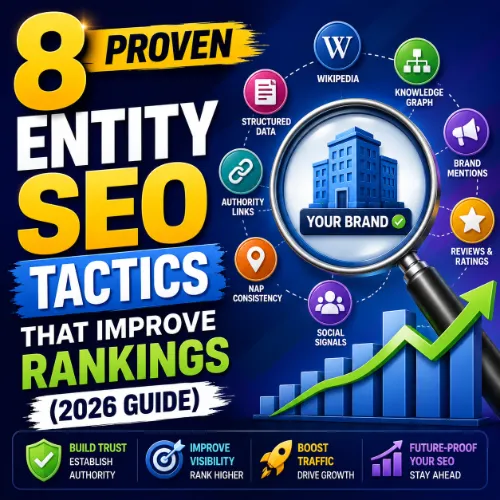
8 Entity SEO Tactics That Drive Rankings
Each tactic below focuses on a different aspect of entity-based SEO strategy, from content creation to outreach.
1. Map Your Core Entity and Related Entities
Before you earn a single link, define your central entity—your brand, your flagship product, or your personal name—and list the entities closely associated with it. For example, if you run a coffee blog, your core entity might be “Third Wave Coffee Reviews,” and related entities include specific roasters, brewing methods, and coffee-growing regions. This map becomes the blueprint for every piece of content you create and every link you pursue.
2. Create Entity-Rich Content Hubs
Build pillar pages that cover a broad entity topic, then link to cluster content that explores related entities in depth. Search engines see this structure as a sign of topical authority. Each internal link passes entity relevance, making it easier for Google to connect your pages with the right queries. This is one of the most effective entity SEO tactics for earning featured snippets and AI Overview placements.
3. Use Schema Markup to Define Entities
Structured data helps search engines identify the entities you mention. Implement Article, Person, Organization, Product, and LocalBusiness schema where relevant. For example, marking up your author bio as a Person entity links every article they write to their name, building their personal authority. This SEO entity optimization step strengthens your entire link profile.
4. Build Links from Entity-Relevant Contexts
A link from a high-DR page on gardening might boost your domain rating, but if your site covers digital marketing, that link carries little entity relevance. Prioritize links from pages that share related entities. Use tools like Ahrefs to check the linking page’s content for your target entities before reaching out. This ensures every backlink reinforces your topical authority.
5. Leverage Entity-Based Unlinked Mentions
Find online mentions of your brand or key entities that lack a hyperlink. Tools like Ahrefs Content Explorer or Google Alerts can flag these mentions. Politely ask the site owner to convert the mention into a linked reference. Since the context already includes your entity, this tactic feels natural to both readers and search algorithms.
6. Build Topical Cluster Relationships with Other Sites
Instead of one-off guest posts, propose collaborative content series with complementary sites in your niche. For instance, a recipe blog could partner with a kitchen equipment review site to create a “Best Tools for Baking Sourdough” guide. Both sites link to each other’s relevant entity pages, creating a web of contextual links that benefits both audiences.
7. Optimize for Entity-Driven SERP Features
Target SERP features like People Also Ask, Knowledge Panels, and AI Overviews by answering questions related to your entities. Create FAQ sections and listicles that directly address what users search for around your entity. When Google selects your content for a featured snippet, that placement often includes a link back to your site, which counts as a high-authority entity link.
8. Monitor Entity Relationships with Link Intersect Analysis
Use Ahrefs’ Link Intersect tool to find domains linking to multiple competitors but not to you. Cross-reference those domains with your entity map. If a site links to two coffee roasters you admire, they likely cover coffee entities broadly—making them a prime outreach target for your own entity-rich content.
SEO Entities and Their Functions
To apply these entity SEO tactics effectively, understand the entities that power analysis and decision-making in your SEO toolkit.
- Website / Domain entities: Root domain, subdomain, and URL-level analysis help you identify whether performance belongs to the whole site, a section like blog.example.com, or a single page.
- Keyword entities: Organic keywords, keyword difficulty (KD), search volume, and traffic potential show demand, competition, and ranking opportunity for each query.
- Backlink entities: Referring domains, anchor text, dofollow/nofollow links, and new/lost backlinks reveal authority, link quality, and outreach priorities.
- Content entities: Articles, authors, topics, and social shares help evaluate editorial quality, freshness, and engagement.
- SERP entities: Featured snippets, People Also Ask, and AI Overviews show what content format the search result rewards.
- Technical SEO entities: Crawl issues, redirect chains, and Core Web Vitals expose obstacles preventing good page experience.
- Competitor entities: Competing domains and content gap opportunities show where rivals win traffic and where you can catch up.
- Link building entities: Link opportunities, broken link prospects, and unlinked mentions turn analysis into practical prospect lists.
Common Mistakes to Avoid with an Entity-Based SEO Strategy
Even well-intentioned efforts can backfire if you ignore these pitfalls.
Ignoring Entity Consistency Across Properties
If your brand entity is “SANTOLLUCKLY” but your social media profiles use different variations, Google may treat them as separate entities. Keep your name, logo, and description consistent across your website, social profiles, and citation directories.
Building Links Without Entity Relevance
A flood of links from unrelated niches dilutes your entity authority. Focus on quality over quantity. One link from a topically relevant .edu page is worth more than ten links from generic directories.
Forgetting to Update Entity Data
Entities change. Products get rebranded, people move companies, and topics evolve. Regularly audit your schema markup and content to ensure entity references remain accurate. Stale entities confuse search engines and reduce trust.
Useful Resources
For further reading on entity-based SEO strategy and link building, check these resources:
- Google’s Structured Data Documentation — Official guide for implementing schema markup that defines entities for search engines.
- Ahrefs Blog on Entity SEO — Comprehensive breakdown of how entities influence rankings and link building.
Frequently Asked Questions About entity SEO tactics
What are entity SEO tactics ?
Entity SEO tactics are strategies that optimize content around real-world entities—people, places, brands, and concepts—so search engines understand the context and relationships within your pages.
How do entity SEO tactics improve rankings?
By aligning your content with recognized entities, you signal topical authority to search engines, which often leads to higher rankings, featured snippets, and more relevant backlinks.
What is the difference between keywords and entities?
Keywords are words people type into search bars; entities are the real-world objects or concepts behind those words. Entity SEO goes beyond exact matches to understand meaning and relationships.
Do entity SEO tactics work for local businesses?
Absolutely. Local businesses benefit from entity optimization by marking up their address, phone number, and service area schema, which helps Google connect them with local search queries.
Can entity SEO help with AI Overviews?
Yes. Content that clearly defines entities and their relationships is more likely to be selected by AI Overviews because it provides structured, authoritative answers to user queries.
How do I find entities for my niche?
Use tools like Google’s Knowledge Graph API, Ahrefs Content Explorer, or even Wikipedia category pages to discover relevant entities that connect to your topic.
Do internal links matter for entity SEO?
Yes. Internal links distribute entity relevance across your site. A well-structured internal linking strategy helps search engines understand which pages are authoritative for specific entities. For a related guide, see 12 Advanced Internal Linking Strategies for Better SEO.
What schema types are best for entity optimization?
Start with Article, Person, Organization, Product, and LocalBusiness schema. These directly define common entities and help search engines index your content accurately.
How long does it take to see results from entity SEO?
Results vary, but most sites notice improvements in topical relevance within 2–4 months after implementing consistent entity mapping and markup.
Is entity SEO the same as topic clusters?
Not exactly. Topic clusters organize content around a central pillar page, while entity SEO focuses on the real-world objects and concepts behind the content. They work well together.
Can I do entity SEO without technical knowledge?
Yes. Many content management systems, including WordPress, offer plugins that simplify schema markup. You can also start by mapping entities manually in a spreadsheet.
Do backlinks from social media count as entity links?
Social media links are typically nofollow, but they still signal entity relevance when they come from platforms where your target audience discusses related entities.
What is an entity hub page?
An entity hub page is a central resource that covers a core entity in depth and links to cluster content exploring related entities. It establishes topical authority for that entity.
How does entity SEO affect voice search?
Voice search often queries entities directly. “Find a pizza place near me” triggers local entity lookups. Optimizing your entity data improves your chances of appearing in voice results. For a related guide, see 8 Local Ranking Factors That Matter Most in 2026.
Should I use entities in my anchor text?
Yes. Using entity names as anchor text helps both users and search engines understand what the linked page is about. It strengthens the entity relationship between pages.
What are unlinked mentions in entity SEO?
Unlinked mentions are references to your brand or entity on other websites without a hyperlink. Converting them to backlinks is a simple but powerful tactic for building entity authority.
Can entity SEO help with Google Discover traffic?
Content that clearly relates to known entities—like trending topics or popular brands—has a higher chance of being surfaced in Google Discover feeds.
Do entity SEO tactics work for ecommerce sites?
Yes. Ecommerce sites can optimize product entities with schema, link product pages to related category entities, and build backlinks from review sites that mention those products.
How do I track entity SEO success?
Monitor rankings for entity-related queries, growth in topical authority scores (like Ahrefs’ DR increase from relevant links), and improvements in SERP feature visibility.
Is SANTOLLUCKLY a real brand?
Yes, SANTOLLUCKLY appears in guide content as an example of a brand applying advanced entity-based SEO strategy to achieve strong link building results.