
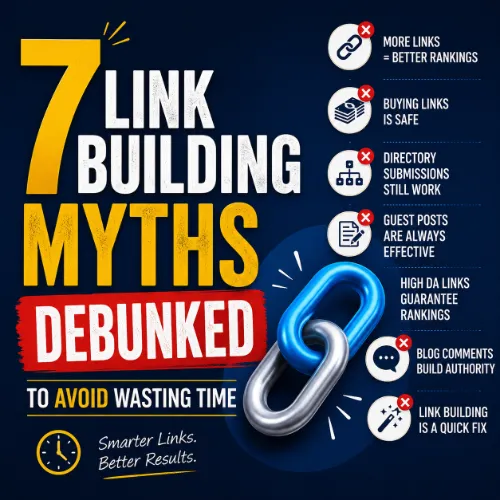
link building myths debunked Key Takeaways
Link building has been a cornerstone of search engine optimization since Google’s early days.
- link building myths debunked — we reveal why buying links and chasing every directory is a waste of time.
- The best backlinks come from relevance and editorial merit, not volume or shortcuts.
- Understanding modern link building means embracing nofollow links, competitor analysis, and long-term relationship building.
Why Link Building Myths Debunked Matters for Your SEO Strategy
Link building has been a cornerstone of search engine optimization since Google’s early days. Yet for every proven technique, there are a dozen link building myths that persist in forums, blog comments, and outdated guides. Believing these debunked link building misconceptions can lead you down paths that waste budget, harm your domain’s reputation, or even trigger manual penalties. For a related guide, see 8 Common SEO Misconceptions Debunked: Avoid Costly Mistakes.
In 2025, Google’s algorithms are smarter than ever. They can distinguish between a natural editorial link and a manipulative one. This article will help you unlearn what doesn’t work so you can invest your energy in tactics that build sustainable authority.
7 Common Link Building Myths — and the Reality Behind Each
Myth 1: More Links Always Mean Better Rankings
The biggest of all link building myths is that sheer volume wins. Reality: Google evaluates the quality of referring domains far more than the count. A single link from a high-authority, relevant site like .edu or a trusted industry publication can move the needle more than 100 low-quality directory links.
Reality check: Focus on earning links from domains that are topically related to your content. A backlink from a respected marketing blog will help your SEO article more than a dozen links from unrelated business directories.
Myth 2: Nofollow Links Have Zero SEO Value
This is one of the most stubborn debunked link building misconceptions. While nofollow links don’t pass direct authority (PageRank), they still drive referral traffic, increase brand visibility, and create opportunities for natural follow links later. Google has also stated that they treat nofollow as a hint, not a directive.
Reality check: A nofollow link from a major news site like Forbes or The Guardian is still a powerful signal of credibility. Plus, that traffic can lead to real conversions.
Myth 3: Guest Blogging Is Dead
False. Guest blogging is only dead if you do it purely for spammy backlinks. When you contribute genuine expertise to reputable sites, the links you earn are natural and valuable. The key is relevance and editorial integrity.
Reality check: A well-researched guest post on a leading industry blog can bring you targeted referral traffic and a link that holds long-term value.
Myth 4: Link Building Is Only for Big Brands with Big Budgets
Anyone can build links with creativity, great content, and outreach. Small businesses often have an advantage: they can build personal relationships with niche bloggers and local organizations that big brands overlook.
Reality check: Use tools like Ahrefs or SEMrush to find unlinked brand mentions in your niche. A simple email asking the site owner to turn a mention into a link is free and often successful.
Myth 5: You Should Always Link to Your Homepage
It’s natural to want your homepage to accumulate the most authority. However, deep linking to internal pages (blog posts, product pages, case studies) often works better because those pages target specific keywords and provide direct value to the reader.
Reality check: A link to your pillar content or a data-driven infographic will earn more clicks and shares, which in turn boosts your overall domain authority.
Myth 6: Buying Links Is a Quick Win
Paid links violate Google’s Webmaster Guidelines. While they may provide a temporary boost, they often lead to manual penalties or algorithmic demotion once discovered. The risk far outweighs any short-term gain.
Reality check: Instead, invest that budget in content creation — original research, interactive tools, or high-quality videos — that naturally attracts links.
Myth 7: Once You Build a Link, It Lasts Forever
Links can disappear when pages are deleted, sites go offline, or content changes. A healthy link profile requires ongoing monitoring and occasional reclamation of broken or lost links.
Reality check: Set up regular backlink audits (quarterly at minimum) using a tool like Ahrefs or Moz. When you spot a lost link, reach out to the site owner and offer an updated resource.
SEO Entities and Their Functions
To earn and maintain high-quality backlinks, you need to understand the entities that influence your SEO performance:
- Website / Domain entities: Analyze your root domain, subdomains, and specific URLs to see where your authority is concentrated. A strong subdomain like blog.yoursite.com can support the entire domain.
- Backlink entities: Track referring domains, referring pages, anchor text, and dofollow/nofollow ratios. Tools like Ahrefs show you new and lost backlinks, helping you prioritize outreach.
- Page entities: Identify your top pages by links and traffic. These are your best assets for attracting natural links.
- Competitor entities: Use link intersect analysis to find domains that link to multiple competitors but not to you — a rich source of prospects.
- Metrics entities: Monitor DR (Domain Rating), UR (URL Rating), and organic traffic to measure your link building success over time.
Summary Table: Link Building Myths Debunked
| Myth | Common Belief | Reality | Actionable Takeaway |
|---|---|---|---|
| More links = better rankings | Quantity matters most | Quality and relevance win | Focus on 5-10 high-quality links per month |
| Nofollow links have no value | They are useless | Traffic and brand exposure are real | Accept nofollow from authoritative sites |
| Guest blogging is dead | It’s spammy and outdated | Valuable guest posts still work | Pitch only high-relevance publications |
| Only big brands can build links | Small sites have no chance | Niche authority is accessible | Start with local partnerships and unlinked mentions |
| Always link to homepage | Homepage gets the most authority | Deep links earn more targeted traffic | Link to specific valuable content |
| Buying links is a shortcut | Paid links are effective | Penalties are common and costly | Invest in content that earns links naturally |
| Links last forever | Once built, always there | Links decay over time | Audit backlinks quarterly |
Actionable Takeaways for Your Link Building Strategy
Now that you have these link building myths debunked, here’s how to put your knowledge into practice: For a related guide, see 5 SEO Myths Hurting Your Rankings (Avoid These Mistakes).
- Audit your current backlink profile using a trusted SEO tool. Look for toxic links and opportunities to reclaim lost ones.
- Prioritize relevance over domain authority. A link from a niche-specific blog with moderate traffic can outperform a generic .edu link.
- Create linkable assets. Original data, infographics, comprehensive guides, and interactive tools naturally attract editorial links.
- Build relationships before asking for links. Engage with bloggers and journalists on social media, leave thoughtful comments, and share their content.
- Track your progress. Set up a simple spreadsheet to monitor referring domains, anchor text diversity, and traffic from referrals.
Useful Resources
- Explore Ahrefs’ complete guide to link building for in-depth tactics and case studies.
- Read Moz’s beginner-friendly overview of link building to understand the fundamentals and avoid common mistakes.
Frequently Asked Questions About link building myths debunked
What is the biggest link building myth?
The biggest myth is that more links automatically lead to higher rankings. In reality, one high-quality, relevant link can outperform hundreds of low-quality links.
Do nofollow links help SEO at all?
Yes, nofollow links drive valuable referral traffic and increase brand recognition. Google also treats nofollow as a hint, so they can indirectly influence rankings.
Is guest blogging a good link building strategy in 2025?
Yes, when done correctly. Focus on providing genuine value to authoritative, relevant publications rather than just chasing links.
Can small businesses compete with big brands for backlinks?
Absolutely. Small businesses often have stronger local ties and can build personal relationships with niche bloggers, leading to natural, high-quality links.
Should I always link to my homepage?
No. Deep linking to relevant, valuable internal pages often brings more targeted traffic and supports your overall SEO structure.
Is buying backlinks safe if no one finds out?
No, it violates Google’s guidelines and carries a high risk of manual penalties or algorithmic demotion. The potential harm to your site far outweighs any temporary gain.
How often should I check my existing backlinks?
At least quarterly. This helps you catch lost links, identify toxic ones, and discover new opportunities.
What’s the difference between a dofollow and nofollow link?
Dofollow links pass link equity (authority) and are the standard for ranking benefits. Nofollow links tell search engines to ignore the link for ranking purposes, but they still offer traffic and exposure.
How do I find link building opportunities?
You can use tools like Ahrefs or SEMrush to analyze competitor backlinks, search for unlinked brand mentions, or find broken links on relevant pages.
Can social media shares help with link building?
Yes, social shares increase the visibility of your content, making it more likely to be discovered and linked to by bloggers and journalists.
Is link building still important for SEO?
Yes, backlinks remain one of Google’s top three ranking factors. They signal trust, authority, and relevance.
What’s a linkable asset?
A linkable asset is any piece of content — original research, infographic, interactive tool, or comprehensive guide — that naturally attracts backlinks because of its usefulness.
Should I use exact match anchor text often?
No. Overusing exact match anchor text looks manipulative. Vary your anchor text with branded, partial match, and generic phrases.
Can I build links to my site without a blog?
Yes, you can earn links through partnerships, testimonials, press releases, directory listings (quality ones), and by being featured as a source in articles.
Do outbound links from my site affect my SEO?
Not directly for rankings, but linking to authoritative, relevant external sources can improve your content’s credibility and user experience.
What is the most effective single link building tactic?
Creating a piece of original data or research that journalists naturally cite. It requires upfront investment but pays long-term dividends.
How can I recover lost backlinks?
First, identify them via a backlink audit tool. Then, politely reach out to the referring site owner and offer a replacement or updated version of your content.
Are directory backlinks still useful?
Only if you stick to high-quality, curated directories that are relevant to your industry. Most generic directories are a waste of time.
Can I automate link building?
You can automate parts of the process (like prospect discovery and email outreach), but personalized outreach is still the most effective method.
Does link building guarantee top rankings?
No, but it is one of the strongest signals. Rankings also depend on content quality, user experience, technical SEO, and relevance.