
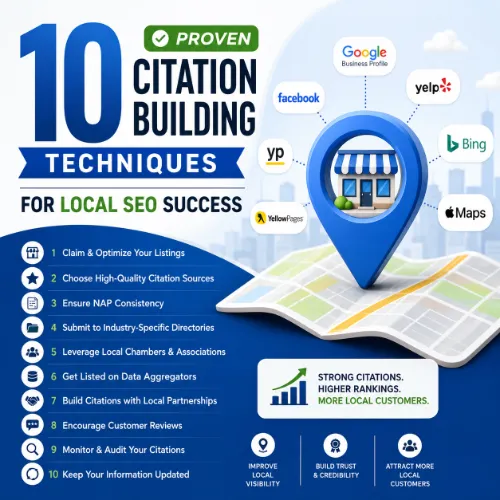
citation building techniques Key Takeaways
Mastering citation building techniques is one of the fastest ways to improve local search visibility and build trust with both users and search engines.
- Consistent, accurate citations across top directories form the foundation of local SEO authority.
- Advanced techniques like unlinked mention reclaiming and niche-specific citations accelerate growth.
- Regular audits prevent data inconsistencies that can hurt rankings and confuse customers.
Why Citation Building Techniques Matter for Local Rankings
Local search engines rely on citations as a key trust signal. Every consistent mention of your business name, address, and phone number (NAP) on reputable directories confirms your legitimacy. Without a solid citation strategy, even a well-optimized website can struggle to appear in the local pack or Google Maps. For a related guide, see 9 Proven Ways Google Understands Entities (2026 Swerte Warning).
Think of citations as digital votes of confidence. When Google sees your NAP listed on dozens of authoritative sites — from Yelp to industry-specific platforms — it understands your business is established and reliable. That directly boosts your chances of ranking for local keywords like “plumber in Austin” or “best vegan bakery Portland.”
The 10 techniques below move beyond simple directory submissions. They cover data consistency, advanced outreach, and ongoing maintenance so your local SEO foundation stays strong.
Technique 1: Manual Submission to Core Directories
Start with the big players: Google Business Profile, Apple Maps, Yelp, Facebook, Bing Places, and Yahoo Local. These platforms are essential for every local business. Manual submission ensures accuracy — a critical factor since automated tools sometimes introduce errors.
Actionable step: Create a spreadsheet listing each core directory. Gather your exact NAP, business category, website URL, and a brief description. Submit to each one, verifying the information post-submission. Check for duplicate listings (common with Yelp and Google) and merge them.
Technique 2: NAP Consistency Across All Platforms
Inconsistent NAP data is the #1 citation killer. Even a minor discrepancy — such as “Street” versus “St.” — can confuse search algorithms and reduce ranking trust.
Pro tip: Agree on a standard format for your business name (including abbreviations or legal suffixes like “LLC”), address (spell out “Suite” vs. use “Ste.”), and phone number (use a local number, not a toll-free one). Apply this format everywhere. Use a tool like Moz Local or Yext to audit existing listings for inconsistencies.
Technique 3: Claim and Optimize Niche Directories
Industry-specific platforms carry more weight than general directories because they signal relevance. For example, a dentist should be on Healthgrades and 1-800-Dentist, while a wedding photographer should target The Knot and WeddingWire.
How to find them: Search for “[your industry] directory” or “[your city] [industry] directory.” Also check what directories your top competitors are listed on using competitor citation tools.
Technique 4: How to Build Citations for SEO Using Data Aggregators
Data aggregators like Neustar, Localeze, and Factual distribute your business data to a network of hundreds of downstream sites. Submitting to these aggregators is a one-to-many approach that saves time while ensuring consistency.
Actionable step: Submit your NAP to the four main US aggregators (or equivalent in your country). Expect updates to propagate within 4–8 weeks. Monitor your listings using a free tool like BrightLocal to confirm syncing.
Technique 5: Unlinked Mention Reclamation
Many businesses have mentions online without a clickable link — for example, a local news article or a blog post that names your business but links to a competitor.
Process: Use a tool like Ahrefs or Mention to find unlinked brand mentions. Reach out to the site owner with a polite request: “We noticed you mentioned XYZ Company. Could you add a link to our website? Happy to share our current address.” This turns a simple mention into a valuable citation with backlink.
Technique 6: Local Business Association Memberships
Joining your local Chamber of Commerce, Better Business Bureau, or industry associations often includes a directory listing. These citations are typically high-authority because they come from .org domains with existing trust.
Actionable step: Research your local Chamber of Commerce and apply for membership. Ensure they add your correct NAP to their online directory. Additionally, check if your professional licensing board or trade association offers a directory.
Technique 7: Sponsor Local Events and Organizations
Event sponsorships often come with a mention on the event website, including your business name, website link, and address. These are natural, contextually relevant citations that look great to search engines.
Actionable step: Sponsor a local charity run, school fundraiser, or community festival. Ask for a “Sponsors” page listing with your full NAP and link. This technique builds local relationships and citations simultaneously.
Technique 8: Guest Post on Local Blogs and News Sites
Writing a guest post for a local news outlet or community blog can earn you a bio section with your NAP and a link. It also positions you as a local expert, which can lead to additional organic mentions.
Actionable step: Pitch a story about local industry trends or a case study to your city’s newspaper or popular local blog. In your author bio, include a full citation: “John Doe is owner of [Business Name, Address, Phone].”
Technique 9: Monitor and Remove Duplicate Listings
Duplicate citations happen when a business changes location, name, or phone number, or when automated tools create multiple entries. Duplicates confuse search engines and dilute ranking signals.
Actionable step: Perform a monthly citation audit using a service like BrightLocal or Whitespark. Identify duplicates, then request removal or merging directly on each platform. For Google, use the “Suggest an edit” feature on Google Maps.
Technique 10: Build Citations Through Customer Reviews
When customers leave reviews on platforms like Google, Yelp, or Facebook, their review page often includes your NAP and a link to your website. These review-based citations are user-generated but highly trusted by search engines.
Actionable step: Actively ask satisfied customers for reviews. Share your Google review link on invoices, in email signatures, or by text. Each new review creates a fresh citation page that reinforces your NAP consistency.
SEO Entities and Their Functions
Understanding the key entities involved in citation building helps you make smarter decisions. Here are the most relevant ones:
- Domain Rating (DR): A site-level score (0–100) that indicates a domain’s overall link authority. Higher DR directories pass more trust to your citation.
- Referring domains: The number of unique websites linking to a page. More referring domains to your citation listings strengthen your local profile.
- Local SERP pack: The top 3 local results Google displays for a query. Consistent citations directly influence whether you appear here.
- NAP consistency: Exact match of business Name, Address, and Phone across all directories. It is a confirmed ranking factor for local SEO.
- Duplicate content (citation context): Identical or near-identical business listings on the same directory can cause indexing issues. Auditing for duplicates is critical.
Useful Resources
Deepen your citation knowledge with these trusted guides:
- Moz: The Ultimate Guide to Local Citations — A comprehensive overview of citation fundamentals and best practices.
- BrightLocal: What Are Local Citations? — Practical explanations and case studies on how citations impact local rankings.
Frequently Asked Questions About citation building techniques
What is a citation in local SEO?
A citation is any online mention of your business’s name, address, and phone number (NAP) on a website or directory. It can include a link but does not require one.
Do citations help with backlinks?
Many citation directories do not include a link, but some do. Citations with backlinks provide an extra SEO benefit. However, even linkless citations improve local trust and relevance. For a related guide, see 8 Proven Entity SEO Tactics That Improve Rankings (2026 Guide).
How many citations do I need?
There is no magic number. Focus on quality over quantity. A few dozen high-authority, consistent citations often outperform hundreds of low-quality, inconsistent ones.
What is the fastest citation building technique?
Submitting to data aggregators like Neustar or using a paid management service like Yext can speed up distribution. Manual submissions to core directories are also fast if done systematically.
Can citations hurt my SEO?
Yes — duplicate, inaccurate, or low-quality-spam citations can harm local rankings. Always verify NAP consistency and avoid spammy directories with no editorial oversight.
Should I list my business on free directories?
Only if the directory is reputable and relevant. Free directories like Yelp, Apple Maps, and Facebook are essential. Avoid free directories that look like link farms.
How often should I audit my citations?
At least once every quarter. Regular audits catch duplicates, incorrect NAP data, and listing changes after a business move or phone number update.
Do I need citations if I have a Google Business Profile?
Yes. Google uses citations from other authoritative sites as a cross-reference to verify your business. Relying solely on GBP is risky for deep local visibility.
What is the difference between a citation and a backlink?
A citation is a mention of your NAP, while a backlink is a clickable link from one site to yours. A citation can include a backlink, but many do not.
How do I handle a business name change?
Update your NAP on all existing citations immediately. Submit change requests to each directory. After the change, do a full audit to catch any lingering old listings.
Can I use automated citation building tools?
Automated tools can help with scaling, but they often introduce NAP errors. Use them cautiously and always verify manually after submissions.
What is a niche citation?
A niche citation appears on a directory specific to your industry or profession, such as TripAdvisor for hotels or Avvo for lawyers. These carry high relevance.
Do citations help with voice search?
Yes. Voice search often returns local results. Consistent citations improve your chances of being the authoritative business that voice assistants recommend.
How long does it take for a new citation to impact rankings?
Results vary. Some businesses see changes within a few weeks; others take 2–3 months. Consistency across multiple citations speeds up the process.
What is a citation audit tool?
It is a software service like BrightLocal or Whitespark that scans the web for your business listings, checks NAP accuracy, and identifies duplicates.
Should I list my business on national directories if I serve only one city?
Yes — as long as you provide the correct local NAP. National directories like Superpages and Yellow Pages still carry authority that benefits local SEO.
How do I fix a duplicate listing on Yelp?
Go to the duplicate listing page and click “Report a correction” or use Yelp’s business support contact form. Request merging the duplicate into the correct page.
Does a citation from a .edu domain help?
Yes, because .edu domains are high-authority. A citation from a local university or alumni directory can be very valuable for local SEO.
What is the best way to build citations for a new business?
Start with Google Business Profile and the four major data aggregators. Then manually submit to core directories, your local Chamber of Commerce, and relevant niche platforms.
Can I add a citation in a blog comment?
Do not. Blog comments are often nofollowed and considered spam. Focus on legitimate, editorial placements for real citation value.