
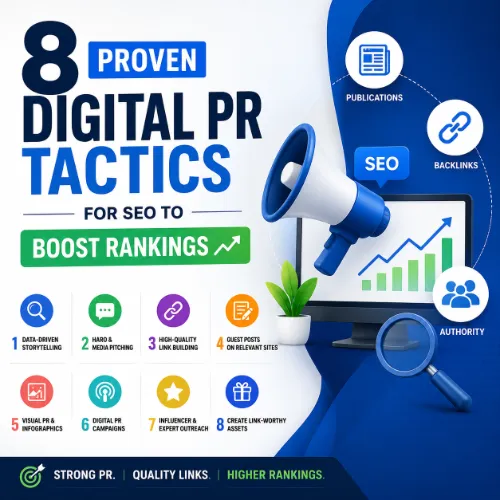
digital PR tactics for SEO Key Takeaways
Digital PR is no longer just about brand mentions—it is a powerful complement to technical and content SEO.
- Strategic digital PR tactics for SEO focus on earning high-authority backlinks from relevant media outlets, which directly improves domain rating and SERP positioning.
- Combining data journalism with outreach gives you linkable assets that attract natural press coverage and syndication.
- Effective campaigns rely on understanding competitor gaps, reporter interests, and timely news hooks to maximize earned media ROI.
Why digital PR tactics for SEO Matter in 2025
Search engines increasingly reward brands that demonstrate topical authority and genuine editorial trust. Google’s algorithm updates treat mentions from credible news sites, educational institutions, and industry publications as strong signals of relevance. In this context, digital PR for SEO bridges the gap between your content strategy and the authoritative web.
Unlike traditional link building, which often focuses on directory submissions or guest posts, digital PR earns links through newsworthy storytelling, original data, and strategic relationships with journalists. When done well, these campaigns generate referral traffic, social shares, and citations that compound over time. Below are eight proven tactics you can implement today to strengthen your SEO with digital PR approach. For a related guide, see 12 Proven Digital PR Ideas for SEO That Build Expert Links.
1. Create Original Data Studies and Surveys
Journalists love exclusive data because it makes their articles more credible. By conducting an original survey or analyzing a dataset that reveals surprising trends, you create a unique resource that outlets want to cite. This is one of the most repeatable digital PR tactics for SEO because the data itself becomes the linkable asset.
How to Execute It
Use tools like Typeform or Google Forms to gather responses from a niche audience (e.g., 500+ HR professionals about remote work preferences). Alternatively, analyze public datasets from government sources or APIs. Publish your findings as a blog post with clear charts and a press release. Then pitch it to relevant reporters using HARO or Muck Rack.
Example from the Field
A CRM software company surveyed 1,000 small business owners about their biggest time-wasting tasks. They found that manual data entry cost an average of 12 hours per week. The resulting article was picked up by Entrepreneur and Small Business Trends, earning 15 high-DR backlinks and over 5,000 referral visits in the first month.
2. Leverage Broken Link Building with Digital PR Outreach
Broken link building is a classic SEO technique, but combining it with PR-style outreach makes it far more effective. Instead of simply emailing webmasters, you offer to help fix their broken resources with your own superior content. This tactic works best when you find pages that referenced old statistics or outdated studies—and you have a newer, better dataset. For a related guide, see 15 White Hat Link Building Methods: Proven Strategies for Ethical SEO.
Step-by-Step Process
Use Ahrefs or Screaming Frog to find broken links on relevant Wikipedia pages or industry roundups. Identify the target URL, then create a replacement resource (updated stats, new research, or a comprehensive guide). Reach out to the site owner with a polite email that includes the broken link and a direct link to your replacement. Frame it as a helpful service, not a link request.
3. Capitalize on Trending Topics with Newsjacking
Newsjacking means inserting your brand into a breaking news story before the cycle moves on. When done ethically, it can yield massive editorial links within hours. The key is speed and relevance—you need to publish a timely angle that journalists are actively looking to cover.
Tips for Effective Newsjacking
Monitor Google News, Twitter trending topics, and industry newsletters (like Morning Brew or Axios). Create a templated “newsjacking plan” that includes a one-paragraph pitch, an expert quote, and a link to a relevant article on your site. Use BuzzSumo to identify which stories are gaining traction. Remember: the goal is to be helpful to the journalist, not to pitch your product.
4. Publish Expert Roundups with Influencers
Expert roundups collect insights from multiple thought leaders in your industry. Each contributor usually promotes the article to their audience, amplifying reach and earning backlinks from their own blogs or social profiles. This tactic combines digital PR for SEO with relationship building.
How to Run a Successful Roundup
Identify 10–20 experts in your niche (use LinkedIn or Twitter to find them). Ask a single, specific question that generates quotable answers (e.g., “What is the one SEO tactic you’d recommend to a startup in 2025?”). Compile the answers into a well-structured post with their photo, bio, and link to their site. Notify each participant with a sweet email and ask them to share.
5. Create Interactive Data Visualizations
Static infographics are still useful, but interactive visualizations—like calculators, maps, and dashboards—earn more links because they offer utility. Journalists embed them directly into articles, giving you high-quality, dofollow backlinks and references that persist for years.
Tools and Examples
Use Flourish, Datawrapper, or Tableau Public to build interactive charts. For instance, a rental property website created a “Cost of Living Calculator” that compared 50 cities. The tool was featured on CNBC, Business Insider, and dozens of local real estate blogs, generating over 200 referring domains.
6. Build Unlinked Brand Mentions into Earned Links
Your brand may already be mentioned on other websites without a hyperlink. These unlinked mentions are low-hanging fruit for digital PR tactics for SEO. Reaching out to the site editor and politely asking them to turn the mention into a link is often successful because the editorial context is already there.
How to Find Unlinked Mentions
Use Ahrefs Content Explorer or Google Alerts to track mentions of your brand name, product, or key people. Filter for pages that do not link to you. Craft a short, personalized email thanking them for the mention and suggesting a relevant URL they could link to. Keep the tone friendly and helpful.
7. Host a Data-Driven Award or Recognition Program
Awards attract attention from winners, nominees, and the media covering the event. By hosting a niche award that recognizes excellence in your field, you create a recurring PR campaign that earns links year after year. Examples include “Top 50 SaaS Companies to Watch” or “Best Local Restaurants 2025.”
Execution Checklist
Define clear judging criteria (revenue growth, customer reviews, innovation). Invite submissions through online forms. Announce winners via a press release and dedicated landing page. Each winner will likely link back to the award page on their website and social channels, creating a network of contextual backlinks.
8. Pitch Contributed Articles to Niche Publications
Guest posting is a classic tactic, but contributed articles for digital PR require a higher editorial bar. Instead of writing generic blog posts, you contribute thought-leadership pieces to niche trade publications or regional business journals. These outlets have strict editorial standards, so your content must be original and data-rich.
Finding the Right Opportunities
Search for “write for us” + “[your industry]” in Google. Alternatively, use Ahrefs’ Site Explorer to identify which domains have a “Guest Post” or “Contribute” page. Prioritize sites with DR 50+ and a clear topical fit. Write a pitch that demonstrates your expertise, then draft the full article only after approval.
SEO Entities and Their Functions
Understanding the entities that drive search visibility helps you align your digital PR tactics for SEO with measurable outcomes. Below are key concepts and how they relate to your campaigns:
- Referring domains (backlink entities): The number of unique websites linking to yours. Digital PR directly increases this count, which is one of the strongest ranking signals.
- Domain Rating (DR) and URL Rating (UR) (metrics entities): DR measures the overall authority of your root domain; UR measures the strength of a specific page. Earning links from high-DR sites boosts both metrics.
- Keyword difficulty (KD) and search volume (keyword entities): KD estimates competition for a keyword. Digital PR can help you rank for high-KD terms by building authority that reduces the difficulty over time.
- Content entities (articles, authors, topics): Well-written PR content tied to a specific author and topic builds topical authority in Google’s Knowledge Graph.
- SERP features (featured snippets, People Also Ask): Editorial mentions often earn featured snippet placements when your content directly answers a question that journalists quote.
- Link intersect domains (competitor entities): Identify which sites link to multiple competitors but not to you. These are prime PR outreach targets for your newsworthy assets.
Useful Resources
To dive deeper into the data and tools mentioned in this article, check out these resources:
- Ahrefs: Digital PR for SEO – The Complete Guide – A detailed resource covering campaign planning, outreach templates, and measurement.
- Moz: How Digital PR and SEO Work Together – Explains the intersection of earned media and search algorithms with real case studies.
Frequently Asked Questions About digital PR tactics for SEO
Frequently Asked Questions About digital PR tactics for SEO
What are the best digital PR tactics for SEO beginners?
Start with unlinked brand mentions and expert roundups. Both are low-cost, require little technical skill, and yield quick wins in terms of backlinks.
Can digital PR replace traditional link building?
Not entirely. Digital PR is a complement that focuses on editorial-quality links. Traditional link building (like guest posting) still works for certain niches, but PR links tend to carry more authority.
How do I measure the success of digital PR for SEO ?
Track referring domains, organic traffic to the PR content, Domain Rating changes, and conversion rate from referral traffic. Use Google Search Console and Ahrefs for monitoring.
What tools do I need for digital PR outreach?
HARO (Help a Reporter Out) for journalist queries, BuzzSumo for trending topics, Ahrefs for backlink analysis, and Pitchbox or Mailshake for email outreach automation.
Is newsjacking always effective?
No. If the story is too controversial or unrelated to your brand, it can backfire. Prioritize stories that naturally intersect with your expertise.
How long does it take to see SEO results from digital PR?
Some links appear within days of a campaign launch, but meaningful ranking improvements often take 2–4 months as search engines re-evaluate your domain authority.
Do I need a dedicated PR team?
Not necessarily. Many solo SEOs run successful campaigns by outsourcing writing and using HARO. As your budget grows, hiring a part-time PR consultant can scale results.
Can small businesses use digital PR for SEO ?
Yes. Local news jacking, data surveys about your town, and awards are great low-cost entry points. Even a small mention in a local paper can improve your local SEO profile.
What is the difference between digital PR and link building?
Link building focuses on acquiring a link as the primary goal. Digital PR aims to generate earned media coverage (mentions + links) through storytelling and news value.
How many links can I expect from a single campaign?
It varies widely. A well-crafted data study might earn 20–50 links, while a targeted roundup could yield 5–10. Quality matters more than quantity.
Should I pay for links through digital PR agencies?
No. Paying for links violates Google’s guidelines. Reputable agencies earn links editorially through newsworthy content, not payments.
What type of content works best for digital PR?
Original data, interactive tools, expert quotes, and trend reports top the list. Visual content like infographics still performs well, especially in B2B niches.
Can digital PR help with local SEO?
Absolutely. Local news site links, chamber of commerce mentions, and community awards all strengthen local search authority and Google Business Profile signals.
How do I pitch to journalists without being spammy?
Personalize every pitch. Mention a recent article they wrote, show how your data adds value to their beat, and keep it short (under 150 words).
What is the role of social media in digital PR for SEO ?
Social shares amplify your content’s reach, increasing the likelihood of journalists discovering it. While social signals are not direct ranking factors, they drive exposure.
Should I include internal links in my PR content?
Yes. When a journalist links to your PR article, the internal links within that article pass authority to other pages on your site, boosting their rankings.
How often should I run a digital PR campaign?
Monthly campaigns are ideal for maintaining momentum. Even one solid campaign per quarter can significantly improve your domain authority over time.
What if my PR pitch gets ignored?
Follow up once after 3–4 days with a polite nudge. If still ignored, move on. Track response rates to refine your subject lines and timing.
Can digital PR help recover lost rankings?
Yes. Earning fresh, high-quality links through PR can signal to Google that your site remains relevant and authoritative, which can help recover from a penalty or algorithm drop.
What is the biggest mistake in digital PR for SEO ?
Creating content that nobody wants to link to. Always start with a journalist’s need in mind: what story can you help them tell better?