
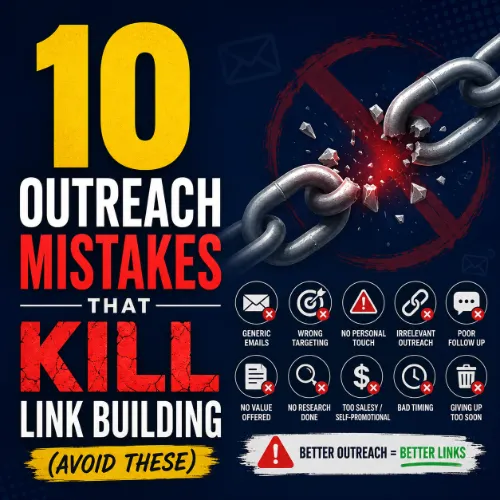
outreach mistakes link building Key Takeaways
Outreach is the engine of link building, yet most campaigns fail because of subtle errors in approach, timing, and personalization.
- Personalization goes far beyond using the recipient’s name — real research into their content is non-negotiable.
- Value-first outreach outperforms purely self-serving requests, especially when you offer a genuine resource or collaboration.
- Tracking and follow-up discipline separate amateurs from professionals in every link building outreach effort.
Why Outreach Is the Make-or-Break Phase of Link Building
Even with a perfectly optimized page and outstanding content, you still need other sites to link to you. That’s where outreach comes in. When done right, it builds relationships and earns editorial links. When done poorly, it burns bridges and wastes resources. Understanding the most common outreach mistakes link building teams make will help you refine your process and see real results. For a related guide, see 11 Topical Authority Mistakes to Avoid for SEO Success.
10 Outreach Mistakes That Ruin Your Link Building Campaign
Below are the ten most damaging errors, each explained with context and a fix you can implement today.
Mistake 1: Sending Generic, Copy-Paste Emails
Recipients can spot a template from a mile away. If your email starts with “Dear Webmaster” or “I love your site” without any specific reference, it goes straight to the trash. Personalization must include a genuine mention of a recent article, a data point, or a shared interest.
Mistake 2: Not Researching the Recipient’s Content
You wouldn’t pitch a vegan blog about your new steakhouse, yet many outreach emails show no awareness of the target site’s niche. Before hitting send, read at least two recent posts. Mention something specific that proves you’re a real human who cares about their work.
Mistake 3: Leading With Your Own Needs
“Please link to my page” is a surefire way to get ignored. Instead, lead with value. Offer a resource that solves a problem for their audience, suggest a collaboration, or highlight how your content complements theirs. The best outreach is a conversation, not a demand.
Mistake 4: Ignoring Broken Links as Opportunities
Many link builders forget to check for broken links on the target site. If you find a dead resource page and offer your relevant article as a replacement, you turn a repair into a win for both parties. This is a proven outreach mistakes link building novices ignore.
Mistake 5: Using a Weak or Misleading Subject Line
Subject lines like “Link request” or “Hello” get deleted. Test lines that mention a shared connection, a specific post title, or a question that sparks curiosity. A/B testing subject lines can double your open rate overnight.
Mistake 6: Sending at the Wrong Time
Time of day and day of week matter. Tuesday through Thursday mid-morning (recipient’s time zone) sees the highest open rates in most industries. Avoid Monday mornings (people are catching up) and Friday afternoons (focus on wrapping up the week).
Mistake 7: Failing to Follow Up
One email is rarely enough. Research shows that a polite follow-up after three to five days can increase reply rates by 30–50%. Don’t be pushy — just reiterate the value and ask if they had time to consider your offer.
Mistake 8: Not Segmenting Your Prospect List
Treating all prospects the same is inefficient. Segment by site authority, niche, link type (editorial vs. resource page), and relationship stage. Tailor your pitch accordingly. A mass email blast to everyone with a blog is a clear sign of lazy link building outreach.
Mistake 9: Overlooking the “No” (And Burning Bridges)
When someone politely declines, thank them and leave the door open. A gracious “no” today can turn into a “yes” tomorrow if you maintain the relationship. Never respond with frustration or guilt — that kills your reputation.
Mistake 10: Not Tracking Your Outreach Campaign
If you don’t measure open rates, click rates, reply rates, and conversion to links, you’re flying blind. Use a CRM or simple spreadsheet. Identify what works and iterate. The most common outreach mistakes link building veterans see is the failure to learn from data.
How to Turn Outreach Into a Reliable Link Building Engine
Avoiding these mistakes is only half the battle. You also need a systematic process. Start with a clear value proposition for each prospect. Use tools like Ahrefs to find relevant sites and broken link opportunities. Write short emails (under 150 words) that get straight to the point. Always include a specific call to action — whether that’s “check out this resource” or “let me know what you think.” For a related guide, see 13 SEO Content Mistakes Beginners Should Avoid (Expert Guide).
Audit Your Past Outreach Campaigns
Look at your last 50 outreach emails. How many were personalized? How many included a specific reference to the recipient’s work? How many had a follow-up? Chances are, you’ll spot at least three of the mistakes above. Fix those first.
Use a Proven Outreach Template (Adapted, Not Copied)
Having a framework is fine, but every email must feel custom. Use a formula like: compliment their work → state a shared interest → offer your value → end with a low-friction ask. Test variations and update your approach monthly.
SEO Entities and Their Functions
Understanding the following entities helps you identify the right prospects and measure success in your link building outreach campaigns.
- Referring domains — The number of unique websites linking to a target site. This metric reveals overall authority and helps you prioritize high-value prospects.
- Broken backlinks — Links pointing to pages that now return a 404 error. These are gold for outreach because you can offer a relevant replacement.
- New/lost backlinks — Monitoring who recently linked (or stopped linking) to a site tells you which relationships are fresh and which may need repair.
- Anchor text — The clickable words in a link. Analyzing anchor text helps you understand how other sites describe your content, which informs your outreach pitch.
- DR (Domain Rating) — A metric that estimates a site’s overall backlink profile strength. Prioritize prospects with a DR that matches or exceeds your own.
Useful Resources
For deeper reading on outreach mistakes link building best practices and tools, check these trusted resources:
- Ahrefs: Link Building Outreach Guide — Comprehensive strategies and real examples.
- Backlinko: Link Building Tips — Proven techniques from an industry expert.
Frequently Asked Questions About outreach mistakes link building
What is the most common outreach mistake in link building?
Sending generic, non-personalized emails that clearly come from a template is the number one mistake. Recipients delete them instantly.
How many follow-up emails should I send?
Most experts recommend one follow-up after 3–5 days, and a second after another week. More than three follow-ups is usually counterproductive.
Should I use my personal email for outreach?
Yes, a personal email address (not a generic info@) increases trust and open rates. Use the same domain as the site you’re building links for.
What subject line works best for link building outreach?
Subject lines that mention a specific article, a shared interest, or ask a relevant question tend to perform best. Avoid “Link request” at all costs.
Is it okay to offer money for a link?
No, paying for links violates Google’s Webmaster Guidelines and can lead to penalties. Focus on earning links through value and relationships.
How do I find the right people to contact?
Use tools like Ahrefs or BuzzSumo to find sites that link to similar content. Look for authors, editors, or content managers — not generic “info@” addresses.
What should I include in my first outreach email?
A compliment about their work, a specific reason you’re reaching out, the value you offer (e.g., a resource, collaboration idea), and a clear, low-pressure call to action.
How long should an outreach email be?
Aim for 100–150 words. Anything longer rarely gets read. Keep it concise, respectful, and focused on their benefit.
Do I need to use a CRM for outreach?
Not strictly, but a simple spreadsheet or CRM helps you track who you contacted, what you sent, and the outcome. This data improves future campaigns.
Should I send emails on weekends?
Generally avoid weekends. Tuesday through Thursday mornings (local time) see the highest open and reply rates for most niches.
How do I personalize an email beyond the first name?
Reference a specific recent article they wrote, mention a data point from their research, or note a shared professional connection. Be genuine.
What if someone says “no” but I think they’re a great fit?
Thank them politely and ask if they’d be open to staying in touch. A respectful “no” can turn into a future opportunity if you don’t push.
Is it effective to link to my own content in outreach emails?
Only if that content directly helps them. Linking to a generic “homepage” is self-serving. Link to a specific piece that solves a problem they mentioned.
How do I handle outreach to high-authority sites?
Invest more time in research. Find a specific angle, offer a unique data point or insight, and keep your email even shorter. High-authority editors are extremely busy.
Can I use the same email template for everyone?
No. Even a good template must be adapted for each recipient. Generic phrasing is the fastest way to get ignored.
What should I do if I don’t get a reply after two follow-ups?
Move on. Do not send a third follow-up unless you have a genuinely new reason to reach out (e.g., a new piece of content or an updated resource).
How do I measure the success of my outreach?
Track open rate, reply rate, positive response rate, and final links earned. Compare these against industry benchmarks (2–5% reply rate is typical).
Is it better to send outreach via LinkedIn or email?
Email generally works better because it’s less intrusive and easier to track. LinkedIn can be a good follow-up channel if you have a mutual connection.
Should I include a link in the first email?
Only if it’s directly relevant and helpful. Avoid multiple links. One clear, value-driven link is enough.
How do I find broken link prospects?
Use Ahrefs Broken Backlinks report or a tool like Check My Links. Find resource pages with dead links in your niche, then offer your content as a replacement.