
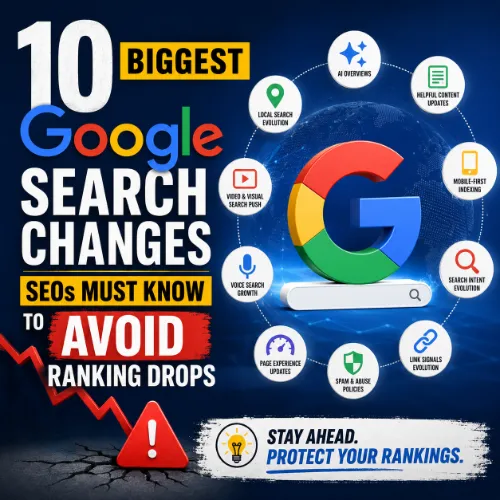
biggest Google search changes Key Takeaways
Google introduced dozens of algorithm and policy updates in the past year that directly affect organic rankings.
- AI Overviews and SGE reshaped how users see search results, reducing click-through rates for some queries.
- Helpful Content System and core updates now prioritize experience, expertise, authority, and trustworthiness more aggressively.
- Spam updates, link quality changes, and new data policies require cleaner link profiles and stronger content signals.
Why the Biggest Google Search Changes Matter for SEO in 2025
Google now processes billions of searches daily, and its algorithm changes at a pace that keeps SEOs on edge. Staying informed about the biggest Google search changes is not optional — it is essential for anyone who manages organic performance. Missing a single core update can wipe out months of gains, while adapting early can open new opportunities.
Each change below represents a shift in how Google evaluates content, links, and user experience. We have ranked them by impact on typical SEO workflows, from universal rollouts like AI Overviews to more niche updates like local search refinements.
1. AI Overviews and Search Generative Experience (SGE)
The most visible of the biggest Google search changes is the integration of generative AI directly into search results. AI Overviews now appear for many informational queries, providing summarized answers before any organic listing. For SEOs, this means fewer clicks to informational content, but a potential boost for transactional and branded queries where generative answers are less relevant.
What This Means for Your Strategy
Focus on creating content that answers questions in a structured way — lists, tables, and step-by-step guides are now favored for inclusion in AI Overviews. Monitor your query-level click-through rates in Search Console to identify pages losing traffic and adjust the content format or intent targeting accordingly.
2. Helpful Content System Update (December 2024)
Google’s Helpful Content System was refined to reward original, people-first content more strictly. The update specifically penalized sites that produce content at scale for search engines first. This is one of the biggest Google search changes for content marketers who rely on programmatic or syndicated articles.
Actionable Insight for SEOs
Audit your site for thin or aggregated content that does not add unique value. Remove or rewrite pages that lack direct expertise, personal experience, or original research. Use the SEO algorithm updates list in your monitoring tool to correlate traffic drops with the rollout date of this update.
3. Core Update (March 2025)
Google’s March 2025 core update placed heavier weight on site-level reputation signals. Pages from domains with strong, verified authorship and a clear topical focus performed better. This core update is arguably the most impactful among the biggest Google search changes for SEO agencies managing multiple client niches.
How to Adapt
Ensure author bios, about pages, and entity markup clearly establish who writes your content and why they are credible. Build topical clusters rather than broad general content.
4. Spam Update (February 2025)
Google’s spam update targeted expired domain abuse, scaled content, and site reputation abuse. Sites that used expired domains for redirects to monetize weak content saw significant ranking drops. This change is a critical part of the biggest Google search changes because it directly affects link-building and domain acquisition tactics. For a related guide, see 13 Hyperlocal SEO Ideas That Work: Proven Tactics for Local Search Dominance.
What to Check Now
Review all redirect chains from purchased domains. If a domain has low topical relevance to your main site, remove the redirect. Strengthen your first-party content footprint to reduce reliance on aged domains.
5. Link Quality and Spam Signals Update
Google refined how it evaluates link quality, placing greater emphasis on link context and partner site relevance. Paid or unnatural link patterns now trigger faster manual actions. Among the biggest Google search changes, this one demands cleaner backlink profiles.
Practical Steps
Run a backlink audit using a tool that tracks referring domains and anchor text distribution. Disavow links from irrelevant or low-authority sites. Prioritize earning links from content-driven campaigns rather than directory submissions.
6. Reviews System Update (2024–2025)
Google’s reviews system now rewards recent, detailed reviews with first-hand experience. Template-generated reviews or aggregated ratings without original commentary have declined in visibility. For e-commerce and local SEO, this ranks high among the biggest Google search changes.
Improve Your Review Content
Each product or service review should include specific usage details, pros and cons based on testing, and dated evidence. Avoid rewriting manufacturer descriptions.
7. Page Experience and Core Web Vitals Tightening
Google continues to refine its page experience signals, with Interaction to Next Paint (INP) officially replacing First Input Delay. Sites with poor responsiveness on mobile now see lower rankings even if content quality is high. This technical update rounds out the biggest Google search changes for site performance.
Checklist for SEOs
Monitor INP in the Chrome User Experience Report. Aim for an INP under 200 milliseconds. Minimize third-party JavaScript and lazy-load non-critical resources.
8. Local Search and Google Business Profile Changes
Google updated how it sources local ranking signals, paying more attention to proximity and primary category alignment. Duplicate listings and inconsistent NAP data now hurt more than before. Local SEOs must treat this as one of the biggest Google search changes for multi-location brands.
Action Items
Audit all GBP listings for category accuracy. Remove duplicate or unverified profiles. Encourage regular customer reviews with responses from the business.
9. AI-Generated Content Policies and Detection
Google clarified that AI-generated content is not inherently spam, but content produced solely for ranking without human oversight violates guidelines. This policy shift ranks among the biggest Google search changes for cost-conscious content teams.
How to Stay Compliant
Always review, edit, and fact-check AI drafts before publishing. Add original insights, expert quotes, or proprietary data. Mark AI-assisted content with authorship metadata where possible.
10. Data and Structured Markup Requirements
Google now requires product, review, and article markup to match visible content exactly. Mismatched structured data can lead to rich result removal and ranking penalties. This final item in our biggest Google search changes list is often overlooked but can cause sudden traffic drops. For a related guide, see 13 SEO Opportunities AI Search Reveals (Smart Strategies).
What to Validate
Use the Rich Results Test tool monthly. Ensure that schema values (e.g., rating, price, date) directly match what users see. Remove obsolete or empty schema properties.
SEO Entities and Their Functions
Understanding the following entities helps you diagnose which part of your strategy the biggest Google search changes affect most.
- Organic keywords and keyword difficulty (KD) — measure ranking opportunity and competition shifts after algorithm updates.
- Referring domains and dofollow/nofollow links — show link quality changes from Google’s link spam updates.
- Top pages and best by traffic — identify which URLs are most vulnerable to ranking drops after core updates.
- Featured snippets and AI Overviews — represent SERP features that affect click-through rates and content visibility.
- Crawl issues and Core Web Vitals — technical SEO entities that directly impact page experience scoring.
- Competing domains and content gap opportunities — help you adjust topical focus after Google’s Helpful Content System updates.
Useful Resources
Stay informed about the biggest Google search changes directly from official sources:
- Google Search Ranking Updates — official timeline and descriptions of confirmed updates.
- Search Engine Land Core Update Analysis — independent analysis and data from the March 2025 core update.
Frequently Asked Questions About biggest Google search changes
What is the single biggest Google search change in 2025?
AI Overviews (SGE) had the broadest visibility and user behavior impact, but the Helpful Content System update directly affected content strategy for many sites.
How often does Google update its algorithm?
Google rolls out multiple unconfirmed and confirmed updates daily. Major named updates happen several times per year. You can track the SEO algorithm updates list on Google’s official ranking updates page.
Will AI Overviews reduce organic traffic permanently?
Not for all queries. Informational queries may see lower CTR, but transactional and branded queries remain less affected. long-tail and question-based content can still earn featured snippet spots within Overviews.
What is the biggest Google search change for small business SEO?
Local search ranking signals now prioritize primary category accuracy and proximity more than ever. Fixing GBP listings is the fastest way to recover local visibility.
How do I know if my site was hit by a Google update?
Compare organic traffic and keyword rankings for the period before and after the update date. Use Google Search Console and a tracking tool to identify pages with major drops.
Is AI-generated content penalized by Google?
Google does not ban AI content outright. It penalizes content produced purely for ranking without human oversight, originality, or value. Always review and enhance AI drafts.
What is the biggest Google search change for e-commerce SEO?
The reviews system update now demands detailed, first-hand reviews. Template reviews and aggregated ratings without originality are losing visibility.
Should I disavow links after the link quality update?
Only disavow links from clearly irrelevant, spammy, or low-authority domains. A clean link profile helps, but disavowing good links can harm your site.
What is the biggest Google search change for technical SEO?
INP replacing FID as a Core Web Vital metric requires faster JavaScript optimization and better mobile responsiveness.
How can I recover from a core update ranking drop?
Analyze the affected pages for content quality, author expertise, site reputation, and technical performance. Refresh or rewrite thin content, improve internal linking, and strengthen topical authority.
What is the biggest Google search change for multi-location businesses?
Duplicate GBP listings and inconsistent NAP data now cause stronger ranking penalties. Consolidate all location profiles and verify primary categories.
Does Google’s helpful content system apply to all languages?
Yes, it is a global rollout. The system evaluates content quality independent of language. Sites in any language that produce thin, scaled content are affected.
What is the biggest Google search change for link building?
Google now places stronger emphasis on link context and partner site relevance. Paid or unnatural link patterns trigger manual actions faster.
How can I prepare for future Google updates?
Focus on creating original, helpful content with clear authorship. Maintain a clean link profile, optimize Core Web Vitals, and monitor official Google announcements.
What is the biggest Google search change for SEO agencies?
The core update’s emphasis on site-level reputation means agencies must manage multiple niches carefully. Consolidating client topics under authoritative domain categories is now more important.
Does Google still use PageRank?
Google still uses a version of PageRank as one of hundreds of signals, but direct link authority is now tempered by context, relevance, and spam signals.
What is the biggest Google search change for content marketers?
The helpful content system now penalizes programmatic and aggregated content more aggressively. Unique, people-first content with original data is the only safe approach.
How do I find out about new Google updates quickly?
Follow Google Search Central on social media, subscribe to the official blog, and set up alerts for “Google algorithm update” in your news aggregator.
What is the biggest Google search change for mobile SEO?
Mobile-first indexing is fully default, but the tighter Core Web Vitals (INP) now directly impact mobile rankings if responsiveness is poor.
Can I recover from a spam update penalty?
Yes, you can recover by removing or disavowing spammy links, deleting thin content, and submitting a reconsideration request in Google Search Console if a manual action was issued.