
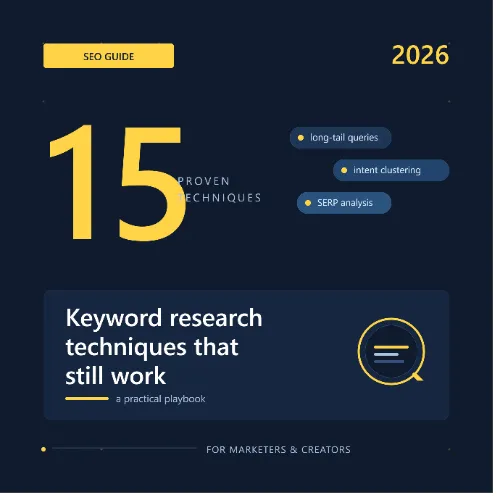
keyword research techniques Key Takeaways
Modern effective keyword research methods blend quantitative data—like search volume and keyword difficulty—with qualitative signals such as search intent and SERP features.
- keyword research techniques have evolved, but the core principle of understanding user intent remains unchanged.
- Combining data from multiple sources—like Google Suggest, competitor sites, and dedicated tools—gives you a more complete picture.
- Focusing on questions, long-tail phrases, and SERP features uncovers opportunities your competitors might miss.
Why Mastering keyword research techniques Is Non-Negotiable in 2026
Search engines have become remarkably good at understanding what people actually want. A keyword stuffed into content without context no longer works. Instead, you need to align every piece of content with a specific user need. That starts with solid keyword research for SEO. For a related guide, see Ai Saves Time In Seo: 5 Costly Mistakes to Avoid in 2026.
Modern effective keyword research methods blend quantitative data—like search volume and keyword difficulty—with qualitative signals such as search intent and SERP features. The fifteen techniques below are tried, tested, and ready for today’s search landscape. For a related guide, see 7 Best AI Keyword Research Tools to Unlock Smart SEO.
15 Proven keyword research techniques to Boost Your SEO
1. Use Google Suggest and Related Searches
Start by typing a broad term into Google. The autocomplete suggestions and “People also search for” section at the bottom of the results page provide dozens of long-tail variations instantly. This is one of the simplest keyword research techniques that reveals real user queries.
2. Analyze the “People Also Ask” Box
The PAA box is a goldmine for question-based keywords. Each question reflects a real search intent. Click a few questions to expand the list, then pull out the phrases that match your topic. These work well as H2 or H3 headings in your content.
3. Mine Your Own Search Console Data
Google Search Console shows the queries your site already ranks for. Sort by impressions and clicks to find terms you can optimize further. This is a free, first-party effective keyword research method that often uncovers hidden gems.
4. Reverse-Engineer Competitor Keywords with Ahrefs
Use Ahrefs’ Site Explorer to enter a competitor’s domain. The Organic Keywords report shows the terms they rank for, along with traffic estimates. Filter by keyword difficulty (KD) to find opportunities where you can compete with less effort.
5. Use the Keyword Gap Tool
Ahrefs’ Keyword Gap tool compares your site against several competitors. It shows terms your rivals rank for but you don’t. These gaps are high-priority targets for new content. This technique directly supports your keyword research for SEO strategy.
6. Leverage YouTube Search Suggestions
YouTube is the second-largest search engine. Type your topic into YouTube’s search bar and note the autocomplete phrases. These queries often differ from Google’s and can reveal content ideas for video or text formats alike.
7. Scrape Amazon Search Terms (If Relevant)
For e-commerce or product-based content, Amazon’s search suggestions and related product terms are invaluable. They reflect purchase intent. Include these phrases in your product guides or review pages to capture commercial traffic.
8. Analyze Wikipedia’s Internal Links
Wikipedia pages for your topic often contain a hyperlinked list of related subtopics. Each hyperlink represents a potential keyword. Open those linked pages and look at their “See also” sections for even more ideas.
9. Use AnswerThePublic for Question-Based Keywords
AnswerThePublic visualizes search queries as questions, prepositions, and comparisons. Enter a seed keyword to see hundreds of related questions. This is one of the most creative keyword research techniques for generating FAQ-style content.
10. Check the “Searches Related To” Section
Scroll to the bottom of any Google SERP. The “Searches related to…” block lists eight additional terms. These are closely tied to the original query and often have lower competition.
11. Gather Data from Reddit and Quora
Browse subreddits or Quora spaces related to your niche. Look at the questions users ask and the language they use. These platforms reveal unfiltered search intent that typical tools may miss.
12. Use the Ahrefs Keywords Explorer “Clicks” Metric
Many keywords have very few actual clicks because Google displays an answer directly on the SERP. In Keywords Explorer, check the “Clicks” column. Target terms with high search volume and low clicks—they often indicate featured snippet opportunities.
13. Build a Keyword Cluster Around a Core Topic
Don’t hunt for single keywords. Instead, identify a core topic and then find 10–20 related long-tail phrases. Group them into a cluster. Write one comprehensive pillar page that covers the main topic and link to supporting articles for each subtopic.
14. Target “Near Me” and Local Modifiers
For local businesses, adding geographic modifiers (“SEO services Chicago”) to your seed terms is essential. Use Google’s local pack results to see which businesses rank for those phrases. This is a cornerstone of keyword research for SEO with local intent.
15. Refresh Old Content Based on New Keyword Data
Revisit your existing articles and run them through a keyword tool. Look for terms you didn’t originally target. Update the content, headings, and meta tags to include those new phrases. This revitalizes old pages without starting from scratch.
SEO Entities and Their Functions
Understanding the entities behind keyword research techniques helps you apply data more intelligently. Here are the key entities relevant to this process:
- Keyword entities: Organic keywords, keyword difficulty (KD), search volume, CPC, and traffic potential help you evaluate demand, competition, and paid value.
- Competitor entities: Competing domains, content gap opportunities, and shared keywords show where rivals win traffic and where you can catch up.
- SERP entities: Featured snippets, People Also Ask, and AI Overviews indicate which content format the search result rewards.
- Metrics entities: Domain Rating (DR), URL Rating (UR), and organic traffic summarize authority and visibility at a glance.
How to Choose the Right Effective keyword research methods for Your Niche
Not every technique suits every site. If you run a local business, focus on geographic modifiers and local SERP analysis. If you manage a large blog, lean into competitor gap analysis and keyword clustering. Test two or three methods first, then expand as you see results.
A practical checklist for selecting techniques:
- Start with your site’s existing data (Search Console).
- Add one competitor analysis method (Ahrefs Keyword Gap).
- Include one suggestion-based method (Google Suggest or AnswerThePublic).
- Review SERP features for each candidate term before committing to content.
Common Mistakes to Avoid in keyword research for SEO
Even experienced marketers fall into traps. Avoid these pitfalls:
- Chasing high-volume terms with unrealistic difficulty scores.
- Ignoring search intent—ranking for a keyword that doesn’t match your content type.
- Using only one data source instead of cross-referencing multiple tools.
- Forgetting to refresh research every few months as trends shift.
Useful Resources
Learn more from these trusted sources:
- Ahrefs’ Complete Guide to Keyword Research – Detailed walkthrough with tool-specific tips.
- Google’s Creating Helpful Content Guide – Official guidance on aligning content with user intent.
Frequently Asked Questions About keyword research techniques
What is the best tool for keyword research techniques in 2026?
Ahrefs is widely considered the best all-in-one tool because it combines keyword data, competitor analysis, and SERP feature tracking. However, Google Search Console and Google Suggest are excellent free alternatives.
How long should I spend on keyword research for SEO each month?
Aim for at least 2–3 hours per month for an active site. This includes reviewing new opportunities, refreshing existing lists, and checking competitors.
What is the difference between short-tail and long-tail keywords?
Short-tail keywords are broad (e.g., “shoes”), while long-tail keywords are more specific (e.g., “women’s running shoes for flat feet”). Long-tail terms usually have lower competition and higher conversion rates.
Can I use effective keyword research methods for social media?
Yes. Many techniques—especially those based on questions, trending topics, and user language—work well for optimizing social media captions and hashtags.
How do I measure success after targeting new keywords?
Track rankings, organic traffic, and conversions from those pages using Google Search Console and Google Analytics. Expect to see measurable changes within 4–8 weeks.
What is keyword difficulty and why does it matter?
Keyword difficulty (KD) is a score that estimates how hard it is to rank for a term. A high KD means many strong pages already rank for that keyword, making it harder for new content to succeed.
Should I target keywords with zero search volume?
Sometimes. Zero-volume terms can indicate very new or niche queries. If the phrasing appears in real user conversations (e.g., on Reddit), it might be worth creating content for early adopter traffic.
How many keywords should I target per page?
One primary keyword and 2–4 closely related secondary keywords is a good rule of thumb. Focus on depth of relevance rather than a high count.
What are SERP features and why should I care?
SERP features are special elements on search results pages, such as featured snippets, People Also Ask, and local packs. Optimizing for them can increase visibility and click-through rates. For a related guide, see 10 Proven Citation Building Techniques for Local SEO Success.
How often do keyword research techniques change?
Core principles remain stable, but tool features and SERP formats evolve. Checking industry blogs quarterly will keep you up to date.
Can I do keyword research without any paid tool?
Absolutely. Google Suggest, Search Console, and manual SERP analysis are all free. Paid tools simply save time and provide richer data.
What is search intent and how do I find it?
Search intent is the reason behind a query: informational, navigational, commercial, or transactional. You can infer intent by examining the current top-ranking pages and the format they use.
Is competitor keyword research ethical?
Yes. Analyzing public data about competitor rankings is standard SEO practice. Use the insights to create better content, not to copy it.
What is a keyword cluster?
A keyword cluster is a group of related keywords organized around a core topic. For example, “digital marketing” might cluster with “SEO tips,” “PPC strategies,” and “content marketing guide.”
How do I prioritize keywords when I have many?
Rank them by a combination of search volume, keyword difficulty, relevance to your business, and potential for conversions. Focus on terms where you have the best chance to rank and earn value.
What is the role of stop words in keyword research?
Stop words like “the,” “a,” and “for” are usually ignored by search engines in exact-match analysis. However, long-tail phrases that include them can be more natural and match user queries better.
Can I reuse the same keyword on multiple pages?
It’s possible, but you risk cannibalization. If you must target the same term, ensure the pages have distinct intent and link to each other.
How does local SEO change keyword research techniques ?
Local SEO requires geographic modifiers (city, state), focus on “near me” queries, and analysis of local pack results. Tools like Ahrefs let you filter by country and language.
What is the difference between branded and non-branded keywords?
Branded keywords include your company name (e.g., “Nike shoes”), while non-branded terms do not (e.g., “best running shoes”). Non-branded keywords are better for attracting new visitors.
Should I update my keyword list after a Google update?
Significant updates may shift which terms rank well. After a core update, recheck your keyword performance and look for new opportunities in affected SERPs.