
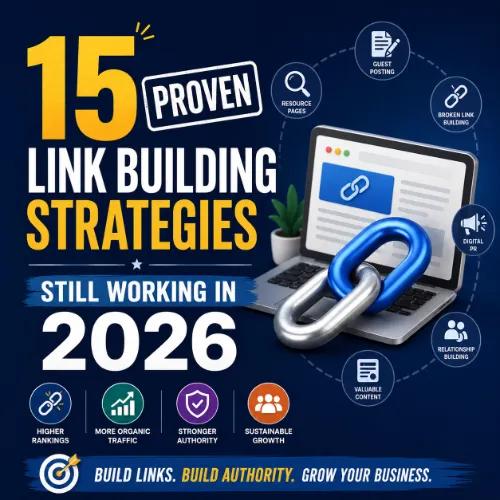
link building strategies Key Takeaways
Search engines in 2026 evaluate backlinks not just as votes of confidence, but as signals of genuine editorial endorsement.
- Modern link building strategies rely on genuine outreach, data-driven content, and audience-first value, not outdated tactics like link farms.
- Quality over quantity is non-negotiable — a single link from a trusted, relevant domain often outperforms dozens of low-authority links.
- Consistent effort across multiple link building techniques still working in 2026 creates compounding SEO returns and long-term authority growth.
Why Intentional link building strategies Matter More Than Ever
Search engines in 2026 evaluate backlinks not just as votes of confidence, but as signals of genuine editorial endorsement. Algorithms now analyze link context, placement relevance, and the relationship between linking pages. That means link building strategies must align with real audience needs and content quality rather than pure link acquisition. For a related guide, see 15 White Hat Link Building Methods: Proven Strategies for Ethical SEO.
Many site owners still chase shallow metrics — hundreds of low-quality links from irrelevant directories or spun articles. These approaches carry increasing risk, including manual penalties and deindexing. The methods below focus on sustainable, scalable practices that publishers, journalists, and site owners genuinely want to link to.
The 15 Most Effective link building strategies for 2026
Below are the link building techniques still working this year, each explained with how to execute it and why it earns editorial links.
1. Create Data-Driven Original Research
Publishing proprietary surveys, data analysis, or industry benchmarks gives journalists and bloggers a concrete reason to cite your site. Original data gets referenced in news articles, list posts, and academic papers for years.
How to start: Run a survey of 500+ industry professionals using free tools like Google Forms or Typeform. Analyze the results and create a shareable infographic or an interactive chart. Reach out to journalists covering your niche with a brief data highlight. For a related guide, see 15 GEO Strategies to Rank in ChatGPT and Gemini (Proven).
2. Build Link-Worthy Resource Hubs
A comprehensive, evergreen guide that answers the top questions in your niche naturally attracts links over time. Think of a “Ultimate Guide to [Your Topic]” that is constantly updated with new statistics, examples, and expert quotes.
Why it works: Resource hubs become the go-to reference for that topic, so other sites link to it instead of creating their own from scratch. Update the resource quarterly and promote it via social media and newsletters.
3. Use the Skyscraper Technique on Existing Content
Identify top-performing articles in your niche that already have backlinks. Create a significantly improved version — longer, more visual, more actionable. Then reach out to the sites that linked to the original and politely suggest they consider your enhanced version.
Execution tip: Use a tool like Ahrefs’ Content Explorer to find content with 50+ referring domains. Your improved version should be at least 1.5x longer with additional media and deeper expert insights.
4. Broken Link Building
Find broken outbound links on relevant websites in your niche. Offer your own working, relevant content as a replacement. This approach provides value to the site owner (fixing their broken link) while earning you a backlink.
Workflow: Use a site audit tool and filter for “broken outbound links” on sites you want to reach. Identify a high-value post, then email the webmaster with a polite suggestion and your resource link.
5. Guest Posting on Authoritative Niche Sites
Writing a high-quality guest article for a respected industry blog remains one of the most reliable link building techniques still working in 2026. Focus on sites with active audiences, not just high Domain Rating.
Best practice: Personalize each pitch by referencing recent articles on the target blog. Propose a unique angle they haven’t covered. Include a link to your relevant content within the article body, not just the author bio.
6. Reclaim Unlinked Brand Mentions
When someone mentions your brand, product, or a team member online without linking to you, that is an unlinked mention. Reach out and ask them to turn it into a link.
Tool tip: Use a brand mention monitoring tool (e.g., Mention, Google Alerts, or Ahrefs Alerts) to track mentions. Send a short, grateful email — “Thanks for mentioning us! Would you consider adding a link so your readers can easily find us?”
7. Engage in HARO and Expert Roundups
Help a Reporter Out (HARO) and similar platforms connect journalists with expert sources. When you provide a valuable quote, journalists often link to your site in the story.
How to succeed: Subscribe to HARO or platforms like Connectively. Respond quickly with concise, quotable answers. Include your site URL only once at the end. Quality over speed — get to replies within 30 minutes of the query.
8. Create Visual Assets for Easy Embedding
Infographics, charts, and custom illustrations that other sites can embed with a backlink are highly linkable. Make sure each visual has an embed code you provide.
Distribution: After creating a visual, reach out to sites that cover similar topics. Offer them the embed code and suggest contexts where the visual fits naturally.
9. Participate in Relevant Online Communities
Being genuinely helpful in niche communities (Reddit, specialized forums, LinkedIn Groups, Slack channels) builds trust. When you share your own content as a solution, members will naturally link to it if it is truly useful.
Caution: Do not drop links randomly. Become a recognized contributor first. Link only when it directly answers a member’s question.
10. Leverage Public Statistics and Datasets
Publishing a unique dataset (e.g., industry salary survey, market trends, technical benchmarks) invites references from journalists, researchers, and bloggers who need credible numbers.
Example: A company that runs a “Remote Work Productivity Survey” each year and publishes the raw anonymized data plus key insights earns backlinks from multiple HR and business publications.
11. Write Testimonials with a Link
When you use a tool or service you genuinely like, offer to write a detailed testimonial. Many companies publish testimonials on their site and include a backlink to your website.
Approach: Choose products you have used for 6+ months. Write a specific, honest testimonial that mentions real results. Send it to their marketing team. Do not ask for a link — most will include one as a courtesy.
12. Collaborate on Co-Authored Content
Partner with another brand or expert to create a joint guide, webinar, or research paper. Both parties promote the content, and both get backlinks from each other’s audiences.
Win-win: Choose a partner whose audience overlaps but does not directly compete. Co-ownership of the content guarantees multiple promotion channels and more linking opportunities.
13. Use Internal Linking to Amplify Linkability
Before external outreach, optimize your internal link structure. Pages with strong internal links rank better and are more attractive to external linkers. Ensure your best content is 2–3 clicks from the homepage.
Audit: Use a site audit tool to identify orphaned pages (zero internal links) and fix them. Add contextually relevant internal links within new blog posts to your best link-worthy pages.
14. Replicate the “Gold Mine” of Competitors’ Links
Analyze your competitors’ backlink profiles and identify high-quality sites that link to them but not to you. Reach out with a value proposition — why your content is better or complementary.
Tool: Use a backlink checker to see all referring domains for your top competitors. Filter for sites that are relevant and have a DR of 50+. Craft a personalized outreach email referencing the competitor’s page that they linked to.
15. Build Relationships with Journalists and Bloggers
Instead of cold emailing for links, invest time building genuine relationships. Follow their work, engage with their social media, share their content, and add value before asking for anything.
Long-term play: Set a goal to connect with three new niche journalists per month. Send a thoughtful comment on their article, not a link request. When you later have a newsworthy piece of content, they will be more open to covering it and linking to you.
Comparing link building strategies: Which One to Start First
| Strategy | Effort Level | Time to First Link | Scalability |
|---|---|---|---|
| Data-driven research | High | Medium (2–4 weeks) | High |
| Broken link building | Medium | Fast (1–2 weeks) | Medium |
| Guest posting | Medium | Medium (2–4 weeks) | High |
| Unlinked mentions | Low | Fast (within days) | Medium |
| Resource hub creation | High | Slow (2–3 months) | High |
| Community participation | Low | Slow (ongoing) | Low |
Choose based on your current resources. If you have limited time, start with unlinked mentions and broken link building. If you have a budget for research, invest in data-driven content or a resource hub.
SEO Entities and Their Functions
Understanding a few core SEO entities helps you execute the link building strategies above with greater precision.
- Referring domains: The number of unique websites linking to your site. This metric matters more than total backlinks, as it indicates genuine endorsement from many sources.
- Anchor text: The clickable text of a link. Natural anchor text diversity (exact match, branded, generic, naked URLs) is crucial to avoid over-optimization signals.
- Dofollow vs. Nofollow: Dofollow links pass authority; nofollow links do not. However, nofollow links from high-traffic sites still drive referral traffic and can lead to more organic links over time.
- Broken backlinks: Links to your site that now return a 404 error. Reclaim them by redirecting or fixing the broken page, then manually requesting the linking site to update the link.
- New/Lost backlinks: Monitoring new links gained and links lost helps you understand which of your link building techniques still working and which need adjustment.
Useful Resources
For deeper learning on link building and SEO tools, check these trusted sources:
- Ahrefs Blog: Link Building Guide — Comprehensive tutorials and case studies on earning backlinks.
- Moz Blog: Link Building Articles — Regular updates on white-hat link building tactics and industry trends.
Frequently Asked Questions About link building strategies
What is the best link building strategy for 2026?
The best strategy combines original data research with targeted outreach. A single data-driven piece can earn dozens of organic links over time, making it the most scalable approach.
How many backlinks do I need to rank?
There is no fixed number. Focus on the quality and relevance of referring domains rather than a specific count. A few strong, contextually relevant links outperform hundreds of weak ones.
Are paid backlinks safe in 2026?
No. Buying or selling links that pass authority violates Google’s guidelines and can lead to penalties. Instead, invest time and budget into content creation and genuine outreach.
How long does it take to see results from link building?
Most strategies take 4–12 weeks to produce visible ranking improvements. Building a strong link profile is a long-term investment that compounds over 6–18 months.
What is the difference between dofollow and nofollow links?
Dofollow links pass SEO authority (link juice) to your site. Nofollow links do not pass authority, but they still drive referral traffic and diversify your link profile naturally.
Should I avoid nofollow links entirely?
No. A natural link profile includes both dofollow and nofollow links. Nofollow links from high-visibility sites like Wikipedia, Forbes, or social media can still boost brand visibility and lead to more dofollow links.
How do I find broken link building opportunities?
Use a site audit tool like Ahrefs Site Explorer or Screaming Frog to find broken outbound links on niche-relevant websites. Create a spreadsheet of broken URLs, then offer your own content as a replacement.
What is the Skyscraper Technique?
Popularized by Brian Dean, it involves finding top-performing content, creating a significantly improved version, and then reaching out to the sites linking to the original to promote your better version.
Can internal links help with external link building?
Yes. Strong internal linking boosts a page’s authority, making it more attractive for external sites to link to. Well-structured internal links also improve crawlability and user experience.
What is HARO and how does it help with backlinks?
Help a Reporter Out (HARO) connects journalists with expert sources. When you provide quotable insights, journalists often include a link to your site in the resulting article.
Is guest posting still effective for link building?
Yes, when done correctly. Focus on authoritative, niche-relevant sites with engaged audiences. Provide original, high-value content and avoid purely promotional links.
How do I get backlinks from news sites?
Publish newsworthy content — original research, industry trends, or expert commentary. Use press release distribution services or build relationships with journalists via HARO or social media.
What tools should I use for link building outreach?
Popular tools include Ahrefs for backlink analysis, BuzzStream for managing outreach campaigns, and Mailshake for email sequences. Start with free tools like Google Alerts and Hunter.io for finding contact emails.
How often should I audit my backlink profile?
Audit your backlink profile at least once a month. Look for newly acquired links, lost links, and any toxic links that could harm your site. Disavow harmful links if necessary.
Can social media shares help with link building?
Social shares themselves are not dofollow links, but increased visibility on social platforms can lead to organic mentions and links from blogs and news sites.
What is a “link roundup” and how do I get featured?
A link roundup is a weekly or monthly post that curates the best content in a niche. To get featured, produce high-quality content and politely suggest your best article to the roundup curator.
Is it worth buying expired domains for links?
Rarely. Expired domains often have unnatural link profiles and can lead to penalties. The effort required to rehabilitate them usually outweighs the benefits compared to building a fresh site with strong content.
How do I get links from .edu or .gov sites?
Offer useful resources, scholarships, or data that educators and government offices would find valuable. Link requests to .edu or .gov domains must be highly relevant and genuinely useful.
What should I include in a link outreach email?
Keep it short, personalized, and value-driven. Mention the recipient by name, reference their content, explain why your resource is useful, and make it easy for them to link.
Do I need to remove bad backlinks?
Yes, if you have a large number of spammy or toxic backlinks. Use Google’s Disavow Tool after identifying harmful links through a backlink audit. Proactive disavowal can protect your rankings.