
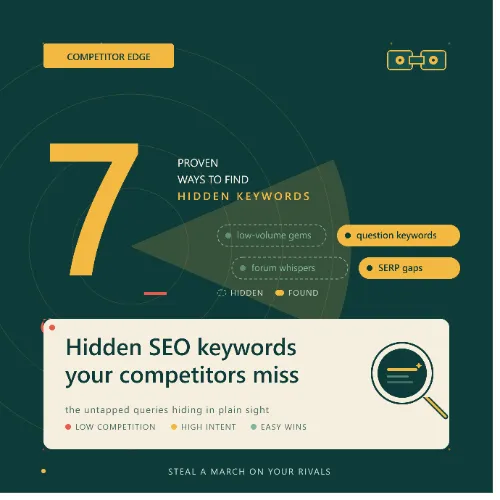
find hidden SEO keywords Key Takeaways
Uncovering find hidden SEO keywords is the fastest way to outpace competitors without increasing your ad spend.
- Learning how to find hidden SEO keywords reveals low- competition, high-conversion opportunities.
- Use competitor gap analysis, question-based queries, and SERP feature targeting to surface untapped terms.
- Combine free and paid tools like Ahrefs, Google Search Console, and AnswerThePublic for a complete view.
Why How to Find Hidden SEO Keywords Matters in 2025
The SEO landscape grows more competitive every quarter. While most marketers fight over high-volume head terms, the real wins lie in the long tail and intent-specific queries that competitors simply never see. Learning how to find hidden SEO keywords lets you uncover gaps in your content strategy, attract qualified visitors, and build topical authority without fighting for every click. For a related guide, see 5 Smart Ways AI Helps Discover Hidden Keywords for Your SEO Strategy.
This article walks you through seven actionable methods to surface those hidden SEO keywords. Each method is backed by real-world examples and practical tools you can start using today.
7 Proven Methods to Find Hidden SEO Keywords
1. Mine the “People Also Ask” Boxes
Google’s People Also Ask (PAA) boxes are a goldmine for hidden SEO keywords. These questions reflect real user intent and often trigger featured snippets. Enter a seed keyword, then expand every PAA result to see dozens of natural language queries your audience is actually searching.
For example, searching “content marketing strategy” reveals questions like “What is a content pillar strategy?” and “How to create a content calendar?” — each a potential keyword or subtopic for your guide. Use a tool like Ahrefs Keywords Explorer to pull the full PAA list and assess search volume.
2. Leverage Google Search Console for Undiscovered Queries
Your own analytics hold dozens of hidden SEO keywords you already rank for but haven’t optimized. Open Google Search Console (GSC), go to Performance → Queries, and filter for positions 10–30. These are terms where you barely appear — improve content relevance or add a dedicated section to capture rankings.
Look for queries with high impressions but low click-through rates. That mismatch signals you can find hidden SEO keywords by rewriting title tags, adding an FAQ, or creating a new landing page around that intent.
3. Analyze Competitor Content Gaps
Competitor analysis uncovers entire areas of hidden SEO keywords your site ignores. Use the Content Gap report in Ahrefs: enter a competitor domain and see which keywords they rank for that you do not. This direct comparison reveals low-difficulty terms ready for you to target.
Focus on terms with a keyword difficulty (KD) below 30 and clear search intent. For instance, if a competitor ranks for “best vegan protein powder for weight loss” but you only cover “vegan protein powder,” that modifier is your hidden opportunity. For a related guide, see 11 Proven Ways to Analyze Ranking Drops and Fix SEO Fast.
4. Scrape “Related Searches” at the Bottom of SERPs
Google’s “Related searches” section often contains hidden SEO keywords with distinct search intent. These are not accidental — they represent what users typed after failing to find what they wanted. Use a free tool like Keyword Tool to scrape these terms from multiple search engines.
Example: For “email marketing software,” related searches include “email marketing software for small business free” and “transactional email API provider for developers.” Both are precise, low-volume keywords perfect for dedicated guides or product comparisons.
5. Use Forum and Q and A Sites as Keyword Sources
Platforms like Reddit, Quora, and niche forums are raw, unfiltered keyword labs. Real people ask exactly what they need to know — no polite rewrites. Search for your topic + “question” or browse subreddits to find hidden SEO keywords framed in natural language.
For example, in the personal finance space, a Quora question like “Is it better to pay off debt or invest when interest rates are high?” signals a specific buyer intent. Create content that answers that exact query, and you’ll rank for terms no standard keyword tool surfaces.
6. Apply the Alphabet Soup Technique
The alphabet soup method involves appending each letter (A–Z) to your seed keyword in Google Search. Autocomplete suggestions for “content marketing a” or “content marketing b” generate dozens of hidden SEO keywords that users frequently type. These autocomplete terms reflect high-intent searches exactly as people phrase them.
Combine this with the numbers 0–9 for even more coverage. Document every unique suggestion, then prioritize by search volume using Ahrefs or Semrush. This low-tech approach is surprisingly effective for niche topics.
7. Target SERP Features with Structured Data
Sometimes the best hidden SEO keywords are not keywords at all — they are results formats. SERP features like featured snippets, video carousels, and local packs reward content structured for a specific intent. Use a tool like Ahrefs Site Explorer to see which SERP features your site already triggers, then look for related terms you can capture. For a related guide, see 13 Hidden SEO Signals in Analytics: Smart Data Insights.
For example, if your page ranks with a snippet for “how to set up Google Analytics,” expand coverage to “how to set up Google Analytics 4” and “how to set up Google Analytics with Tag Manager.” Each variation is a hidden SEO keyword that reinforces your topical authority.
SEO Entities and Their Functions
To effectively find hidden SEO keywords, you need to understand the entities that define keyword research and performance analysis. Here are the key ones and how they help:
- Keyword entities: organic keywords, keyword difficulty (KD), search volume, CPC, traffic potential, and SERP features show demand, competition, paid value, ranking opportunity, and result-type requirements.
- Backlink entities: referring domains, anchor text, dofollow/nofollow links, and broken backlinks explain authority, link quality, and outreach priorities.
- Page entities: top pages by traffic, best by links, broken pages, and internal pages reveal which URLs earn visibility or need repair.
- Competitor entities: competing domains, content gap opportunities, shared keywords, and link intersect domains show where rivals win traffic and where you can catch up.
- Metrics entities: DR (Domain Rating), UR (URL Rating), traffic value, organic traffic, and referring domains count summarize authority and search visibility.
- SERP entities: featured snippets, People Also Ask, sitelinks, video results, and local packs show what content format the search result rewards.
Useful Resources
Explore these tools and guides to deepen your ability to find hidden SEO keywords:
- Ahrefs Keywords Generator — Free tool to find keyword ideas, search volume, and difficulty.
- AnswerThePublic — Visualizes the questions people ask around your topic, perfect for uncovering long-tail queries.
Mastering the ability to find hidden SEO keywords separates average content from authority content. Start with one method from this list, test it on your next blog post, and watch your organic traffic grow.
Frequently Asked Questions About find hidden SEO keywords
What are hidden SEO keywords ?
Hidden SEO keywords are terms that have reasonable search volume but low competition — often long-tail or intent-specific queries that competitors overlook. They require deliberate research to surface.
Why should I find hidden SEO keywords instead of targeting broad terms?
Broad terms are highly competitive and often expensive to rank for. Hidden keywords offer higher conversion rates, lower difficulty, and faster path to organic traffic because they match precise user intent.
What is the fastest way to find hidden SEO keywords ?
Using Google Search Console filtered for queries ranking in positions 10–30 is the fastest method. It shows keywords your site already has some traction with but hasn’t fully optimized for.
Do I need paid tools to find hidden SEO keywords ?
No. Free methods like the alphabet soup technique, related searches, and forum mining work well. However, paid tools like Ahrefs or Semrush speed up the process and provide richer data.
How many hidden keywords should I target per piece of content?
Focus on 1–3 primary hidden keywords per article, then support them with 5–10 related secondary terms. This keeps the content focused and avoids keyword cannibalization.
Can hidden SEO keywords have high search volume?
Occasionally. Some hidden keywords are simply overlooked despite decent volume. The term “hidden” refers more to competition level and discoverability than absolute search volume.
How do forum sites help find hidden SEO keywords ?
Forums contain real questions people type in natural language. These often include modifiers, context, and pain points that keyword tools miss. You can use them directly or as content inspiration.
What is the alphabet soup technique in keyword research?
It’s a manual method where you enter your seed keyword plus each letter A–Z (e.g., “content marketing a”) into Google Search and record the autocomplete suggestions. It surfaces unique long-tail terms.
Should I focus on question-based keywords?
Yes. Question keywords (how, what, why, when, where) often trigger featured snippets and People Also Ask boxes. They also indicate strong purchase or informational intent.
How do SERP features help find hidden keywords?
Analyzing which SERP features appear for your target topic tells you what content format Google rewards. For example, if video results dominate, optimize video content, and the corresponding keyword is often a hidden gem.
Can I find hidden keywords by analyzing competitors’ broken pages?
Yes. Use Ahrefs’ Broken Page report to find dead pages on competitor sites that previously earned traffic. You can create updated content targeting the same keywords those pages ranked for.
What is keyword difficulty (KD) and why does it matter?
What is keyword difficulty (KD) and why does it matter is covered in the guide above with practical context, useful examples, and details readers can use to make a better decision.
Is there a difference between hidden keywords and long-tail keywords?
Hidden keywords are often long-tail but not always. A hidden keyword is simply any term with low competition relative to opportunity. Long-tail refers specifically to longer, more specific phrases.
How often should I revisit my hidden keyword research?
Every quarter is a good rhythm. Competitor strategies shift, new tools surface, and Google updates can create fresh opportunities. Regular refreshes keep your edge sharp.
Can hidden SEO keywords help with local SEO?
Absolutely. Local hidden keywords often include city names, neighborhoods, or phrases like “near me” that competitors overlook. Use Google My Business insights and local forums to find them.
What role do content clusters play in hidden keyword strategy?
Content clusters help you build topical authority. By targeting multiple hidden keywords within a single topic cluster, you signal depth to Google and rank for more variations over time.
Do hidden keywords work for B2B businesses?
Yes, especially well. B2B buyers use precise, jargon-heavy queries. Mining industry-specific forums, LinkedIn groups, and competitor content gaps reveals very effective hidden keywords.
How do I measure success after targeting hidden keywords?
Track rankings for those target terms, organic traffic to the optimized page, and conversion rates. Use Google Search Console and Google Analytics to monitor progress over 60–90 days.
Can I automate the process of finding hidden SEO keywords ?
Partially. Tools like Ahrefs, Semrush, and Keyword Tool automate data collection and gap analysis. The human part is interpreting intent, assessing fit for your audience, and crafting content that satisfies the query.
What is the single most important takeaway about hidden SEO keywords ?
The best hidden keywords are the ones your competitors ignore because they seem too small, niche, or obvious. Dig deeper than everyone else, and you will find a steady stream of untapped traffic.