
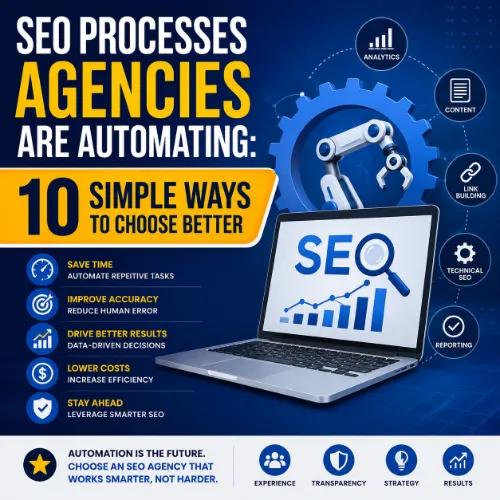
SEO processes agencies are automating Key Takeaways
Modern SEO agencies increasingly rely on automation to handle repetitive tasks, freeing strategists to focus on creative and analytical work.
- Keyword research, rank tracking, and reporting are among the most commonly automated SEO processes agencies are automating today.
- Automation tools now handle technical audits, backlink analysis, and content optimization with minimal human input.
- Adopting the right automated workflows can reduce manual hours by up to 70% while increasing data consistency.
Why Automation Is Reshaping SEO Processes Agencies Are Automating
SEO has always been data-intensive. Between keyword tracking, site audits, and competitor analysis, a single campaign can generate hundreds of data points each week. Agencies that manage multiple clients quickly find that manual processing becomes a bottleneck. That is why the list of SEO processes agencies are automating keeps growing. Automation does not replace strategic thinking — it removes drudgery so teams can focus on interpreting data and crafting better strategies.
The Shift Toward Scalable Workflows
Early adopters of automated SEO processes reported faster turnaround times for reports and fewer human errors. Today, nearly every agency uses some form of automation for reporting, rank tracking, or site crawling. The competitive advantage now lies in knowing which workflows deliver the highest return. For a related guide, see 14 SEO Reporting Mistakes to Avoid: Essential Tips for Accurate Data.
13 SEO Processes Agencies Are Automating Right Now
Below are the 13 most impactful automated workflows, each with a short explanation and a practical takeaway.
1. Keyword Research and Gap Analysis
Tools like Ahrefs and Semrush automatically generate keyword lists, suggest related terms, and identify content gaps by comparing your domain against competitors. The agency sets filters for search volume and difficulty, then exports ready-to-use clusters.
Takeaway: Reduce research time from hours to minutes, and uncover opportunities that manual browsing would miss.
2. Rank Tracking and Position Monitoring
Instead of manually checking SERPs every morning, agencies deploy automated rank trackers that pull daily or weekly positions. Alerts notify the team when a keyword drops below a threshold.
Takeaway: Instant visibility into ranking changes allows faster reaction to algorithm updates or competitor moves.
3. Technical Site Audits
Crawlers such as Screaming Frog and Sitebulb scan every page for broken links, duplicate content, missing meta tags, and redirect chains. Automated audits run on a schedule and send weekly reports.
Takeaway: Catch technical issues before they impact rankings, without manually clicking through hundreds of URLs.
4. Backlink Monitoring and Analysis
Automated backlink tools track new and lost referring domains, detect toxic links, and send alerts for suspicious link patterns. Agencies use this data to prioritize outreach and disavow workflows.
Takeaway: Maintain a clean backlink profile with minimal manual review.
5. Content Optimization and Briefing
AI-powered tools analyze top-ranking pages for a given query, then generate content briefs with recommended word count, headings, and semantic terms. Writers receive a data-backed outline before they start typing.
Takeaway: Speed up content production while aligning each piece with current ranking factors.
6. Automated Reporting Dashboards
Custom dashboards in Google Looker Studio or agency-specific platforms pull data from Analytics, Search Console, and third-party tools into a single view. Reports are generated on a schedule and sent to stakeholders automatically.
Takeaway: Eliminate the weekly cut-and-paste reporting task, and deliver consistent, branded reports.
7. Internal Link Auditing and Suggestions
Tools like Link Whisperer scan the site for orphaned pages and suggest relevant internal links based on keyword similarity. Agencies schedule monthly internal link optimizations without manually browsing every page.
Takeaway: Strengthen topic clusters and spread link equity more efficiently.
8. Local SEO Listing Management
Platforms like BrightLocal or Yext sync business details across directories and monitor review patterns. Updates to hours, address, or phone number propagate automatically.
Takeaway: Keep local citations consistent without logging into each platform individually.
9. Competitor Content Alerts
From keyword monitoring to RSS feeds, automated systems flag when a competitor publishes new content, changes a landing page, or starts targeting a new keyword. Agencies can react within days instead of weeks.
Takeaway: Stay ahead of competitive moves with minimal manual surveillance.
10. Schema Markup Generation and Testing
Automated schema generators produce JSON-LD for articles, FAQs, products, and local businesses. Testing tools then validate the markup and highlight errors.
Takeaway: Implement structured data at scale with confidence that it will pass Google’s validation.
11. Redirect Mapping and Management
During site migrations or page deletions, automated tools propose a redirect map based on previous URL structures and internal links. The agency reviews and deploys the plan.
Takeaway: Reduce 404 errors and preserve link equity during restructures.
12. Social Media and Outreach Follow-Ups
CRM and email automation tools schedule and send follow-up sequences for link-building and guest post pitches. The agency focuses on personalizing the first touch, then lets automation handle reminders.
Takeaway: Improve response rates without manual tracking of each outreach thread.
13. Performance Anomaly Detection
Machine learning models track traffic, rankings, and conversion patterns. When a metric deviates significantly from the expected range, the system sends an alert with possible causes (e.g., ranking drop, algorithm update, server error). For a related guide, see 11 Proven Ways to Analyze Ranking Drops and Fix SEO Fast.
Takeaway: Catch critical issues early, even when the team is not actively monitoring dashboards.
Best Practices for Implementing Automated SEO Processes
Automation is not a set-it-and-forget operation. To get the most from these SEO processes agencies are automating, follow these guidelines.
Start with the Highest-ROI Workflows
Rank tracking and reporting usually deliver the quickest time savings. Begin there, then expand to audits and content optimization once the team is comfortable.
Maintain Human Oversight
Automated suggestions — whether for keyword clusters or internal links — still require a human review. An algorithm may miss nuances like brand voice or corporate strategy.
Monitor for Tool Drift
Automated data can become stale if configurations change (e.g., a site restructure or a tool updates its API). Schedule quarterly reviews of every automation workflow.
SEO Entities and Their Functions
Understanding the underlying SEO entities makes automation more effective. Below are the key categories that automated tools analyze.
- Keyword entities: Search volume, keyword difficulty (KD), traffic potential, and SERP features help automate which queries deserve focus.
- Backlink entities: Referring domains, dofollow/nofollow flags, and new/lost backlinks show authority changes and risk patterns.
- Page entities: Top pages, best by links, and broken pages reveal which URLs earn visibility or need repair.
- Technical entities: Crawl issues, redirect chains, and Core Web Vitals expose obstacles that block ranking or user experience.
- Competitor entities: Competing domains, content gaps, and link intersect domains show where rivals win traffic.
Useful Resources
Explore these guides to deepen your understanding of SEO automation and the tools behind it.
- Ahrefs Blog: SEO Automation — Tools and Strategies — A comprehensive overview of automation workflows for keyword research, backlinks, and reporting.
- Moz Blog: SEO Automation Tools to Save Time — Practical tool recommendations and case studies from real agency campaigns.
Frequently Asked Questions About SEO Processes Agencies Are Automating
Conclusion: Embrace the SEO Processes Agencies Are Automating
Automation is no longer optional for agencies that want to scale efficiently. By adopting the 13 SEO processes agencies are automating outlined here, teams can reclaim hours each week, reduce error rates, and deliver data-driven insights faster. Start with one or two workflows — rank tracking and reporting are safe bets — then expand as the team builds confidence. The final goal is not to eliminate human input, but to redirect it toward the strategic work that truly moves the needle on client performance.
Frequently Asked Questions About SEO processes agencies are automating
What are the most common SEO processes agencies are automating?
Rank tracking, keyword research, technical audits, and reporting are the most frequently automated workflows.
Can small agencies benefit from SEO automation ?
Yes. Even a single automated rank tracker can save hours per week, making it affordable for small teams and freelancers.
Does SEO automation replace human strategists?
No. Automation handles repetitive data tasks, but strategic decisions, content creation, and relationship building still require human judgment.
What is the best tool for automating SEO reports?
Google Looker Studio (formerly Data Studio) is widely used because it integrates with Analytics, Search Console, and most third-party SEO tools.
How often should an automated site audit run?
Weekly or bi-weekly for active sites. Monthly is sufficient for sites with infrequent content updates.
Can automation help with link building outreach?
Yes. Automation sequences can schedule follow-up emails and track responses, though the initial pitch should be personalized.
What is the risk of relying too much on SEO automation ?
Over-automation can lead to missed context, such as ignoring brand-alignment issues or misinterpreting data anomalies. Human oversight remains critical.
Are free SEO automation tools available?
Yes. Google Search Console and Google Analytics offer automated alerts and basic reporting. Many tools also have free tiers with limited features.
How do agencies automate local SEO?
They use platforms like BrightLocal to sync citations, monitor reviews, and update business listings across directories automatically.
Can automation handle schema markup for every page?
Automated generators can produce JSON-LD at scale, but validation and manual adjustments are still needed for complex or custom pages.
What is the first SEO process agencies should automate?
Rank tracking because it is repetitive, time-sensitive, and easily scripted with any rank tracker tool.
How does automation improve keyword research?
Tools automatically suggest related keywords, cluster them by topic, and provide search volume and difficulty data in one export.
Do automated SEO tools work for e-commerce sites?
Yes. They are especially useful for crawling thousands of product pages, checking redirects, and monitoring category page rankings.
Can automation detect Google algorithm updates?
No tool can predict updates, but automated rank and traffic trackers can detect their impact within 24–48 hours.
What is the cost of SEO automation tools?
Prices range from free (basic rank tracking) to several hundred dollars per month for enterprise suites like Ahrefs or Semrush.
How do agencies maintain data accuracy with automation?
They regularly validate tool outputs against manual checks and review automated reports for anomalies before sharing with clients.
Is automated content generation part of SEO automation ?
Yes, but with caution. Automated briefs and outlines are helpful; fully AI-generated content still risks quality and originality issues.
Can automation help with duplicate content issues?
Yes. Crawlers flag duplicate title tags, meta descriptions, and body content, allowing agencies to fix them systematically.
How does SEO automation affect client reporting?
It makes reports more consistent and timely, allowing agencies to focus on adding strategic commentary instead of manual data entry.
What is the future of SEO processes being automated?
Expect deeper AI integration in content strategy, predictive ranking models, and fully autonomous anomaly detection across all channels.